- The interbank rate remains within a range during the week.
- IMF review talks begin under SEF and RSF.
- Remittances increase year after year and decrease month after month.
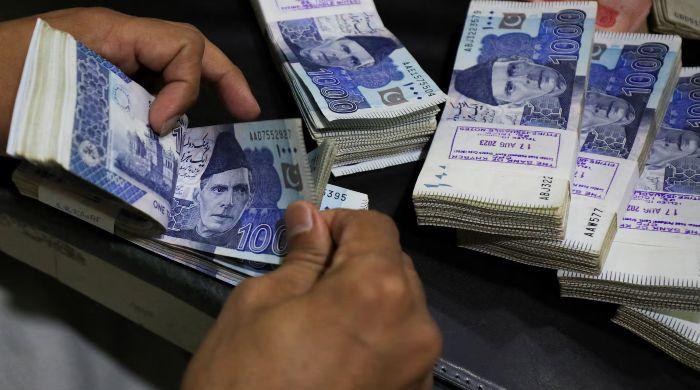
KARACHI: The Pakistani rupee is expected to remain stable and could strengthen slightly in the near term, supported by seasonal inflows of remittances during Ramadan and before Eid. The news reported, citing a report published Saturday.
The currency traded in a narrow band on the interbank market this week, closing at 279.55 per dollar on Monday and 279.47 on Friday.
The International Monetary Fund (IMF) team on Wednesday began talks with Pakistani authorities for the third review of the $7 billion Extended Financing Facility (SAF) and the second review of the $1.1 billion Resilience and Sustainability Fund (RSF).
Upon successful completion, Pakistan would be eligible by the end of April to receive around $1 billion under the SAF and an additional $200 million under the RSF.
The geopolitical situation has worsened as the United States and Israel launched attacks against Iran, plunging the region into a new conflict.
The rupee has appreciated by about 60 paisa since the beginning of the year, Tresmark, a platform that offers live financial rates, said in a note to its clients. While this increase is modest on its own, it is more significant when considering the broader context, he said.
The rupee has strengthened despite several challenges, including rising geopolitical risks and the United States’ posture in the region, escalating tensions along the western border, isolated internal security incidents, Brent crude oil prices trading above $72 a barrel, a steady decline in exports, a growing trade deficit, tariff pressures and a persistent inflation differential with the United States.
“Seasonal inflows of remittances around Ramadan and Eid are likely to keep the rupee well-traded in the near term,” the Tresmark report said.
“That said, most economists argue that further appreciation offers limited structural benefit, making the recent firmness somewhat counterintuitive,” he added.
Pakistan’s remittances rose 15.4% year-on-year (YoY) in January to $3.5 billion. However, these flows fell 4% month on month (MoM). Remittances increased 11.3% to $23.2 billion in the first seven months of fiscal 2026.
“Premiums have improved marginally. If costs are tight, exporters should opt for forward contracts as the outlook for the rupee continues to look stable or slightly stronger,” he said.
According to the report, the stability of the rupee is not an isolated case. Several high-carry or reform-backed emerging market currencies have also held firm despite geopolitical noise, including the Egyptian pound, Thai baht, South African rand, Brazilian real, Mexican peso and Indonesian rupiah.