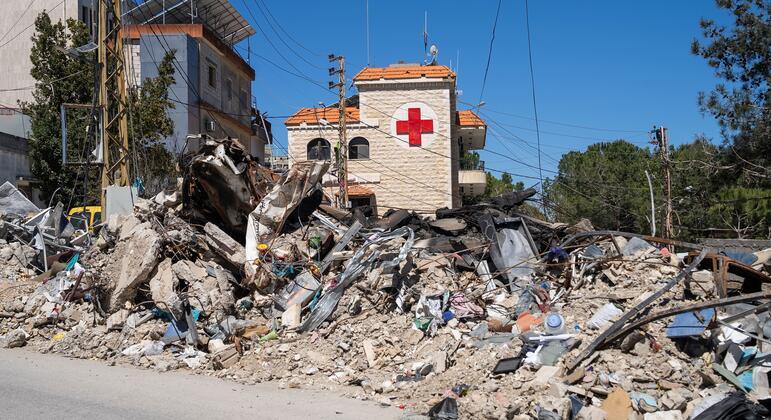
According to the first information from the Lebanese authorities, at least 86 people, including health workers, were injured in the attacks on the Jabal Amel hospital.
The attacks “caused significant damage… to the emergency department and the intensive care unit,” said the World Health Organization (WHO) representative in Lebanon, Dr. Abdinasir Abubakar.
Speaking from Beirut on Tuesday, Dr. Abubakar explained that Jabal Amel is one of the few hospitals currently operating in the south.
deadly pattern
In just three months, the WHO has verified almost 190 attacks on healthcare, killing 128 healthcare workers and injuring 332 others. Last week alone there were 11 attacks.
“These attacks kill and maim, but they also deprive people of the health services they need,” said the WHO representative.
Healthcare in the Tire district has suffered the worst impacts of hostilities between Hezbollah fighters and Israel in recent days; Two out of three hospitals, Jabal Amel and Hiram, which was attacked last Sunday, are damaged, while the third hospital is “overwhelmed because it has to deal with the influx of a larger number of injured patients,” Dr. Abubakar said.
Access to essential services is “critically limited”, he insisted, especially in southern Lebanon, where patients face delays of up to 48 hours to reach the nearest referral centres.
A matter of life and death
“Six hospitals have not yet resumed delivery services and are currently only providing care in emergency rooms,” Dr. Abubakar stressed. “For pregnant women and newborns, delays in care can mean the difference between life and death.”
The WHO representative also highlighted the difficult health situation in the shelters, which house some 130,000 people who have fled the fighting. Displacements are increasing following the latest Israeli evacuation orders. The escalation of violence and warnings of Israeli attacks on Beirut’s southern suburbs, home to hundreds of thousands of civilians, prompted a Security Council meeting on Monday.
The UN health agency has been monitoring infectious diseases within shelters and host communities, reporting “a growing trend of acute watery diarrhea.”
“We are in the summer season and now the risk of cholera may be increasing,” Dr Abubakar warned.
As humanitarian needs outweigh the response, the WHO representative stressed the need to maintain funding for essential health services.
“We also need attacks on healthcare to stop and we need active protection for healthcare,” he said, reiterating calls for a sustained ceasefire and lasting peace.
Since the start of the current escalation of fighting between Israel and Hezbollah fighters on March 2, more than nearly 3,400 people have been killed in Lebanon and nearly 10,400 wounded, most of them civilians.
“These have been some of the deadliest months for Lebanon since the start of the conflict in October 2023,” Dr. Abubakar insisted.
A US-brokered ceasefire between Lebanon and Israel went into effect on April 17, but neither side has fully respected it. It was nominally extended twice, most recently on May 16 for a period of 45 days.