
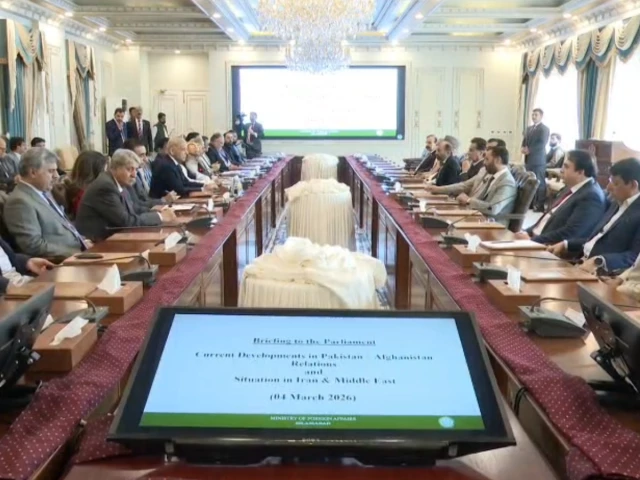
High-level meeting discusses border clashes in Afghanistan and escalating Middle East conflict amid security concerns
A high-level meeting of parliamentary leaders and representatives, chaired by Prime Minister Muhammad Shehbaz Sharif, began in Islamabad. PHOTO: PMO
A high-level meeting of parliamentary leaders and representatives, chaired by Prime Minister Shehbaz Sharif, was held in Islamabad on Wednesday to discuss the ongoing geopolitical tensions in the region, the Prime Minister’s Office (PMO) said in a statement.
According to the statement, the prime minister briefed the leaders on the evolving situation in Pakistan and Afghanistan, as well as recent regional tensions, particularly in the Middle East and the Gulf. The session also covered Pakistan’s ongoing diplomatic efforts during the current geopolitical challenges.
The meeting included a detailed briefing to ensure that parliamentary leaders are fully informed about the country’s foreign policy approach and its regional security posture, the PMO said.
Key attendees included Senate President Syed Yousuf Raza Gilani, National Assembly Speaker Sardar Ayaz Sadiq, Senate Deputy Speaker Syedaal Khan, National Assembly Deputy Speaker Ghulam Mustafa Shah, Deputy Prime Minister/Foreign Minister Ishaq Dar, Pakistan Peoples Party President Bilawal Bhutto Zardari, JUI-F President Maulana Fazlur Rehman, Ministers federal officials, party leaders and other parliamentary representatives from all over the country.
The PMO highlighted that the inclusive meeting was aimed at maintaining transparency with all political players regarding Pakistan’s foreign policy and security measures amid regional tensions.
Read: Dar reminds Iran of Pakistan-Saudi Arabia defense pact
Pakistan and Afghanistan have clashed along the border since last week, when Afghanistan launched a border offensive in response to Pakistani airstrikes. ‘Operation Ghazab Lil Haq’ was launched late on Thursday following fresh clashes along the border, when Afghan Taliban forces fired at multiple locations, prompting swift military retaliation.
Islamabad accuses Afghanistan of failing to act against terrorist groups carrying out attacks in Pakistan, which the Taliban government rejects. Border fighting has affected several Afghan provinces. The violence of recent days is the worst since fighting in October killed more than 70 people on both sides, and land borders between the neighbors have since been virtually closed.
The meeting also discussed the escalation of the conflict in the Gulf after the United States and Israel continued their military attacks against Iran, following a joint operation on Saturday that killed Supreme Leader Ali Khamenei and several high-ranking officials. Iran said schools and hospitals have also been attacked, killing hundreds of civilians.
In the first wave of attacks, some 163 girls were killed when a school in southern Iran was attacked.
Tehran responded by attacking Israel as well as US military assets throughout the region, disrupting trade travel, disrupting oil routes and raising global energy prices.
The Islamic Revolutionary Guard Corps said it attacked more than 500 US and Israeli locations using 700 drones along with hundreds of missiles.


