
Regional diplomacy intensifies with talks aimed at reducing tensions and advancing ceasefire efforts in the Middle East conflict.
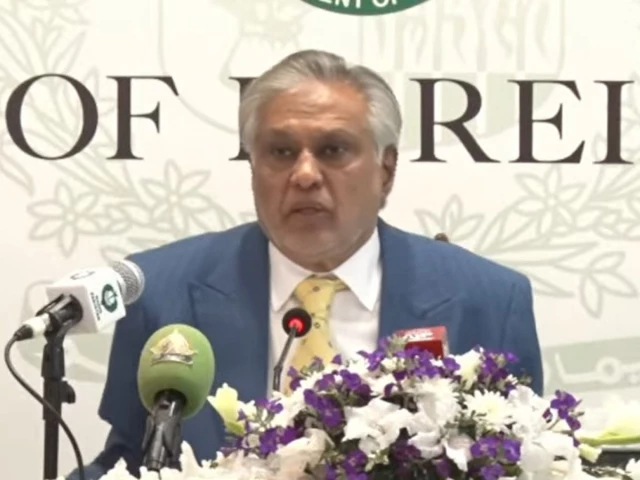
Foreign Minister Ishaq Dar. Photo: screenshot
The foreign ministers of Saudi Arabia, Turkiye and Egypt will visit Islamabad from March 29 to 30, at the invitation of Deputy Prime Minister and Foreign Minister Senator Ishaq Dar, in a bid to reduce tensions in the region amid the ongoing US-Israel war against Iran.
🔊PR No.7️⃣7️⃣/2️⃣0️⃣2️⃣6️⃣
Foreign Ministers of Saudi Arabia, Türkiye and Egypt to visit Islamabad for consultations
🔗⬇️ pic.twitter.com/l6DhGBtnti
— Ministry of Foreign Affairs – Pakistan (@ForeignOfficePk) March 28, 2026
The Foreign Ministry announced the visits to
The ministry added that the visiting dignitaries will also call on Prime Minister Shehbaz Sharif.
Read: Why is Pakistan involved in efforts to stop the war in Iran?
Furthermore, the statement noted that “Pakistan highly values its relations with the brotherly countries of Saudi Arabia, Turkiye and Egypt,” and said the visit “will provide an opportunity to further strengthen Pakistan’s cooperation and coordination with these countries in multifaceted areas of mutual interest.”
Apart from inviting the dignitaries to Pakistan, Dar also had a telephone conversation with Chinese Foreign Minister Wang Yi on Saturday. Lin Jian, spokesperson for the Chinese Foreign Ministry, announced the conversation on the X day.
Chinese Foreign Minister Wang Yi held a telephone conversation with Pakistani Deputy Prime Minister and Foreign Minister Mohammad Ishaq Dar.
Wang Yi said that #Porcelain appreciates Pakistan’s tireless efforts to de-escalate the Iranian situation and supports #Pakistan to continue playing its role as mediator.
Both… pic.twitter.com/E8zch4tyBl
—Lin Jian林剑 (@SpoxCHN_LinJian) March 28, 2026
In the tweet, he noted, “Wang Yi said China appreciates Pakistan’s unremitting efforts to de-escalate the Iranian situation and supports Pakistan to continue playing its role as a mediator.”
The spokesperson added that the two sides agreed to work together to promote a ceasefire, resume peace talks, ensure the security of non-military targets and sea routes and support the United Nations.
Read more: Foreign Minister Dar urges collective efforts to reduce Middle East crisis in talks with counterparts from Iran, Türkiye and Iraq
These developments come at a time when Pakistan is emerging as a key mediator between the United States and Iran in their ongoing conflict that has spread across the Gulf region.
On Tuesday, Prime Minister Shehbaz Sharif publicly offered Pakistan as a venue for US-Iran peace talks, an offer that received an extraordinary boost when President Donald Trump reposted it on his Truth Social platform, a move widely seen in Islamabad as Washington’s tacit endorsement of Pakistan’s emerging role as a mediator.
On Thursday, Dar confirmed that there was indirect communication between the United States and Iran through messages transmitted by Pakistan, and that Turkiye and Egypt were also collaborating on diplomatic efforts aimed at easing tensions in the Middle East.
Also read: Pakistan’s good ties with the United States and Iran pay off
The deputy prime minister has met several political figures as Pakistan continues to call for a de-escalation of the conflict; these include talks with British High Commissioner Jane Marriott, Chinese Ambassador Jiang Zaidong, UAE Deputy Prime Minister Sheikh Abdullah bin Zayed Al Nahyan, and Iranian Foreign Minister Abbas Araghchi.


