
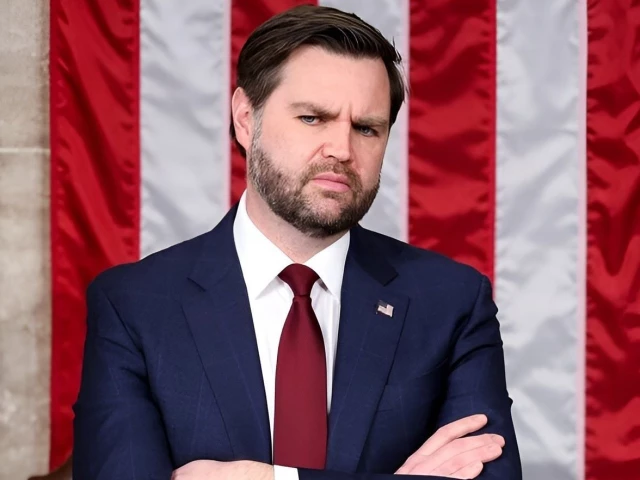
US Vice President JD Vance in the House of Representatives before US President Donald Trump’s speech to a joint session of Congress at the US Capitol in Washington, DC, United States, March 4, 2025. PHOTO: REUTERS
Pakistan’s quiet but significant diplomatic effort to mediate between the United States and Iran appears to have narrowly failed, twice.
According to a senior administration official familiar with clandestine diplomacy, a high-level US delegation led by Vice President JD Vance was prepared on two separate occasions in recent days to travel to Islamabad for direct talks with Iranian officials.
However, both attempts failed at the last minute after Tehran requested more time for internal consultations and ultimately decided not to participate.
Read: Iran’s Pezeshkian says Trump’s ‘Stone Age’ threat amounts to war crime
“The American delegation, led by its vice president, was ready to leave for Islamabad in recent days,” the official revealed. “We came very close… twice in the last ten days to organizing a critical meeting. Unfortunately, both times, Iran reconsidered and did not send its team.”
Pakistan has been actively positioning itself as a neutral facilitator amid rising tensions between Washington and Tehran, offering Islamabad as a venue for dialogue.
The initiative reflects Islamabad’s broader effort to reduce regional tensions, particularly in the wake of increased hostilities following US and Israeli attacks on Iranian targets.
The official noted that while the United States had shown a willingness to participate, Iran appeared more cautious and was weighing the risks of starting talks under the current circumstances. “Let me tell you that we were a little disappointed with the Iranian response,” the official admitted.
“Their concerns regarding the United States are understandable, given recent events, but diplomacy should always be given a chance, especially at such a critical juncture.”
In a telling revelation, the official also shared that before the recent escalation, Pakistan had explored direct engagement with Iran at the highest level. Prime Minister Shehbaz Sharif, along with the country’s top military leaders, were set to visit Tehran for talks with Iran’s Supreme Leader Ayatollah Ali Khamenei, who had since been killed in the conflict.
However, that planned visit never materialized. Iranian authorities, citing security concerns, conveyed that a meeting with the Supreme Leader would not be possible under the prevailing conditions, prompting Pakistan to postpone the trip.
The official’s comments provide a rare glimpse into the intense behind-the-scenes diplomacy taking place in the region, efforts that remain largely out of public view but have significant implications for regional stability.
Pakistan’s role has not been limited to mediation alone. His diplomatic stance, particularly his criticism of Israel’s actions, has not resonated positively with certain Gulf countries. This became evident during a key meeting held in Riyadh on March 19, where foreign ministers from 12 Muslim countries met to discuss the rapidly deteriorating regional situation.
According to the official, moments before the meeting began, the Foreign Ministers of Turkey and Pakistan were holding a bilateral meeting and Hakan Fidan’s phone rang and his Iranian counterpart was on the other end. Later, Ishaq Dar also joined that call during which Abbas Argachi urged both countries to ensure that the meeting’s joint statement was neither one-sided nor disproportionately critical of Iran.
Notably, this conversation took place amid heightened tensions, with sirens sounding across Riyadh due to fear of possible Iranian retaliatory attacks.
During the subsequent meeting, a draft statement was circulated that Pakistani officials said largely blamed Iran for the escalation. Islamabad strongly objected to the language, arguing that it did not address the root causes of the crisis, particularly Israel’s actions.
“Pakistan insisted that any statement must be balanced and not ignore the underlying issues,” the official said. After several hours of deliberations, Pakistan managed to achieve key amendments to the draft, ensuring a more nuanced and less accusatory final statement.
However, Pakistan’s assertive stance did not please all participants. Some countries were reportedly unhappy with Islamabad’s position, considering it too sympathetic towards Iran.
In addition to its diplomatic interventions, Pakistan has also been cautious about military or security initiatives that could further aggravate tensions. The official indicated that Islamabad opposed any proposal that could lead to the formation of a multinational task force in the Strait of Hormuz, a move seen by some as potentially provocative.
This cautious approach also explains Pakistan’s decision to skip a recent meeting organized by the United Kingdom aimed at discussing measures to restore normal maritime traffic through the strategically vital Strait of Hormuz. Islamabad politely declined the invitation, citing concerns that the proposed initiative might not align with its broader policy of de-escalation and neutrality.
Together, these developments underscore Pakistan’s delicate balancing act as it seeks to play a constructive diplomatic role while avoiding becoming embroiled in a rapidly escalating conflict. While its mediation efforts have yet to yield tangible results, the fact that it almost hosted the US-Iran talks highlights both the potential and challenges of secondary diplomacy in one of the world’s most volatile regions.


