
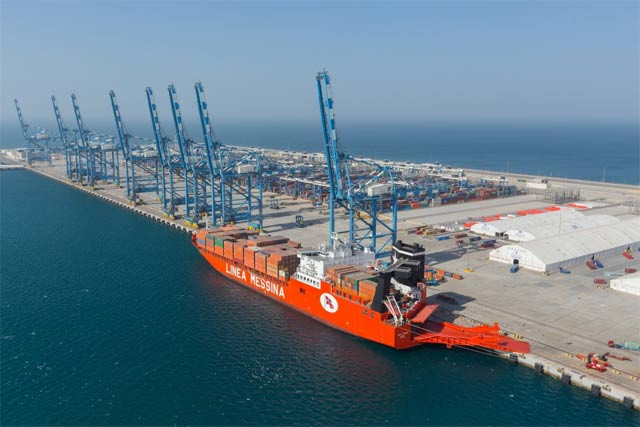
Improved security, faster handling and advanced systems drive notable increase in port efficiency
QUETA:
Gwadar’s transformation from a sleepy coastal outpost to a bustling maritime gateway is accelerating, as rising cargo volumes and improving infrastructure begin to reshape its economic narrative and regional importance.
The latest sign of this momentum came with the successful docking of the cargo ship MV Riva Glory, which arrived with 14,629 metric tons of goods, a development that officials describe as another concrete step towards positioning Gwadar as a vital node in regional trade networks.
“This arrival reflects the growing confidence of international shipping lines in Gwadar Port,” said Gwadar Port Authority Chairman Noorul Haq Baloch, emphasizing that the facility is “rapidly advancing in global trade due to its modern infrastructure and efficient logistics systems.”
Port authorities acted quickly to begin unloading operations, strictly adhering to the scheduled schedule, and officials confirmed that the process remained uninterrupted. “All operations are carried out in a highly professional manner and without interruptions,” said a port official, highlighting operational preparation.
The cargo, which comprises a variety of goods destined for regional markets, is part of a broader rebound in activity that experts believe is not a coincidence but is linked to changing global maritime dynamics and evolving geopolitical realities.
In recent months, rising tensions across the Persian Gulf and congestion along traditional shipping corridors have pushed international cargo operators to explore alternative routes, with Gwadar increasingly seen as a safer and strategically advantageous option.
“Gwadar’s geographical location, combined with its deepwater capacity and modern infrastructure, makes it an ideal safe harbor in uncertain times,” said one industry observer, noting its proximity to key trade arteries linking South Asia, Central Asia and the Middle East.
Baloch echoed this sentiment and stated that the port is no longer just a national but a regional asset. “Gwadar is steadily emerging as a reliable and efficient trade hub not only for Pakistan but for the entire region,” he said, signaling a shift in how the port is perceived globally.
Meanwhile, the government is interested in translating maritime activity into broader economic gains. Baloch urged local investors to take advantage of the opportunity presented by the Gwadar Free Zone, stating that “incentives and facilities are being offered to encourage industrial development, boost the local economy and generate employment.”
Recent data from port authorities supports this optimism, showing a marked increase in cargo handling, transshipment and overall trade flows in recent months, trends largely attributed to ongoing development projects under the China-Pakistan Economic Corridor (CPEC).
Improved safety protocols, modern cargo handling equipment and faster logistics systems have also improved vessel turnaround times, making Gwadar a more competitive destination for global shipping lines.
Local business communities have welcomed these developments and expressed hope that sustained activity at the port will reduce transportation costs and open up new trade corridors. “This will significantly improve connectivity between Pakistan, Central Asia and Gulf markets,” a trade representative said.
Looking ahead, port officials anticipate the arrival of larger vessels and the continued expansion of Gwadar’s operational capacity, with several projects already underway to meet future demand.
Therefore, the successful docking of MV Riva Glory is considered more than a routine docking – it is a sign of Gwadar’s growing stature, operational maturity and growing credibility on the global maritime stage.
For Balochistan and Pakistan in general, the implications are substantial, as Gwadar steadily evolves into a modern logistics and trade hub where infrastructure, technology and regional connectivity converge to drive economic opportunities.


