
LAHORE:
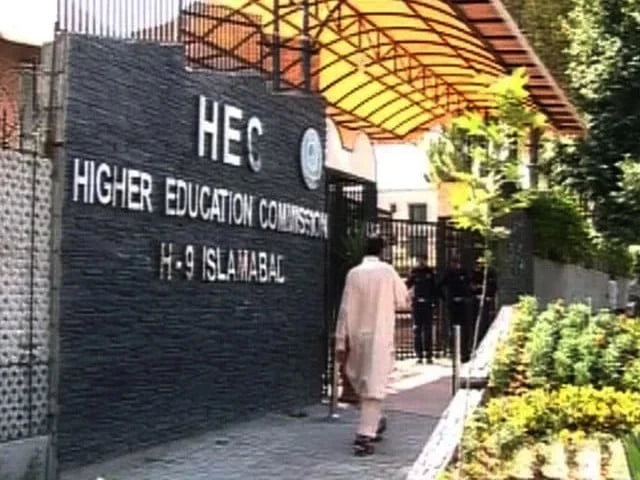
In a sweeping move, the Higher Education Commission (HEC) has imposed an immediate ban on the establishment, functioning and advertising of university sub-campuses at the tehsil level across Punjab and across the country.
The decision, conveyed through an official notification, has shocked public and private sector universities that had been rapidly expanding into smaller districts.
According to the directive, all pending and pending sub-campus projects have been suspended with immediate effect. Universities have been ordered to suspend admissions, recruitment, land acquisition and construction activities linked to such campuses.
The HEC has also clarified that no new no-objection certificates (NOCs), accreditations or permits will be issued for sub-campuses at the tehsil level until further notice.
The crackdown comes after internal reviews revealed that many of these sub-campuses in Punjab and other provinces were operating far below academic standards.
The major concerns highlighted in the notification include an acute shortage of PhD-holding faculty, inadequate student enrollment and weak infrastructure.
The HEC has stated that sub-campuses established without prior approval will not be granted academic status and degrees issued by such institutions will not be recognised.
An HEC official, speaking on condition of anonymity, said the move was taken after repeated warnings were ignored, adding that several institutions were prioritizing expansion over quality, which directly compromises the future of students.
“We cannot allow degree-awarding bodies to operate without meeting minimum academic standards,” he added. Investigations reveal that many illegal or unapproved subcampuses operated under the umbrella of parent universities but without formal authorization from the HEC.
In the large cities of Punjab, these campuses often rented small buildings in tehsil towns, offering limited programs with visiting or part-time faculty. In several cases, classes were held only on weekends, raising serious questions about academic rigor.
Education sector sources indicate that some universities used aggressive marketing campaigns to attract students from rural and semi-urban areas, promising recognized degrees and modern facilities. However, the reality on the ground painted a different picture: students faced problems such as lack of laboratories, libraries and qualified teaching staff.
A senior official of the Punjab Higher Education Department said they received multiple complaints from students and parents about the poor quality of education in these sub-campuses.
“In many cases, students were misled about the recognition status of their degrees. This action by the HEC is necessary to restore confidence in the system.” The issue has gained urgency in recent years as universities have increasingly sought to explore untapped markets in smaller cities.
Education experts believe that the absence of strict monitoring allowed institutions to exploit regulatory loopholes.
“Some universities set up sub-campuses without proper feasibility studies. They lacked essential facilities and relied heavily on temporary faculty. This is not sustainable for quality higher education,” said Muzaffad Mahmood, a Lahore-based academic.


