
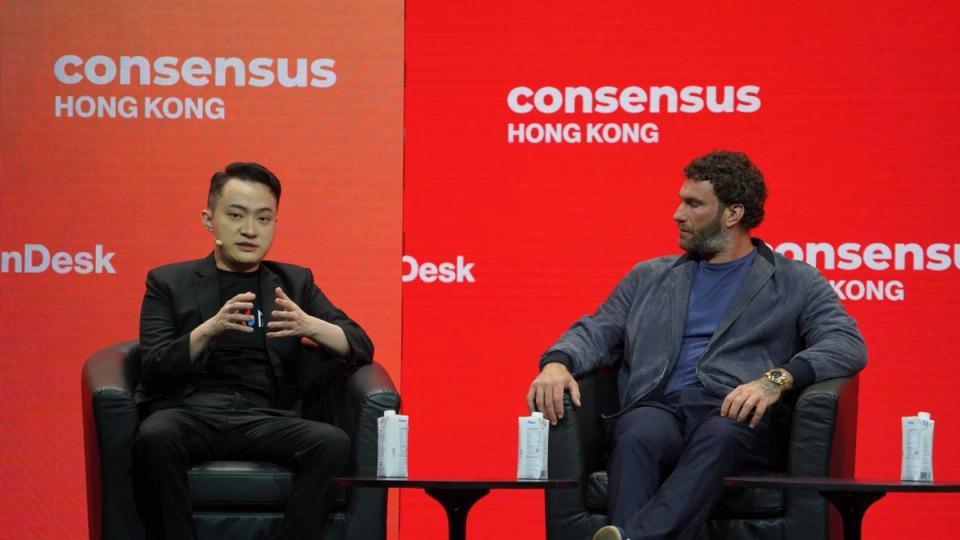
Tron creator Justin Sun on Tuesday sued World Liberty Financial, the stablecoin and cryptocurrency firm backed by members of US President Donald Trump’s family, alleging that the project had unfairly blocked his holdings of $WLFI, made fraudulent misrepresentations, and threatened and defamed Sun.
The lawsuit filed Tuesday, which includes a line about Sun’s support for Trump himself, alleges that World Liberty leadership had engaged “in an unlawful scheme to seize property” in the form of Sun tokens, which Sun alleged it had purchased after being solicited by the World Liberty team in 2024.
“At that pivotal moment for World Liberty, Mr. Sun invested $45 million to purchase World Liberty’s $WLFI tokens not only because of the project’s claims that it would promote the adoption of decentralized finance, an issue Mr. Sun cares deeply about and to which he has dedicated much of his life’s work, but also because of the Trump family’s association with the project,” the lawsuit says.
World Liberty asked Sun to continue investing through 2025, including through a request to mint the World Liberty $1 stablecoin, according to the document. “In July 2025, when it became clear that Mr. Sun would not invest or mint a dollar on his terms, the directors of World Liberty became hostile toward Mr. Sun.”
“World Liberty induced plaintiffs to make their investments in World Liberty through fraudulent misrepresentations and omissions about the economic rights and freedoms that would come with the purchase of $WLFI tokens,” the filing said.
These allegedly fraudulent misrepresentations include statements regarding the rights of token holders, various public statements by World Liberty or its executives regarding the governance rights of token holders, and statements regarding “freedom to transact.”
Sun’s lawsuit also alleged that World Liberty, despite presenting itself as a company operating in the decentralized finance sector, had centralized control over its tokens.
According to the complaint, World Liberty changed the smart contract governing $WLFI in August 2025 to add a “blacklist” feature that allowed the company to freeze tokens in specific wallets. The modification was not put to a governance vote or revealed to investors, Sun alleges, even though token holders had just approved a proposal to make a portion of the supply tradable.
“While the update is technically visible on the public blockchain, World Liberty buried it in the code without alerting token holders of its existence or implications,” the complaint states. “In the dead of night, the company created a ‘blacklist’ feature that I could use at will.”
The complaint alleges that World Liberty’s freezing of Sun tokens served a dual purpose: to pressure it into minting $200 million of the company’s $1 stablecoin on its Tron blockchain, and to manipulate the market price of $WLFI by preventing one of the largest holders from selling.
By blocking Sun’s position, the complaint argues, World Liberty “artificially boosted the market price of $WLFI tokens held by World Liberty’s founders and the company’s corporate treasury.”
World Liberty’s ability to issue, freeze, and even reallocate tokens may not only undermine its claims of decentralization, but also raise regulatory questions. The filing argues that those powers could qualify the company as a money transmitter under the rules of the U.S. Financial Crimes Enforcement Network, subjecting it to registration and anti-money laundering requirements.
Other allegations in the complaint include that “World Liberty made two overt threats” to Sun and its businesses. Chase Herro, one of the co-founders of World Liberty, allegedly threatened to burn Sun’s $WLFI tokens if Sun did not ask for his tokens to be burned.
“Second, Mr. Herro also falsely claimed that the know-your-customer (“KYC”) documentation submitted by Mr. Sun and the Sun companies in connection with their purchases of $WLFI tokens was inadequate,” the document said.
Herro threatened to report Sun to U.S. authorities, the lawsuit alleges.
Parts of the lawsuit were drafted. Another document attached to the lawsuit cited a confidentiality provision, saying that the Sun team was giving the World Liberty team the opportunity to decide whether these redacted provisions should remain sealed or not.
In a post on X, Sun said he had “tried in good faith to resolve this situation.”
“All I want is to be treated the same as any other initial investor who received tokens: no better and no worse,” he said.
A spokesperson for World Liberty Financial said they had no comment on the lawsuit.
“I also want the community to know that I strongly oppose the new World Liberty governance proposal released on April 15,” Sun said in his post.
Since Trump took office, Sun has visited the United States after previously staying away from the country. He was invited to Trump’s first memecoin dinner (tied to a different crypto project linked to Trump) last year.
Sun settled with the U.S. Securities and Exchange Commission last month and agreed to pay a $10 million fine to resolve a case brought by the former presidential administration.


