
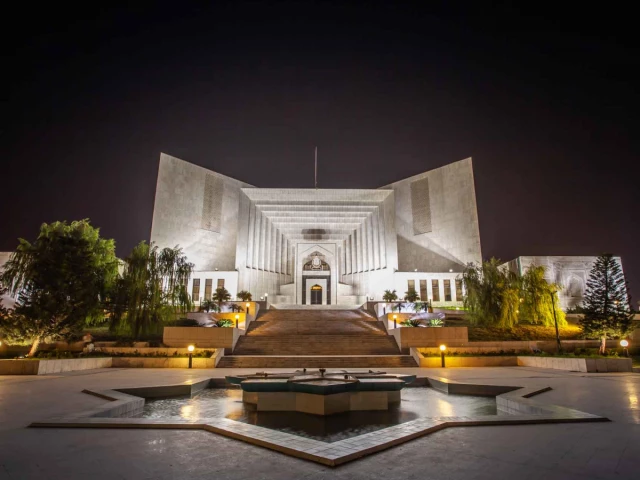
High court introduces e-hearing, e-filing and standard operating procedures for seamless, faster and transparent delivery of justice
ISLAMABAD:
The Supreme Court on Wednesday said it had set a new benchmark in digital justice delivery, reaffirming its commitment to a people-friendly, transparent and technology-driven judicial system.
In an official statement, the court said hearings of the cases were successfully conducted across the country using modern technology, enabling smooth court proceedings even in difficult circumstances.
A court in Islamabad conducted the proceedings while lawyers appeared online from Quetta, Karachi and Hyderabad. Chief Justice of Pakistan Yahya Afridi participated from Islamabad, while Justice Ayesha Malik joined the court remotely from Lahore.
The court noted that the process continued without interruption, even during emergency situations. The entire list of cases was heard by the Islamabad court, with litigants and lawyers joining in virtually from various cities.
Traditional paper records have largely been replaced by comprehensive digital records, significantly reducing the need to request documents from branch records.
Also read: SC implements new SOPs for uninterrupted judicial work during unexpected holidays
The Supreme Court said several key reforms have been put in place, including case barcoding, e-filing and e-office systems. The electronic transmission of court orders has allowed for the immediate issuance of decisions.
He added that videoconference hearings have helped bridge geographic distances, reduce litigation costs and expand access to justice.
Separately, the court said it had introduced new standard operating procedures (SOPs) on Tuesday to ensure uninterrupted judicial work during the unexpectedly announced holidays.
Issued by CJ Afridi, the SOPs aim to strengthen the efficiency and continuity of judicial operations. Under the new framework, priority will be given to urgent civil and criminal matters, including family cases, bail applications, criminal reviews, cases involving prisoners over the age of 80, restoration petitions, conciliation matters and cases involving short legal issues.
The statement added that measures have also been introduced to address the backlog of cases, and that at least 40% of the cases in each final cause list will consist of the oldest pending matters up to 2018.
Special facilitation has been provided to lawyers from Sindh and Balochistan, and their cases will be scheduled later in the week to accommodate travel and logistical constraints.
The court further said it plans to introduce an automated case fixation system to enhance transparency and objectivity while minimizing discretionary delays through algorithm-based prioritization.
The system will include weekly cause lists and monthly proposals, aimed at improving predictability and overall case flow management.


