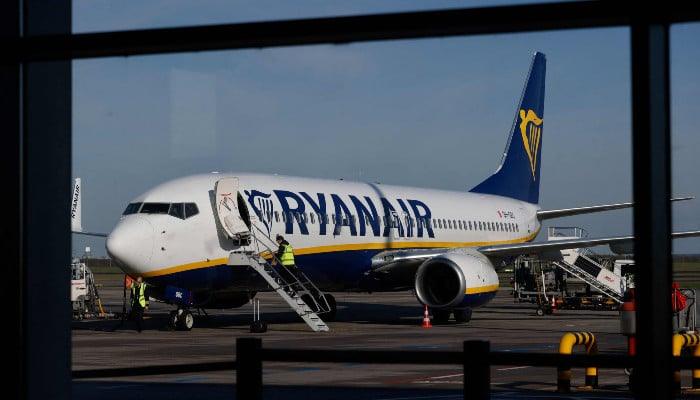
PARIS: Ryanair, Transavia, Volotea and other low-cost airlines are feeling the financial pain of high jet fuel prices as a result of the war in the Middle East and are cutting flights.
The closure of the Strait of Hormuz has taken a large chunk of oil supplies off the market, sending the price of jet fuel soaring and raising fears of a shortage that could force airlines to cancel flights.
Airlines are not waiting for the lack of supplies to react.
“Travel alert: Airlines are cutting thousands of flights right now,” Travel Therapy TV host Karen Schaler said in an Instagram Reel last weekend. “Book in advance.”
That advice would win the approval of Ryanair chief Michael O’Leary, who expressed concern earlier this month that fears of fuel shortages were causing people to postpone booking flights.
Low-cost airlines, which control just over a third of the global market by various estimates, are the first to feel the pressure due to the nature of their business model.
By having cheaper tickets, they have less capacity to absorb the increase in fuel costs.
Some of the cancellations may be the normal adjustments that airlines tend to make when demand does not meet expectations on certain routes.
“It’s not unusual for airlines to adjust their schedules at this time of year,” said financial analyst Dudley Shanley at investment bank Goodbody. AFP.
But “if jet fuel prices remain at this level, a little more cutting will have to be made for low-cost airlines,” he added.
If before the war airlines were able to maintain marginally profitable routes or even unprofitable routes, rising jet fuel prices will force them to make difficult decisions.
This will begin with many during the peak summer travel season.
“Unfortunately, it is very likely that many people’s holidays will be affected, either by flight cancellations or by very, very expensive tickets,” said EU Energy Commissioner Dan Jorgensen. News from heaven last week.
‘Faster than the bear’
How quickly airlines are reacting depends in part on the extent to which they secured fuel supplies at fixed prices in advance.

European airlines tend to do this to a greater extent than their rivals in other parts of the world.
Air Transat, a Canadian low-cost airline, has cut 6% of its flight schedule from May to October.
Southeast Asia’s largest low-cost airline, AirAsia X, announced on Friday that it would cut more flights and even some connections, without providing an overall figure.
Earlier this month, the unassuming Malaysia-based airline said it was raising fares by up to 40% and that around 10% of its total flights had been cut so far.
Hungarian low-cost airline Wizz Air has so far resisted cutting flights.
“We are not eliminating capacity, because I think the others will eliminate it,” its CEO, Jozsef Varadi, said recently, quoted by the specialized magazine Aviation Week.
“You don’t have to run faster than the bear, but faster than the one next to you,” he added.
You may have been thinking about the most dramatic cuts made to the industry by the German group Lufthansa, which had just announced that it would eliminate 20,000 flights from its schedule until October, in addition to suspending its regional airline CityLine.
Its European rival Air France-KLM has cut 2% of flights in May and June on its low-cost subsidiary Transavia.
KLM has kept cancellations to a minimum of 1% of its European flights.
Ryanair cited not fuel prices but high costs and taxes when it announced last week that it would reduce flights to and from Berlin from October.
It is also cutting 10% of flights from Dublin, criticizing the airport’s limited capacity.
Since the beginning of the month, the Spanish company Volotea has cut almost 1% of the flights from its summer schedule.