
There are currently 84,000 cases of HIV registered in the country and only 21,000 patients receive treatment.
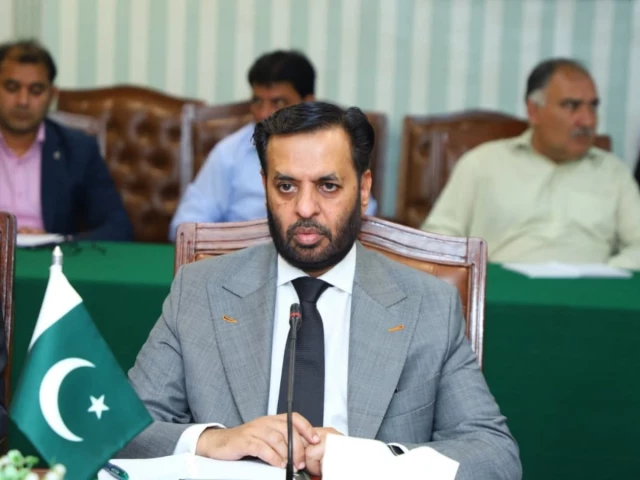
Minister of Health, Mustafa Kamal. Photo:
ISLAMABAD:
Health Minister Mustafa Kamal on Tuesday rejected reports of an HIV outbreak in Taunsa, Islamabad, stating that there were currently 84,000 HIV cases recorded in the country, with only 21,000 patients receiving treatment. Radio Pakistan reported
The minister was referring to bbc Report published in early April exposing cases of “gross negligence” in the children’s ward of a government hospital in Taunsa, Punjab, which continued months after the facility was linked to an HIV outbreak among children last year. An increase in HIV cases was first reported in late 2024 at the central hospital in Taunsa Tehsil.
The broadcaster reported that after 106 children were infected, officials announced a “massive crackdown” and suspended the hospital’s medical superintendent in March 2025. However, a source told the station bbc that conditions remain unchanged.
Addressing a press conference in Islamabad today, the minister stated that no outbreak had been reported in Taunsa or Islamabad in 2026, adding that the incident in Taunsa dates back to 2024.
“There are 618 cases recorded in Islamabad, including 210 local cases, while 408 are from outside the city,” he said.
Kamal said that according to experts, there should have been around 369,000 HIV cases in Pakistan, but only 84,000 were registered and 21,000 patients received treatment. The remaining patients were “missing.”
Read more: NA panel alarmed by HIV cases in Taunsa and seeks detailed information
The minister, providing data, said that in 2020, 37,944 people were tested in 49 centers across the country, of which 6,910 tested positive.
“By 2025, the number of testing centers has increased to 97, with 374,126 tests performed and 14,182 positive cases detected,” he added.
The minister stated that the trend remains “normal” and that there has been no sudden increase in infections.
He said there were 160 districts across the country and 68 HIV treatment centres, adding that the government was working to increase their number.
Kamal said the government was providing free medicines and added, “If these missing people do not take medicines from here, they will not get them from anywhere.” He stressed that HIV is not incurable and does not cause immediate death. “It’s a misconception,” he said. “The only condition is that the medication must be taken for life.”
The minister stated that “the treatment also prevents the transmission of the disease to other people”, and urged people not to hide their condition, as secrecy could lead to further spread.
Kamal said that while Pakistan had focused on preventing war, “fake news” about HIV had emerged during that period. He added that the use of reused syringes had been banned and that now even 10cc syringes would be single-use and not reusable.
The minister called the Global Fund “the real champion” in the fight against HIV/AIDS, but criticized the theft of $800,000 worth of medicinal mosquito nets, saying it is “shameful that the world is helping us, and this is what we are doing.”
He added that the health system was a matter of national security and warned that neglecting it could harm the economy.
Read more: 255 cases of Leishmania reported in South Waziristan
Last week, the National Assembly Standing Committee on National Health Services, Regulations and Coordination (NHSR&C) termed the rising cases of HIV in the country, particularly in Taunsa tehsil, as alarming and directed that a detailed report be presented in the next meeting. Highlighting the situation in Taunsa, where 331 cases had been reported, the committee sought clarification on the matter.
Medical experts at the Pakistan Institute of Medical Sciences (PIMS) HIV Center expressed concern over the rise in the number of patients and noted that the presence of HIV cases among children was particularly alarming.
Dr Zubair Abdullah, director of the AIDS Control Programme, said the apparent rise in cases at the PIMS HIV Center was largely due to more people coming forward for screening.
According to details published by the Ministry of National Health Services, The highest monthly figure was recorded in March 2026, with 40 cases, while in January 2026, 41 cases were recorded. In the first 20 days of April, 11 new cases were reported.
Male patients outnumber women, and cases have also been identified among transgender people, while HIV screening among children remains a concern.


