
Sources say Operation Ghazab Lil Haq will continue until all designated objectives are achieved.
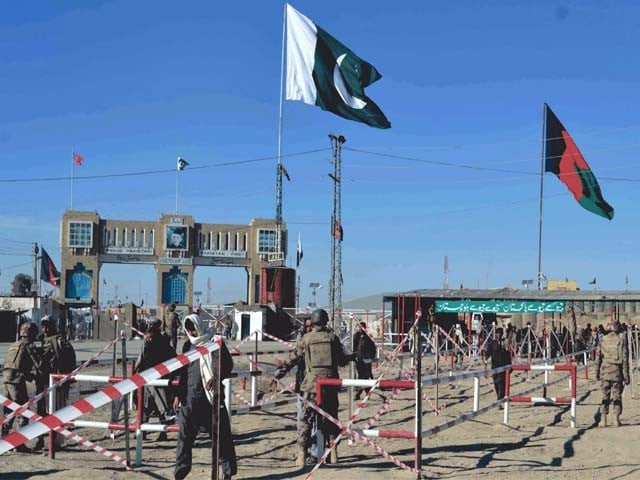
Pakistan-Afghanistan border in Chaman. PHOTO: ARCHIVE
Security forces launched a strong retaliatory response within the framework of Operation Ghazab Lil Haq after unprovoked aggression by the Afghan Taliban and terrorists along the Pakistan-Afghanistan border, security sources said on Wednesday.
According to sources, the armed forces carried out precise attacks in the Chaman area, attacking and destroying several posts and vehicles of the Afghan Taliban. They said the effective response forced Afghan Taliban fighters and their affiliated terrorists to withdraw from their positions.
They added that the ongoing military action reflects the armed forces’ unwavering determination to defend the country’s territorial integrity and ensure border security.
“Operation Ghazab al-Haq will continue until all designated objectives are achieved,” security sources said, maintaining that Pakistan’s security forces remain fully prepared and committed to respond with force to any cross-border aggression.
Also read: Pakistan army responds to unprovoked aggression by Afghan Taliban: security sources
On Tuesday, security forces carried out retaliatory attacks on key locations, including the Ariana compound, Dabgai checkpoint, police headquarters and Zakarkhel post, which were destroyed.
The Pakistan Air Force also attacked positions in Laghman province, destroying a weapons depot, the ABF battalion headquarters and the Nangarhar brigade. The sources further said that a Taliban outpost near the Mohmand sector was also destroyed, emphasizing that only Afghan military targets were attacked in accordance with international law.
On April 15, three civilians, including two children, were martyred and three others injured when Afghan Taliban forces carried out unprovoked shelling on local residents in a border area of Khyber-Pakhtunkhwa’s Bajaur district, according to state media.
The incident marked a new episode of cross-border aggression after a gap of more than a month, following Operation Ghazab Lil Haq, launched in response to earlier unprovoked hostility from the Afghan side.
Operation Ghazab Lil Haq was launched in late February following fresh clashes along the Pakistan-Afghanistan border, after Afghan Taliban forces fired at multiple locations, prompting swift military retaliation by Pakistan.
Since then, neighboring countries have intensified hostilities along the border. Clashes intensified after Afghanistan launched a border offensive in response to Pakistani airstrikes on terrorist positions and subsided during a temporary ceasefire on the occasion of Eidul Fitr.
Read more: Three civilians killed in unprovoked cross-border shelling by Afghan Taliban in Bajaur, KP: state media
The escalation of tensions between the two countries followed a series of tit-for-tat actions over the past year.
Earlier, Pakistan carried out airstrikes against TTP camps and the Islamic State’s Khorasan province inside Afghanistan after a wave of attacks in Pakistan, including a suicide bombing in Islamabad.
Islamabad has long maintained that TTP leaders operate from Afghan territory, a charge Kabul has repeatedly denied.
Tensions also rose after a series of explosions in Kabul on October 9 last year. Taliban forces subsequently attacked areas along the border with Pakistan, prompting Islamabad to respond with cross-border bombings.
The exchanges caused casualties and damage to infrastructure on both sides and led to the suspension of trade after the closure of border crossings on October 12, 2025.


