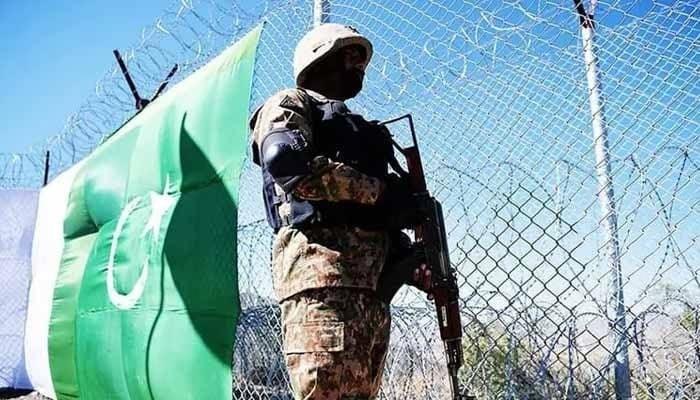
Acts of terror committed by entities like the TTP and now its equally virulent variants like Ittehad-e-Mujahideen-e-Pakistan (IMP) have continued in a sine wave since the launch of Operation Ghazab Lil Haq.
The latest attacks are a gruesome reminder of the terror that still stalks the newly merged and settled districts of KP. The impunity and persistence of the attackers reflects their determination and sinister desire to achieve their objectives despite suffering heavy losses at the hands of the Pakistani LEA.
Operation Ghazab Lil Haq was the right decision, after a long delay, and demonstrated the clarity and determination of the State to confront terrorism head-on, without any ambivalence or ambiguity. However, the reality of the battle against terrorism, which has internal and external accomplices, must be understood through an honest assessment of the underlying causes and enabling factors that sustain terrorism. Afghanistan, being the main source of terrorism, is ruled by a cabal that captured Kabul through the power of arms and is not beholden to public opinion or a political settlement.
The result of this reality is the cocky and uncompromising attitude of the Taliban leaders. Multiple factions within them continually compete for influence, agreeing on one thing: accumulating more power. The ferment that unites these disparate militant factions is a shared politico-religious perspective and a history of joint struggle against foreign intruders.
It is for this reason that the Afghan Taliban regime cannot confront the terrible combination of terrorist groups operating in Afghanistan, each of which sells its own agenda. Meanwhile, the Afghan Taliban government is fragmented across multiple power centers. The ‘Kandahari’ faction, led by Mullah Hibatullah Akhundzada, which combines spiritual and temporal power, occupies the traditional seat of government in Afghanistan in Kandahar, and is the most regressive in its outlook.
The next faction is the Haqqani group, which comprises the Zadran tribal leadership and has influence in the eastern and northern regions, including Kabul. The group has greater muscle power and is creating its own representatives, such as the IMP, to expand its reach and effectiveness outside of Afghanistan. The third main faction is the National Resistance Front (NRF), which comprises the former Northern Alliance and includes Tajiks, Uzbeks and Hazaras, plus a few disaffected Pashtuns against the Taliban.
Another power faction, the TTP (Fitna tul Khawarij), operates in eastern Afghanistan, in Paktika, Paktia, Khost and Nangarhar. The reach of the faction and its new rival IMP, with the active help of the Haqqani faction, has now extended towards Kunar as well. Terrorist entities such as Al Qaeda and ISKP are also active in Afghanistan, with the latter having a considerable presence in Nangarhar and Kunar. Lately, all these terrorist groups have started sharing intelligence and training experience with each other and are acting as feeders for each other. American weapons and ammunition abandoned in Afghanistan are being used by these terrorist networks, who are not short of money due to an illicit war economy.
Due to widespread poor governance and an illegal economy, Afghanistan is becoming poorer while its rulers become richer. Individual factions are becoming stronger and accumulating wealth and military strength. Completely devoid of diplomatic sense and international obligations, the regime is ignoring UN resolutions that demand the denial of sanctuaries and support for terrorist networks. Under international isolation, the Taliban regime is taking advantage of covert illegal aid from countries like India to wage a proxy war against Pakistan.
As the TTP and its leader, Nur Wali Mehsud, moved closer to the Kandahari faction, the Haqqanis created the IMP as a countervailing force, which now has more suicide bombers than the TTP. The Lashkar-e-Islam and Hafiz Gul Bahadur factions are also part of the IMP now.
There are certain external and internal realities that the Pakistani authorities must recognize. On the external front, it must be understood that the current Afghan rulers are inspired by both their twisted ideology and Afghan irredentism.
Pakistan has lost a space in Afghanistan that it needs to regain, especially in the form of an effective counter-terrorism network. Pakistan’s kinetic response has created some impact, but due to the non-elimination of the TTP’s top leadership, the overall ability to foment terrorism remains intact. The TTP and IMP are becoming more active on social media and using mobile phone technology to the fullest for recruitment, planning and propaganda. This is an area where Pakistan’s cyber response needs considerable improvement.
As the LEA continues to pressure terrorists and their sponsors, the political and diplomatic arms of the State should engage with elements wielding influence in the Afghan regime to achieve a diplomatic breakthrough. All these efforts must continue to keep countries in the region such as China, Iran and Central Asian states informed. There is a possibility of an internal conflict pitting the Haqqanis (including the IMP) and the NRF against the Kandahari faction.
Internally, it appears that the TTP and now the IMP retain the ability to launch attacks against civilian and LEA targets. There are areas where terrorists find refuge due to their coercive tactics and tribal affiliations, as the population still fears them. Pakistan needs a unified national response in which the KP government lends a willing and effective hand to the federal government’s counter-terrorism efforts.
David Galula, the dean of counterinsurgency, recommends, among other things, strengthening an “active minority” among the people who can fight on behalf of the state and win over more people.
Most importantly, the people of the merged districts deserve the governance and development dividends that were promised when these areas were merged into KP.
The writer is a security and defense analyst. He can be contacted at: [email protected]
Disclaimer: The views expressed in this article are those of the writer and do not necessarily reflect the editorial policy of PakGazette.tv.
Originally published in The News