
ISLAMABAD:
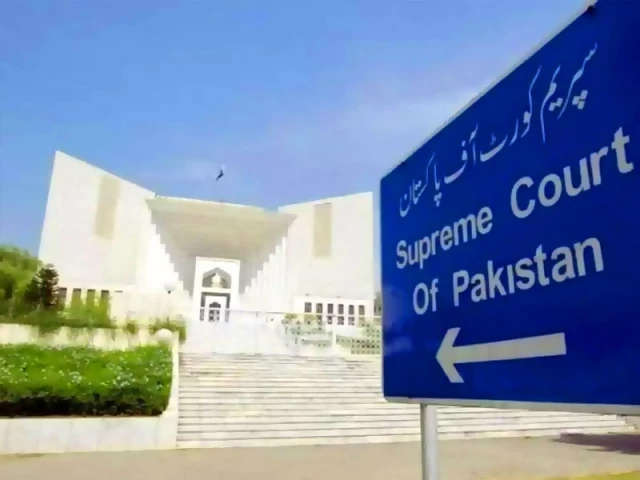
The Supreme Court has refused to consider the petition of the Lahore Bar Association (LBA) challenging the 27th Constitutional Amendment and the subsequent transfer of three judges of the Islamabad High Court (IHC) to different high courts.
The Supreme Court recorder’s office is learned to have returned the petition to the Advocate-on-Record (AOR) without issuing a written order. The petition was filed through senior advocate Hamid Khan.
Interestingly, none of the interested parties in good faith have challenged the 27th Amendment before the Federal Constitutional Court (FCC). Lawyers who oppose the 27th Amendment still hope that the Supreme Court will safeguard the independence of the judiciary.
However, legal experts question whether it is reasonable to expect the Supreme Court to accept a petition against the amendment when CJP Yahya Afridi himself is considered a beneficiary of the 27th Amendment.
A senior lawyer said that even if the Supreme Court no longer had jurisdiction under Article 184(3), it was still the duty of the registrar to inform the petitioners in writing. “It is like the return of a complaint in a civil process. That has to be done by written order,” he added.
It is also learned that the LBA will soon file an appeal against the registrar’s refusal to consider the petition.
Before the 27th Amendment, if the South Carolina registrar’s office returned a petition, objections were conveyed by a written order that could be challenged by appeal in chambers. However, in the present case, the petition was returned without a written order.
In its petition, the LBA argued that the judicial powers of the Supreme Court could not be taken away by another branch of government, namely Parliament. He argued that such an amendment undermined the Constitution and destroyed judicial independence.
“The said Constitution (27th Amendment) is, therefore, unconstitutional and void, and the Supreme Court, being an indivisible judicial institution at its apex, cannot have its powers and jurisdiction taken away,” the petition states.
The petition further argued that the independence of the judiciary – including the appointment, transfer and dismissal of high court judges – was part of the basic features of the Constitution and therefore could not be amended.
He argued that Parliament, being a constituted and non-constituent body, lacked the authority to amend Article 200 in a manner that allegedly undermined judicial independence and subordinated the judiciary to the executive.
The petition also contended that despite Article 239(6) and past constitutional amendments that sought to eliminate judicial review, the high courts retained the power to review constitutional amendments that violated basic or salient features of the Constitution.
He further argued that the newly created FCC could not hear 27th Amendment challenges because its very creation and jurisdiction were in question.
According to the petition, FCC judges were beneficiaries of the amendment and therefore could not rule on its constitutionality. The LBA also challenged the transfer of IHC judges under the amended Article 200, arguing that the transfers lacked disclosed reasons, criteria, transparency and demonstrable institutional need.


