
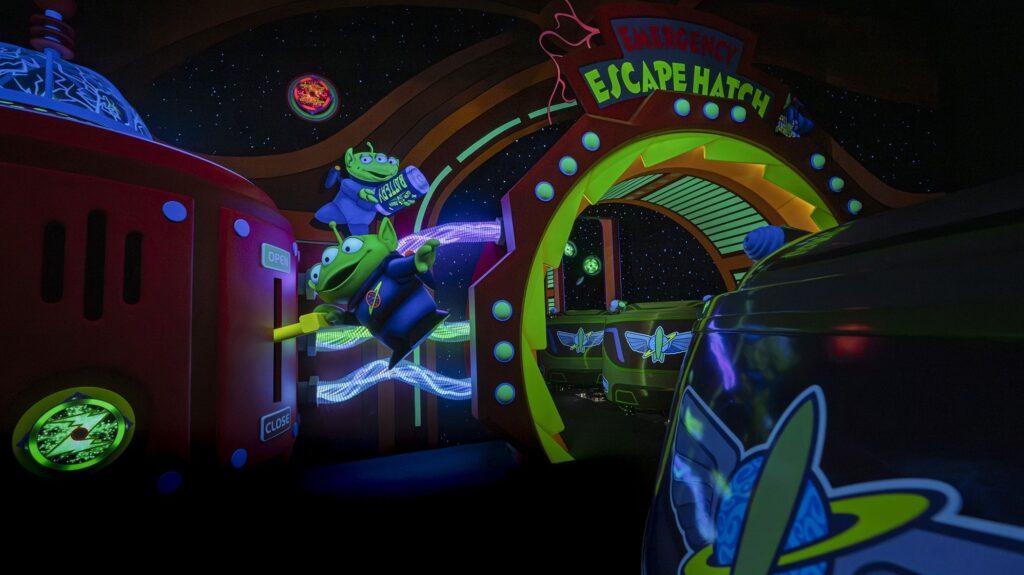
We are just a few weeks away from the Toy Story franchise returning to the big screen with toy story 5but in the lead-up, Disney has been quietly upgrading one of its most iconic attractions themed after one of Walt Disney World’s main characters.
Buzz Lightyear’s Space Ranger Spin is a staple of Magic Kingdom in Orlando, Florida: a classic interactive dark ride where guests board a spinning vehicle, pick up a blaster, and try to rack up points by hitting targets while helping Buzz Lightyear and Star Command defeat Zurg.

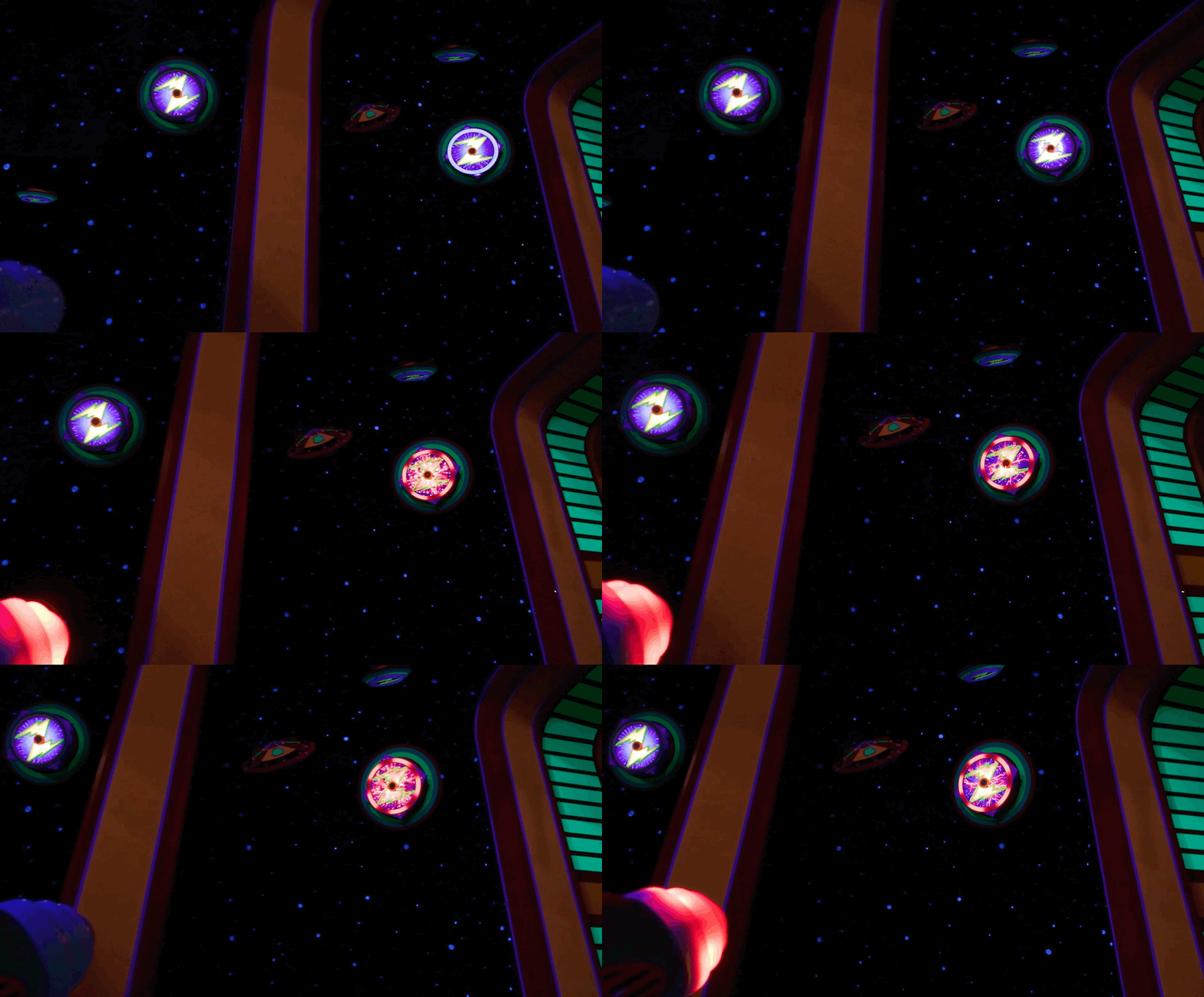
Spoiler: a lot of technology is used here. New haptics inside completely redesigned blasters, improved tracking systems and on-board computers.
In essence, the biggest change in Buzz Lightyear’s Space Ranger Spin is not visual, but interactive. The attraction has always been a competitive shooter-style game, but the new version is designed to be much more responsive and dynamic in the way it reacts to visitors in real time.
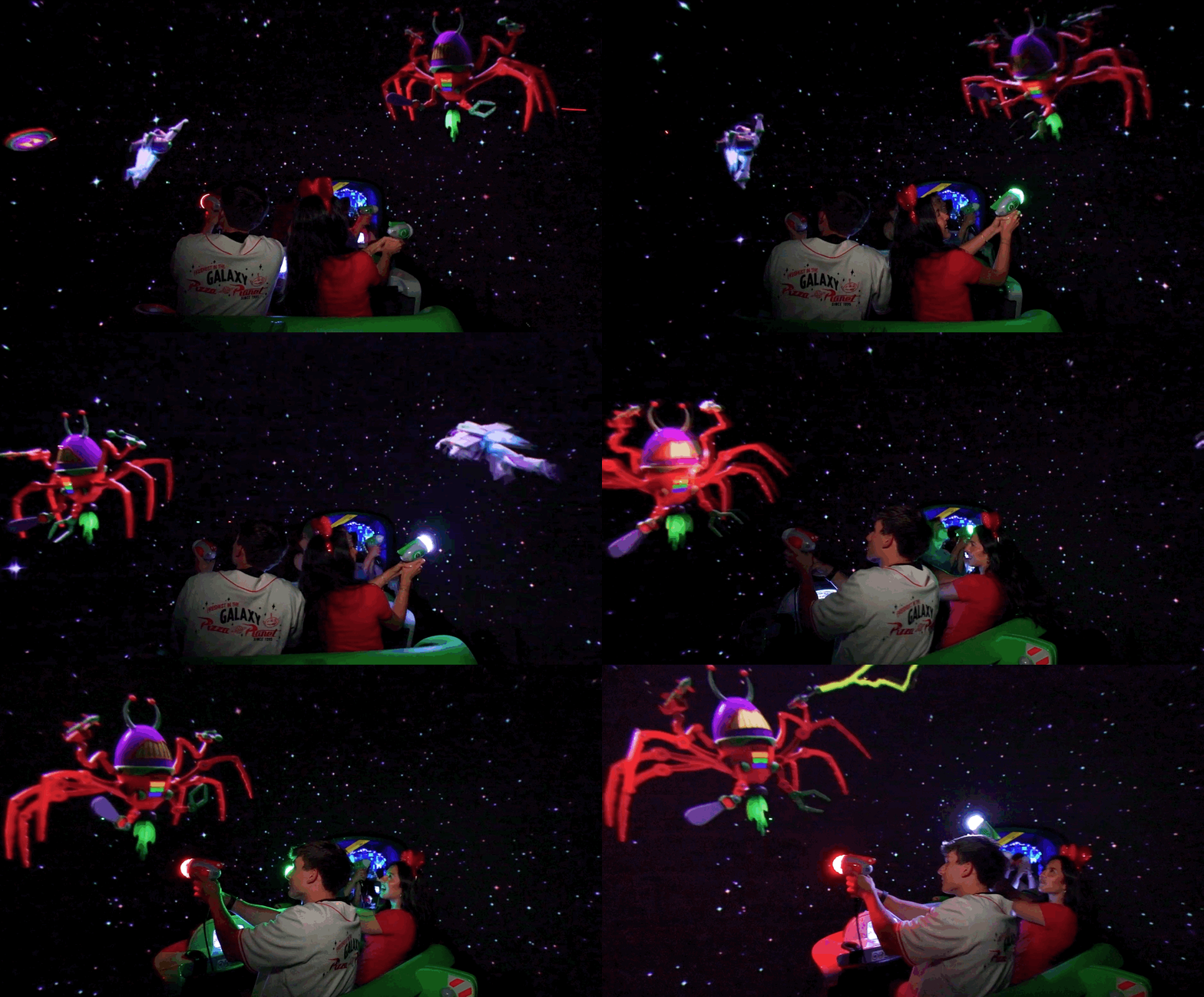
That starts with the new blasters, which are no longer attached to the vehicle but can be lifted and aimed freely. They vibrate with haptics and play audio feedback to confirm when you’ve made contact with a target – changes that make moment-to-moment gameplay feel much more immediate.
The most significant change is in what you’re actually shooting. Goals are no longer static accessories. They light up, change color, and have dynamic point values that change throughout the ride, effectively turning the attraction into something closer to a real-time game than a traditional dark ride.
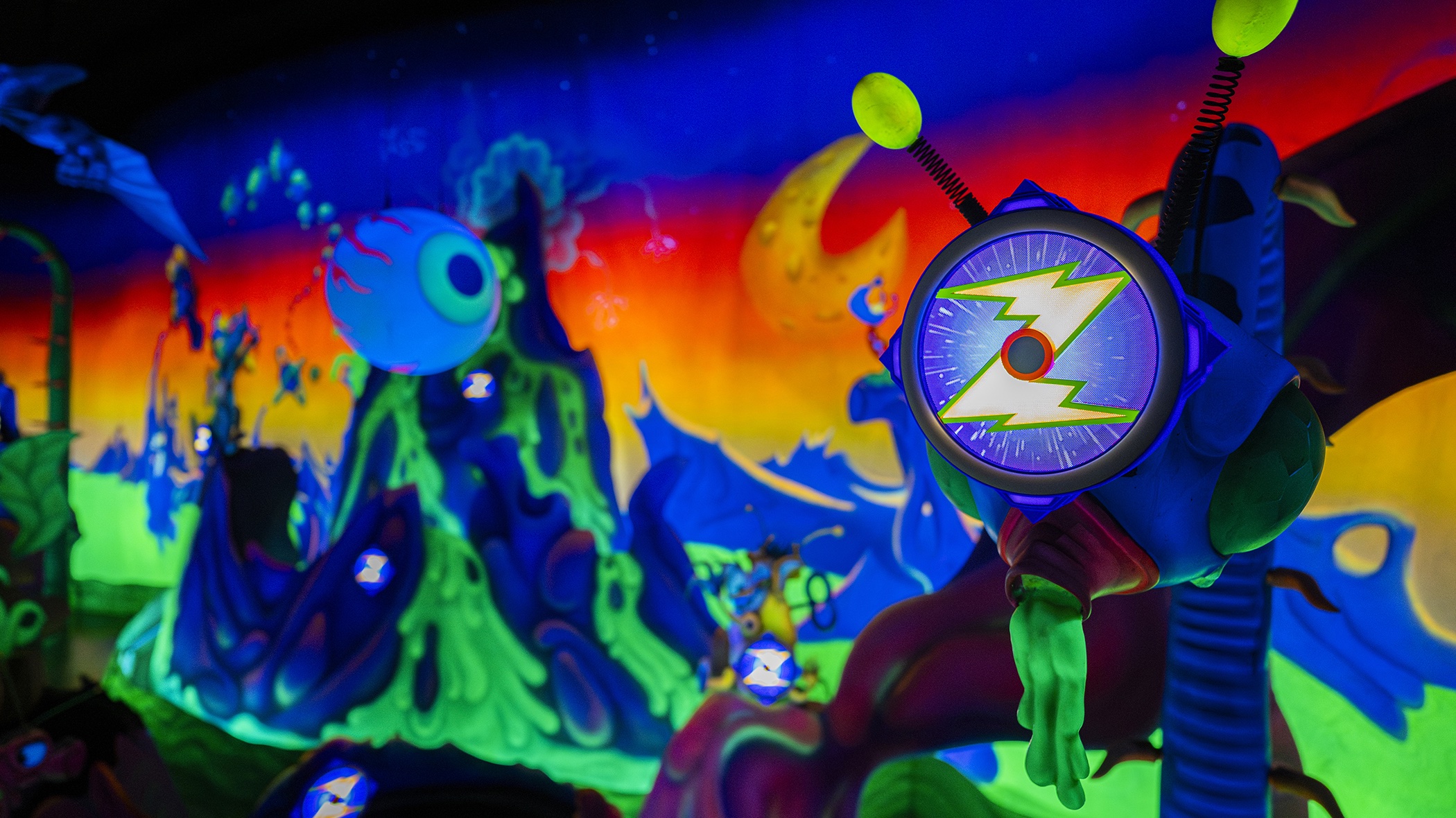
Klein says that was the fundamental goal of the design. “The dynamic nature of the objectives is the biggest leap,” he explains. “Before it was a very static attraction. None of the targets necessarily reacted. It was hard to see where you were aiming and what you were actually hitting.”
Goals now encourage visitors to explore the entire environment rather than focusing on a single high-value location. “With these targets that light up different colors and have different dynamic scores, it really encourages the guest to look around,” Klein said.
He is quick to point out that the underlying technology philosophy was “innovation versus invention”: taking tried-and-true technology and carefully implementing it. “A lot of what was done here was taking the best of all the different Buzz Lightyear attractions around the world, and some other attractions as well, and trying to combine them into something that kept the soul of the original, but leveled it up where we could.”
The most technically surprising aspect of the renovation isn’t something guests will see: it’s what’s running beneath the surface, powered by Epic Games’ Unreal Engine.
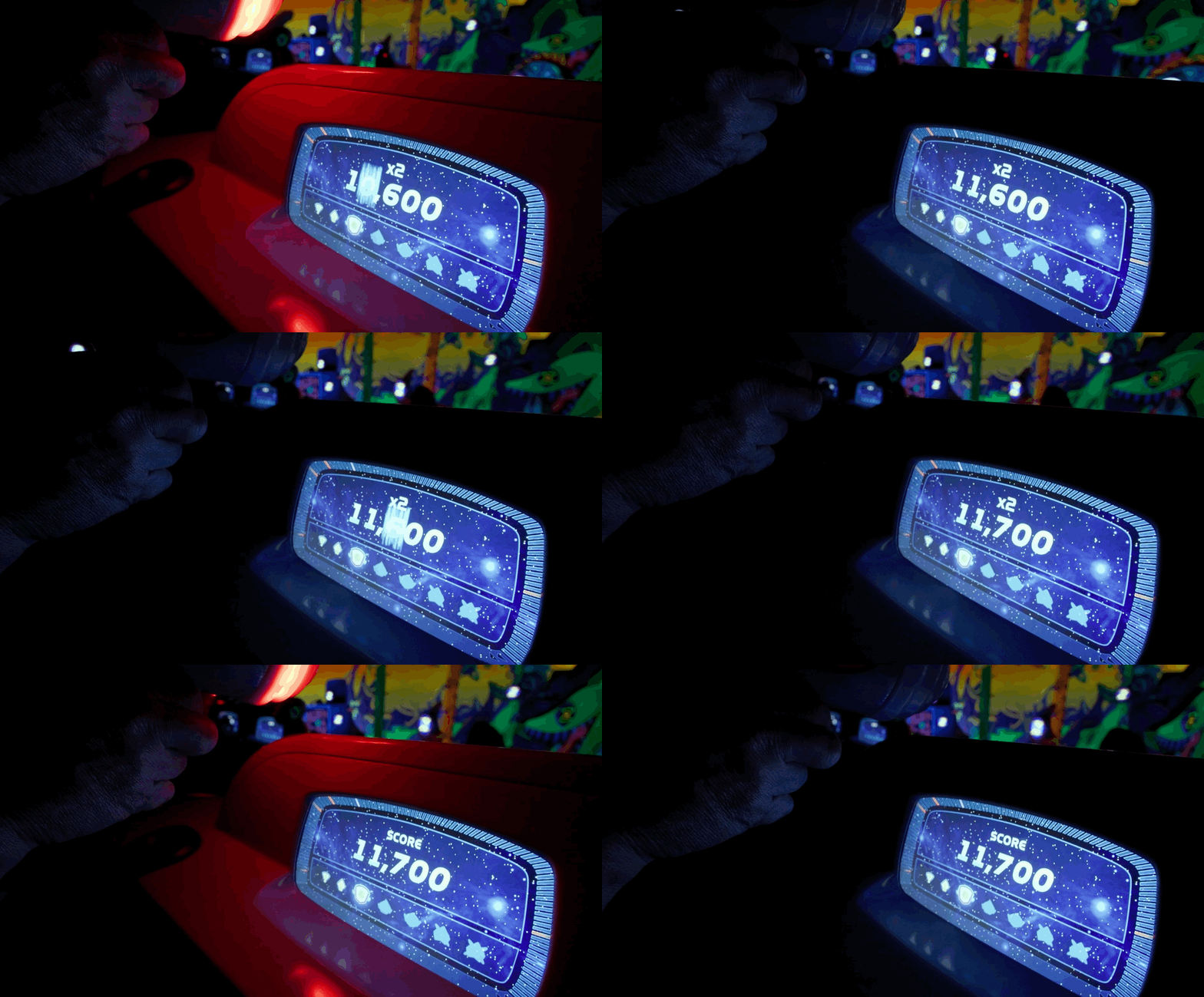
“Each ride vehicle actually hosts Unreal Engine for the scoring content that you see,” Klein explains. Dynamic score screens that show your rank and progression to the next level do not come from a static resource library. Each vehicle runs two independent implementations of Unreal, one per player, as each car seats two, generating that content locally in real time.
It’s a noticeably different application of game engine technology than what Disney typically uses on major attractions. “This is a really interesting way to use the technology in an integrated context,” says Klein, separating it from larger projection-based systems like the one used on the Millennium Falcon, which itself will be updated on May 22 with new thematic elements. tthe mandalorian and grogu.
Beyond the vehicles, all of the attraction’s objectives and scoring systems are networked. Klein notes that more than 200 machines are managed daily to keep everything synchronized and consistent. The result is an attraction that behaves less like a single attraction and more like a distributed computing system.
The same engine also played a central role in the creative process, particularly in collaborating with Pixar on the attraction’s projected media, most notably a hyperspace tunnel scene, which is probably my favorite addition.
“We were able to work with Pixar to develop the entire attraction in a virtual preview environment,” explains Klein. For the hyperspace scene in particular, drafts of Pixar’s media were loaded directly into the simulation, allowing Imagineering’s creative director to walk through the space in virtual reality and evaluate how the media reads from different angles within the physical room.
That was important because the projection space has an unusual shape. “The room is an odd shape, so it was a unique challenge to ensure that the media really read well from all the different angles and perspectives from the vehicle,” says Klein.
The same environment was used to test motion profiles for new figures, including a new animatronic named Buddy, and to evaluate how scenes would read from a vehicle moving at real speed.
It’s a truly impressive use of technology, not just as a tool for cross-coast remote collaboration, but as a shared reference point that allows different teams to weigh in at every stage of the process. Especially useful for a trip like this where teams from Walt Disney Imagineering and Pixar Animation Studios worked together.
What emerges is a version of Buzz Lightyear’s Space Ranger Spin that still looks familiar on the surface but works in a fundamentally different way. The design, the history, the vehicles, everything preserved.
Klein’s personal best on the ride is 20.1 million points, a score he says took more than 100 rides and some lucky slowdowns to achieve.
For Disney Imagineering, the revamp is another step toward treating physical attractions less as static environments and more as evolving software-driven systems that take guest immersion to infinity and beyond.
Or as Klein says: take something beloved and “level it up and just improve it where we can.”

Follow TechRadar on Google News and add us as a preferred source to receive news, reviews and opinions from our experts in your feeds.


