
ISLAMABAD:
Pakistan, along with other countries in the region, is believed to have been pushing for a “standby agreement” aimed at formally ending the war between Iran and the United States while establishing a framework to resolve contentious issues that continue to divide Tehran and Washington, it emerged on Thursday.
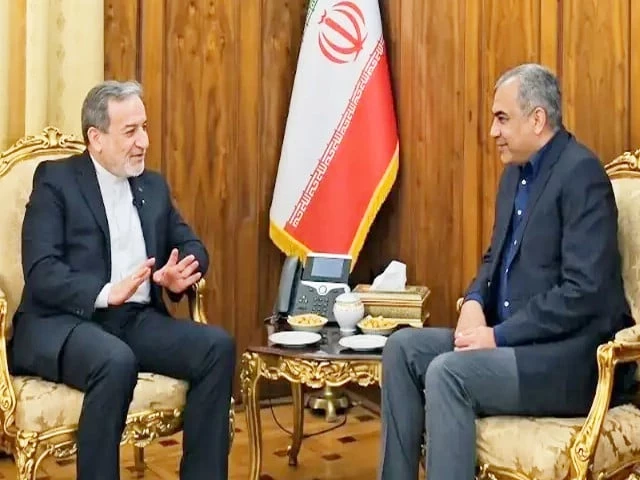
As part of those efforts, Interior Minister Mohsin Naqvi continued his engagements in Tehran during his second visit within days, holding talks with key Iranian figures, including Foreign Minister Abbas Araqchi and Interior Minister Eskandar Momeni.
Iranian state media IRNA reported that Naqvi also met with President Masoud Pezeshkian, who reviewed the latest regional developments and diplomatic consultations linked to talks between Iran and the United States.
According to the Iranian side, President Pezeshkian appreciated Pakistan’s role and support for regional stability and constructive engagement.
The Iranian Foreign Ministry separately confirmed that Tehran was currently reviewing a new US proposal aimed at ending the war.
Diplomatic sources said that unlike previous proposals, the latest initiative sought to break the current impasse through what President Trump had previously described as a “letter of intent,” actually a standby agreement designed to provide an exit path for both sides.
The proposal essentially seeks a formal end to hostilities while establishing a broader framework for negotiations over unresolved disputes.
However, one of the main sticking points remains the status of the Strait of Hormuz.
The United States, Gulf countries and other states dependent on the key sea route want the Strait to return to its pre-war state to ensure uninterrupted global energy supplies.
Iran, however, insists it has sovereign rights over the strategic chokepoint, through which nearly a fifth of the world’s oil supply passes.
Iranian media reports also suggested that a senior Pakistani military figure could travel to Tehran in the coming days in an effort to help finalize the deal.
Islamabad, however, remained tight-lipped and did not offer any official confirmation about the possible visit.
Sources said such a high-level trip would likely take place only if Naqvi’s current engagements produced tangible progress on the diplomatic front.
The US Secretary of State also said Thursday that Pakistani officials will travel to Tehran. “So, hopefully, this will move this forward further,” he told reporters.
“The president’s preference is to reach a good agreement, that is his preference. It has always been his preference. If we can reach a good agreement, that would be fantastic,” Rubio said.
“But if we can’t reach a good deal, the president has been clear: He has other options. I’m not going to elaborate on what they are, but everyone knows what they are.”
He added: “There are some good signs, but… I also don’t want to be too optimistic, so let’s see what happens in the next few days.”
According to observers, the latest provisional agreement proposal is aimed at ending the perpetual uncertainty that has gripped the region since the conflict broke out.
Without a formal end to hostilities, they warn, the region could remain mired in instability while the specter of another round of war continues to loom.
For that reason, Pakistan and several regional players are intensifying their diplomatic efforts to ensure that the current initiative does not fail.


