

- Nvidia showed off DLSS 5 again at its Siggraph 2026 keynote
- Team Green made it clear that developers will have a level of control, being able to choose between three different AI models.
- There will be two sliders to play with and skins to prevent DLSS 5 from interfering with game resources where it is not necessary, but many players think that developers should have much more control than this.
Nvidia has given us another taste of DLSS 5, the incoming technology for its GeForce GPUs that received a very stormy reception when it was first revealed at GTC 2026 and, as expected, changes have been made in recent months.
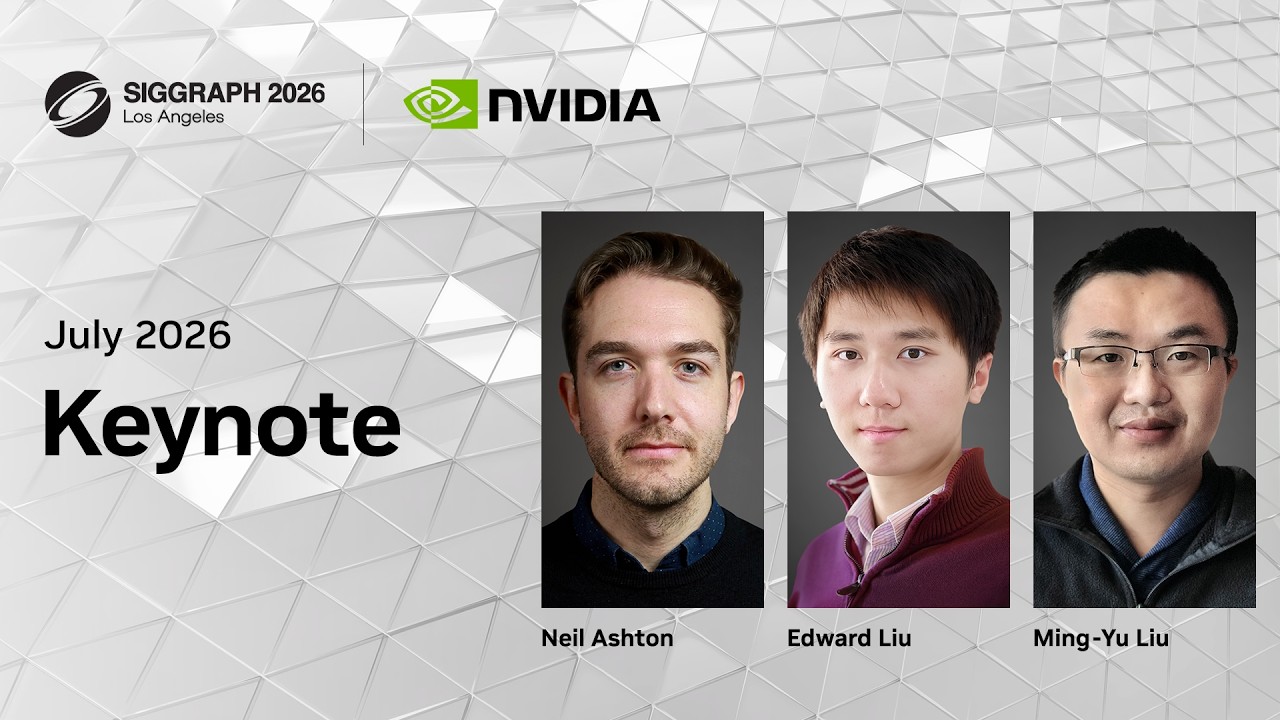
Tom’s Hardware reports that Nvidia revealed more about how DLSS 5 will be implemented at Siggraph 2026 in Los Angeles, where the technology was the main topic in Team Green’s keynote.
Nvidia was keen to point out how the neural rendering model has changed in some key ways since DLSS 5 was first announced. Of course, it’s obvious that a lot of this has to do with combating the idea that the technology is an ‘AI downfall’ that makes games look worse rather than better, and characters (particularly faces) look bad and have that undesirable ‘uncanny valley’ effect. And indeed, criticism that DLSS 5 is altering the art direction and overall feel of a game’s graphics.

On this last point, in the original reveal, Nvidia emphasized that it would give game developers control over the end result with DLSS 5, and now we’re seeing how it will work. Team Green has built in three different AI models that offer different levels of detail (and performance impact), so developers can choose between three different filters, essentially.
This isn’t a game-wide choice, however, as the developer can apply any of those models to any different scene, mixing and matching them as needed. There are also two sliders to adjust the intensity of the “structure” and “tone” of the effects.
On top of that, the developer can mask any game assets where they don’t want DLSS 5 to be applied. That’s good news as it means that, for example, character heads (and faces) could be marked as out of bounds and therefore not subject to Nvidia’s technology. The developer could simply get DLSS 5 to improve background objects and details, and maybe only in a relatively minor way (by toning down those intensity sliders).
To clarify, DLSS 5 is essentially an AI filter that sits on top of the existing DLSS technology suite. Below that, you still have upscaling (and frame generation), and Nvidia applies what is essentially a photorealism filter on top of that in the form of this new neural rendering model.
If you want to eat some popcorn, Nvidia’s full Siggraph presentation is available to watch on YouTube, check it out below. All the DLSS 5 stuff is at the beginning (well, beyond the usual preamble).
Look
Analysis: a step forward, but skeptics remain
So has Nvidia managed to appease the DLSS 5 haters? No, in a word. Did you really think I would?
As one Redditor said: “I had so many hopes for DLSS in the early days, it’s turned into a dumpster fire.”
Another observed: “Confirming what anyone with a basic understanding of AI already knew. Glorified Instagram filter.”
To be fair, overall the reaction has been somewhat more positive compared to the original reveal, and it’s clearly a good thing that the game developers can at least keep the ‘yasified’ faces out of the mix with the characters. Clearly, there is a level of control here, but even though Nvidia acts more carefully in this regard, there is still a feeling that it is not doing enough.
The choice of three AI models and a couple of intensity sliders is relatively limited, really, and a far cry from anything resembling a full level of control over how DLSS 5 imposes itself on a game. Although it’s true that there’s still a long way to go before DLSS 5 comes out (it’s supposedly coming later this year, in the fall (theoretically, anytime from September to November)) and Nvidia could implement additional controls before launch.
Aside from disappointment at the level of control Nvidia is giving developers, the other issue raised is the impact this AI filter could have on performance. When Nvidia first demonstrated DLSS 5, it was running on a pair of RTX 5090 graphics cards, and in this most recent presentation, there’s no mention of the hardware involved.
It’s pretty easy to guess that GPU demands haven’t dropped significantly yet; otherwise Nvidia would probably be shouting about it, and some interpret it as a concern. I understand where they’re coming from, although Nvidia has clarified that the technology will run on a single graphics card (it will have to, of course), adding on Siggraph that DLSS 5 is “VRAM efficient” (a very vague claim).
For starters, I would expect that it probably won’t work with anything less than an RTX 5080, or even an RTX 5090. And the other fear is that the initial incarnation could be quite difficult in terms of gadgets and the like, and that’s a danger with the first version of any technology. Just look at the original DLSS (version 1), which suffered from blurring and glitches, before they were polished and became a truly impressive scaler. Perhaps the same will happen with DLSS 5, but there is still a long way to go and, in particular, many more doubts and question marks here.

Follow TechRadar on Google News and add us as a preferred source to receive news, reviews and opinions from our experts in your feeds.
The best graphics cards for all budgets


