The latest outbreak of this deadly disease, which the WHO has declared a public health emergency of international concern, is spreading faster than health workers can contain.
In the Democratic Republic of the Congo, the epicenter of the outbreak, the WHO has upgraded its national risk assessment from high to very high, and neighboring countries – including Uganda, where five cases and one death have been confirmed – are at especially high risk.
Treatment centers set on fire in eastern Democratic Republic of the Congo
However, efforts are being hampered, especially in the restive east of the Democratic Republic of the Congo, by local community distrust of outside authorities, which is significantly increasing the risk of disease transmission.
In recent days, two treatment centers were burned in the region, hit by intense fighting, which displaced more than 100,000 people.
Marie Roseline Belizaire, Director of WHO Emergency Response in Africa, said PakGazette that the attacks are related to disinformation campaigns circulating on social media, which are significantly slowing case investigations and limiting the ability of health care teams to reach affected communities.
Anger over Ebola burial rules
The strict protocols surrounding the burial of suspected Ebola victims have been a source of anger among the population. Authorities in northeastern Democratic Republic of Congo have banned wakes involving more than 50 people, and soldiers and armed police have been monitoring burials carried out by health workers.
According to Dr. Belizaire, WHO is working with local traditional leaders and healers to intensify community participation and improve the safety of external health workers.
The families of the victims have access to mourn their loved ones but, to protect them from the virus, they are not allowed to touch the body. “We provide the family with protective equipment,” explains Dr. Belizaire, “so they can help place their loved one in a body bag and pray for them.”
No vaccines
Although the outbreaks date back almost 20 years, there are still no approved vaccines or treatments for the Bundibugyo virus.
The WHO has recommended prioritizing two antibodies in clinical trials and evaluating the antiviral obeldesivir in a clinical trial as a treatment for people who are high-risk contacts.
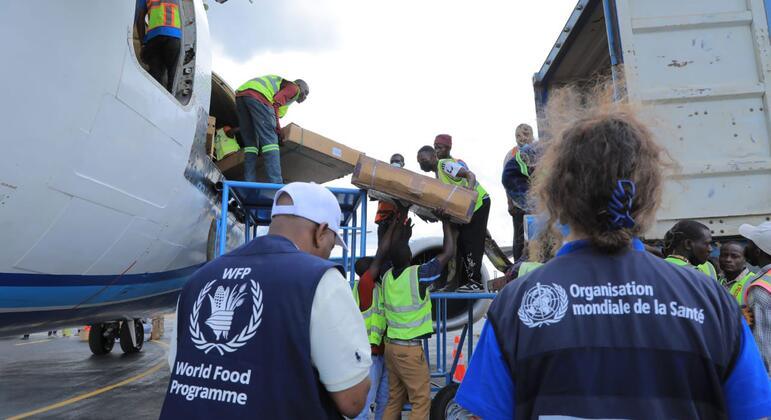
The UN health agency is urgently scaling up operations on the ground, including contact tracing, establishing treatment centres, strengthening laboratory capacity, case management, infection prevention and control, risk communication and community engagement. Some $3.9 million has been released from the WHO Emergency Contingency Fund to help finance these measures.