
RAWALPINDI:
The flood season for the 18-kilometre-long Nullah Leh and 15 seasonal streams, which wreak havoc on the city every monsoon, will begin on Monday, June 15, and continue till August 15.
Despite the onset of the flood season, silting and removal of garbage and construction material from Nullah Leh and the 15 seasonal streams has not been completed, raising fears of another destructive flood this year.
Residents living along Nullah Leh and seasonal streams have started relocating due to these fears, while many have moved their valuables to safer locations. Although Rs 80 crore has been allocated for sludge removal, not even 15 per cent of the work has been completed.
Nullah Leh is originally from the Margalla Hills of Islamabad. Until 1950 it was a clear stream whose waters were used for drinking. Women washed clothes and bathed along its banks, while members of the Hindu community immersed ashes there after cremations.
Dhobi ghats existed at various points along its banks. Historical accounts suggest that Alexander the Great’s army camped next to the stream because of its clear water, while Aryan tribes remained settled in the area for 80 years. Arya Mohalla still exists alongside the nullahs.
When Islamabad became capital during the Ayub Khan era, the stream gradually became polluted with sewage and has now turned into a smelly drain.
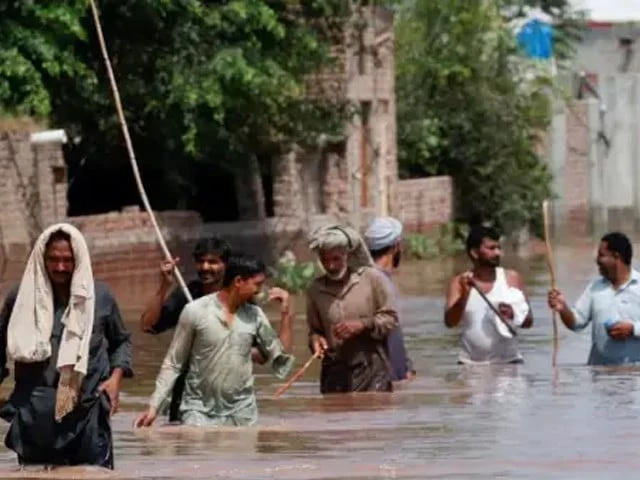
So far, Nullah Leh has suffered 17 major and minor floods, resulting in 210 deaths and the loss of 2,500 animals, including cows, buffaloes, goats, dogs and cats. The most devastating flood occurred on July 23, 2001, claiming 81 lives.
Half of the city was submerged under 10 to 20 feet of water, while two-story homes in nearby areas were flooded. One flood occurred during Ayub Khan’s era, one during Yahya Khan’s, three during Zulfikar Ali Bhutto’s rule, three during General Ziaul Haq’s rule, three during Pervez Musharraf’s period, two during Benazir Bhutto and Nawaz Sharif’s governments, one during Imran Khan’s rule and two during the current government.
The flood on July 23, 2001 caused losses worth Rs 7 billion to traders and another Rs 2 billion to citizens.
For flood monitoring, two hotspots have been designated in Nullah Leh. The danger level in Katarian is 18 feet, while in Gawalmandi it is 17 feet.
A year ago, the flood early warning system installed in the nullah was stolen and had to be replaced.
Deputy Commissioner Hassan Waqar Cheema said preparations to deal with the floods had been completed. The Triple One Brigade will remain on full red alert during the flood season. Personnel from rescue agencies, Civil Defense and Rescue 1122 will conduct dress rehearsals at Rawal Dam to rescue stranded citizens, in which army personnel will also participate.
To deal with power outages during floods, Civil Defense volunteers will be provided with special manually operated siren devices. These will be placed in special Civil Defense rooms established in flood-prone areas.
Five relief camps will be set up at Islamia No.1 Higher Secondary School on Murree Road, Islamia Liaquat Road Secondary School near Liaquat Bagh, New Katarian Girls School, Dhoke Hassu Girls School, Dhoke Ratta Bhosa Godam Girls School and a girls school at Gawalmandi.


