
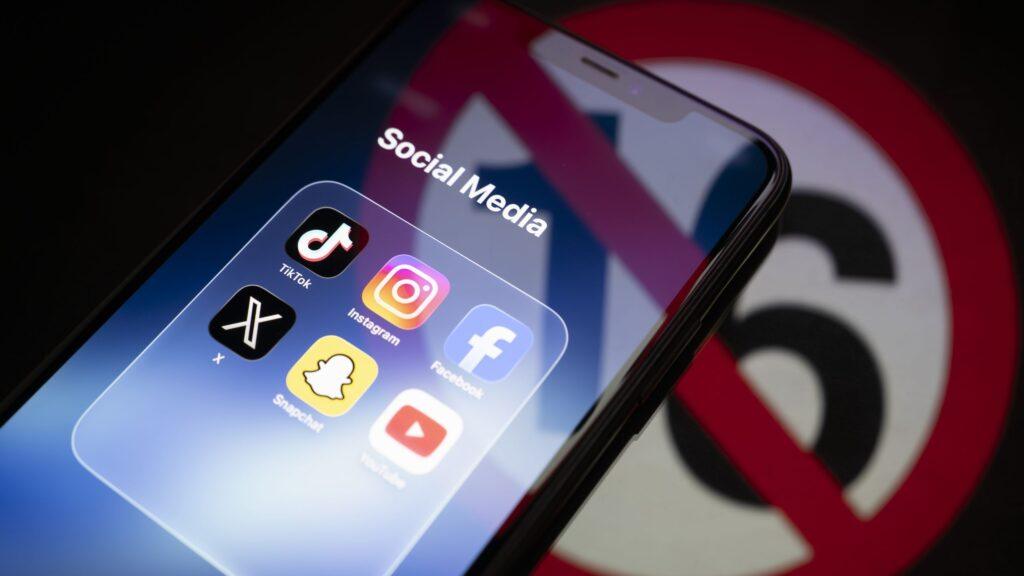
- The UK government has announced a social media ban for under-16s.
- Privacy advocates concerned about impact of increased age checks
- Some groups also argue that a ban will not protect children online.
The UK’s “world-leading” plan to protect teenagers with strict social media regulations has sparked immediate criticism from privacy campaigners.
On Monday, British Prime Minister Keir Starmer announced that social media platforms will be required to prevent under-16s from using their services. Restrictions on certain harmful functions and curfews are also being considered.
Privacy advocates and VPN companies are particularly concerned about the prospect of mandatory enforcement becoming more prevalent. age verification checks. Justas Pukys, senior product manager at Surfshark, told TechRadar: “While we fully support the goal of protecting minors, requiring platforms to collect government IDs for age verification is a cybersecurity disaster waiting to happen.”
More details about how the upcoming restrictions would work in practice, including whether VPN services will have age restrictions, will be released next month, with implementation expected in spring 2027.
Just a week earlier, Starmer handed Big Tech platforms another controversial ultimatum, giving them three months to implement on-device scanning technology to prevent children from viewing explicit images.
The problems with age verification.
Mandatory age verification remains the top concern of privacy advocates.
Romain Digneaux, Proton’s public policy director, points to last year’s leak of 70,000 government-issued ID photos of Discord users as a stark reminder of the risks when age checks become a routine requirement for online platforms.
“Us We must all remember that there is no age verification for unaccompanied children. Age verification for children is age verification for everyone,” Digneaux told TechRadar, arguing that the global push toward age verification is not a “silver bullet” for child safety.
Meanwhile, Harry Halpin, CEO of NymVPN, argues that these initiatives may be a pretext for a more invasive agenda. He told TechRadar:
“Currently, children can bypass these restrictions by drawing a mustache on their face. The goal of these technologies is not to protect children but to create a centralized digital identification database to find and track political dissent online.”
Why Nym is against age verification laws. They claim that it is about protecting children. It’s really about keeping an eye on everyone.⤵️June 15, 2026
Halpin hopes that age controls will be implemented directly at the operating system level, arguing that this would mean that “you will have to scan your ID card and your face to use your phone or computer.”
However, according to Windscribe CEO Yegor Sak, social media providers could use a combination of account history, payment signals, facial estimation, identity providers, device or app store signals, and document verifications.
“None of that is neutral from a privacy standpoint,” Sak told TechRadar. “If the control is weak, teenagers avoid it. If the control is strong, everyone else is drawn into identity checks.”
When age controls can’t be avoided, Laura Tyrylyte, privacy advocate at NordVPN, suggests that policymakers prioritize solutions that “minimize the collection and sharing of sensitive personal data” to avoid creating new cybersecurity risks for users.
The wrong solution to an urgent problem?
Beyond concerns about age verification, many commentators fear that banning children and teens from social media will ultimately fail to protect them.
James Baker, program director at Open Rights Group, argues that the ban will fail because it ignores the root causes of online harm. The real problem, he explains, is “business models that reward harmful content.”
This stance is shared by other digital rights groups, including Article 19, along with various child safety campaigns.
Ultimately, technology experts are united in the belief that a social media ban is not only a threat to public privacy, but a drastic measure that could do more harm than good, leaving parents with a false sense of security.


