
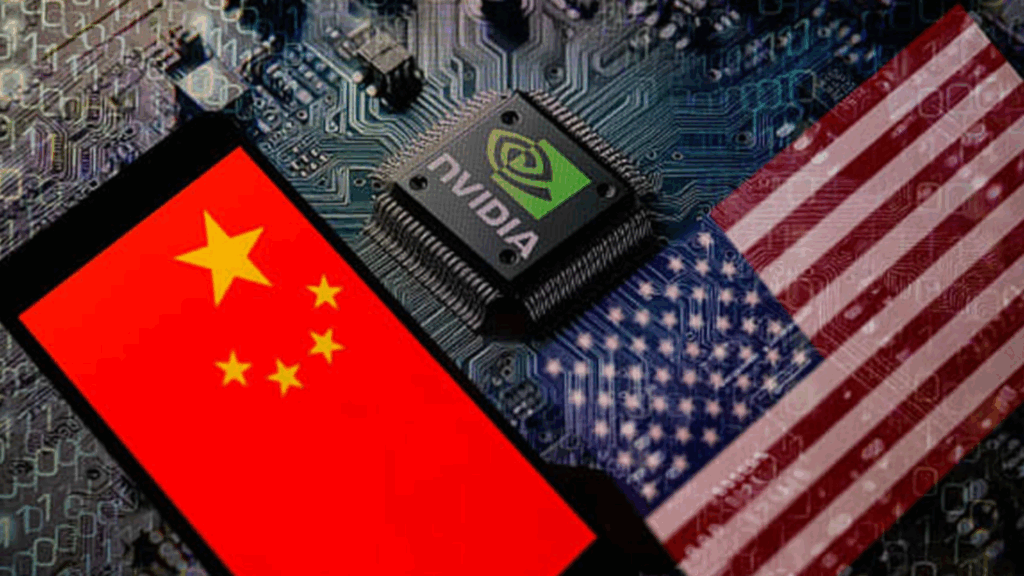
- Nvidia is launching its upcoming Vera CPUs to Chinese customers and will announce their availability soon.
- The transition to data center CPUs pits Nvidia against traditional rivals Intel and AMD, which currently control most of the market in China and other regions.
- Nvidia’s move comes as the Chinese government continues to advocate for local chip solutions, and US chip controls have effectively reduced its share to 0% of the lucrative Chinese data center market.
Nvidia is apparently pushing to win Chinese customers for what its CEO sees as the next multibillion-dollar frontier for the company: data center CPUs.
The company has spent the past two years watching the world’s second-largest chip market effectively unravel with a mix of consumer chips and homegrown solutions like Huawei’s Ascend offerings, backed by a Chinese government push for self-sufficiency.
While Chinese officials have held the line with soft barriers (there are no official restrictions on Nvidia chip exports to China on the mainland), Nvidia is apparently betting on a reset in relations when it comes to its Vera CPUs for the data center.

Why CPU and why now for Nvidia?
Nvidia’s Vera CPU is more than just another competitor on the market. It threatens to disrupt the existing status quo, with Intel and AMD chips dominating the market, by adopting an AI-first design approach.
Nvidia introduces Vera as a CPU that is up to 1.8x faster than current x86 CPUs from Intel and AMD in certain workloads, offers 4x the memory bandwidth, and delivers up to a 50% increase in performance compared to traditional rack-scale CPUs.
According to a PakGazette report, at least one major unnamed Chinese cloud company intends to purchase 300 servers, each with 2 Vera CPUs. The CPUs themselves are estimated to cost more than $20,000 before volume discounts take effect.
However, whether this results in order remains to be seen. Chinese regulators appear to be making more of a push for self-sufficiency in its chip sector, prompting many of its startups and AI giants to opt for local chip options, such as Huawei’s Ascend and T-Head’s Hanguang.
Nvidia’s salvation could come from an unexpected place, however, as the battle lines could be different this time: the same AI export controls that crushed its Chinese business could work in its favor now.
Not only are CPUs considerably less regulated by US export rules, but the Chinese market is also reeling from a tightening of server CPUs, with Intel pushing delivery times up to six months in some cases, even as AMD noted that the CPU market remains tight, with demand outstripping supply.
If Nvidia can overcome the politics and software advantage of the current x86 architecture, as well as the ecosystem built around it, it could grab a major piece of the lucrative Chinese data center market, even without the CUDA “stiffness” that makes its GPUs so sought after in this segment.
However, it remains to be seen whether that is enough to negate the obvious advantage that both well-placed chipmakers (Intel and AMD) have in terms of ecosystem, as well as the advantage that national champion Huawei enjoys in terms of government-level support.

Follow TechRadar on Google News and add us as a preferred source to receive news, reviews and opinions from our experts in your feeds.


