
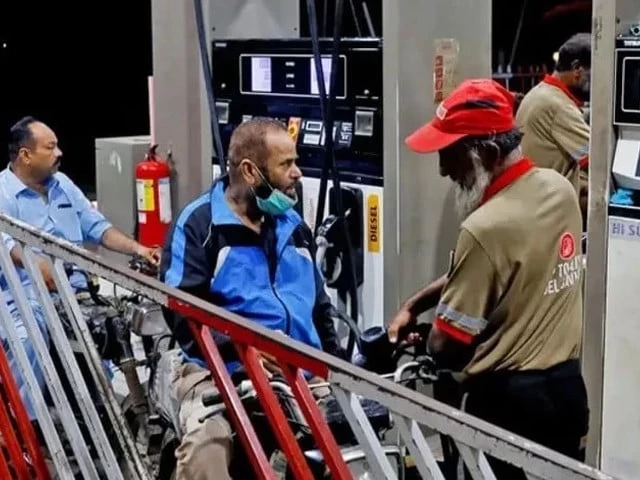
Falling fuel demand signals weaker economic activity and growing financial strain despite efficiency claims
LAHORE:
The government’s two-year energy conservation campaign, aimed at reducing import costs and easing pressure on foreign exchange reserves, has led to a notable decline in oil consumption. However, while the measures have delivered some financial benefits, economists argue their broader impact remains limited, with few visible changes to daily urban life.
Launching its energy conservation campaign, the government said various measures could save approximately $1.5 billion to $2.7 billion a year in foreign exchange. To achieve this goal, restrictions were imposed on the use of official vehicles, the operating hours of companies and businesses were limited, assistance systems in government offices were modified, and various administrative measures were introduced to reduce energy consumption.
Meanwhile, according to recent statistics, sales of petroleum products in the country also remain under pressure. In May 2026, total sales of oil marketing companies fell 23 percent year-on-year to 1.17 million tons. Excluding furnace oil from the total volume, sales amounted to 1.14 million tons, which is considered the lowest level recorded in the month of May in the last thirteen years.
According to the report, substantial increases in gasoline and diesel prices also affected fuel demand. The average price of petrol reached around Rs 402 per litre, while diesel averaged around Rs 401.46 per litre. Due to high prices and reduced economic activity, diesel sales fell to a record low of just 450,000 tons.
Similarly, gasoline sales also declined annually, while furnace oil recorded the steepest drop in sales. Experts note that increased electricity generation from hydropower and the availability of alternative fuels have also reduced demand for furnace oil.
According to economic circles, although lower oil consumption can be considered a positive development, the economic slowdown and increasing financial pressure on the public are also important contributing factors. Experts argue that a reduction in consumption alone cannot be considered a complete success, as it may also reflect limited purchasing power among citizens and reduced business activity.
On the other hand, for the last two years, the government has used the oil tax as an important source of national revenue. As per available official data, approximately Rs 119 billion was collected through petroleum tax in fiscal year 2023-24, which increased to around Rs 122 billion in fiscal year 2024-25. Similarly, during the first nine months of the fiscal year 2025-26, more than Rs 120 billion had already been deposited in the national treasury, and an even higher collection target has been set for the next fiscal year.
Economist Khalid Rasool opined that the government’s austerity drive was a positive and commendable initiative because reducing unnecessary expenditure can benefit any economy. Rasool noted that the campaign has brought some benefits and a reduction in energy consumption has been observed in certain sectors; However, the situation on the ground seems somewhat different.
“Despite austerity measures at the government level, the number of vehicles on the roads remains visibly high. This suggests that fuel consumption among the public has not decreased significantly. The government primarily sought to improve administrative efficiency and limit expenditure, but administrative decisions alone cannot produce a substantial and lasting reduction in energy use,” Rasool said.
Rasool further stated that achieving sustainable outcomes will require better public transport systems, promotion of electric vehicles, better urban planning and effective progress towards alternative energy sources. “Without long-term structural reforms, it will be difficult to realize the full benefits of temporary measures,” he added.


