
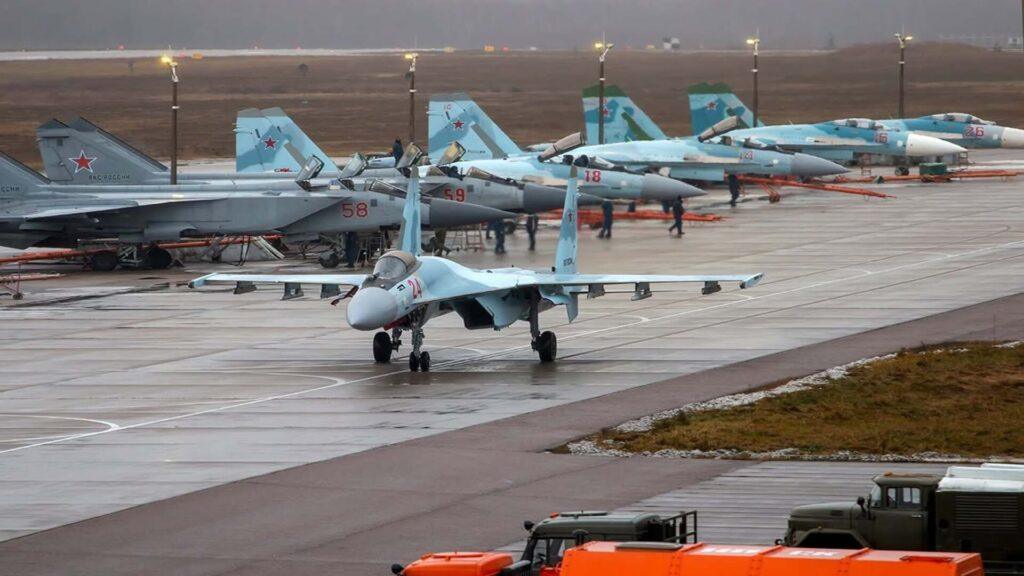
- NATO seeks technologies capable of closing enemy airfields for longer
- The competition focuses on planes, runways, fuel depots and infrastructure.
- The proposed systems must survive electronic warfare and navigation disruptions.
NATO and Ukraine have launched a €250,000 (~$287,000) competition seeking technologies capable of denying adversaries the use of airfields for extended periods.
The initiative, known as Persistent Airfield Denial, focuses on disrupting aviation infrastructure used to support military operations against Ukraine.
Organizers are looking for practical solutions that could damage aircraft, runways, fuel facilities, ammunition storage sites and supporting ground infrastructure.

Search for technologies capable of altering aerodromes in the long term
The competition is organized by NATO Allied Command Transformation together with the NATO-Ukraine Joint Analysis, Training and Education Center, commonly known as JATEC.
According to the Ukrainian Ministry of Defense, the effort arises from the importance of airfields in supporting Russian air operations against Ukrainian territory.
The ministry stated that “every Russian aviation sortie to attack Ukraine begins at an airfield,” which explains why the search is focused on restricting access to aviation infrastructure.
Officials are looking for concepts capable of maintaining operational pressure against enemy airfields rather than conducting only short-duration attacks.
Proposed systems may rely on drones, loitering munitions, swarm technologies, or alternative methods to deliver destructive payloads over significant distances.
The contest rules allow for virtually any technology architecture as long as the proposed solution can achieve the required operational results.
Participants must also demonstrate effectiveness in electronic warfare environments where communications may be degraded or unavailable at all during missions.
The solutions are expected to continue operating without direct operator control or access to satellite navigation services in challenging battlefield conditions.
Organizers also require systems capable of operating year-round and in different climatic conditions without significant performance degradation.
The initiative follows previous NATO-backed innovation challenges that sought answers to threats from guided bombs and fiber optic drones increasingly used in combat.
Prototype requirements and emphasis on rapid deployment
Organizers require technologies that can quickly move from development to operational deployment once testing has been successfully completed.
The desired technological readiness level is between 5 and 7, indicating capabilities at the prototype stage rather than purely theoretical concepts.
Participants are expected to provide a minimally functional initial version within six weeks, demonstrating practical progress toward implementation goals.
The proposal submission window remains open until July 20, 2026, while the selected finalists will be announced on August 11.
Ukrainian military technology companies, startups, engineering teams and defense developers are encouraged to submit candidate technologies for evaluation.
Many of the concepts likely to emerge could involve autonomous systems designed to operate independently when communications are no longer available.
Developers can also employ AI tools to improve navigation, coordination and decision-making during contested operations.
Last year, the Ukrainian Security Service carried out Operation Spiderweb, a coordinated drone attack against five Russian airfields.
kyiv claimed the operation destroyed or damaged 41 aircraft and caused approximately $7 billion in damage, although Russia says it lost 11 aircraft and around $26 million.
Although Ukraine already operates cheap drones such as the Hornet and other AI-assisted modified unmanned aerial vehicles capable of hitting targets hundreds of kilometers away, it is now pursuing “spider web-like” technologies capable of producing similar or greater effects.
Via Defensa Express

Follow TechRadar on Google News and add us as a preferred source to receive news, reviews and opinions from our experts in your feeds.


