
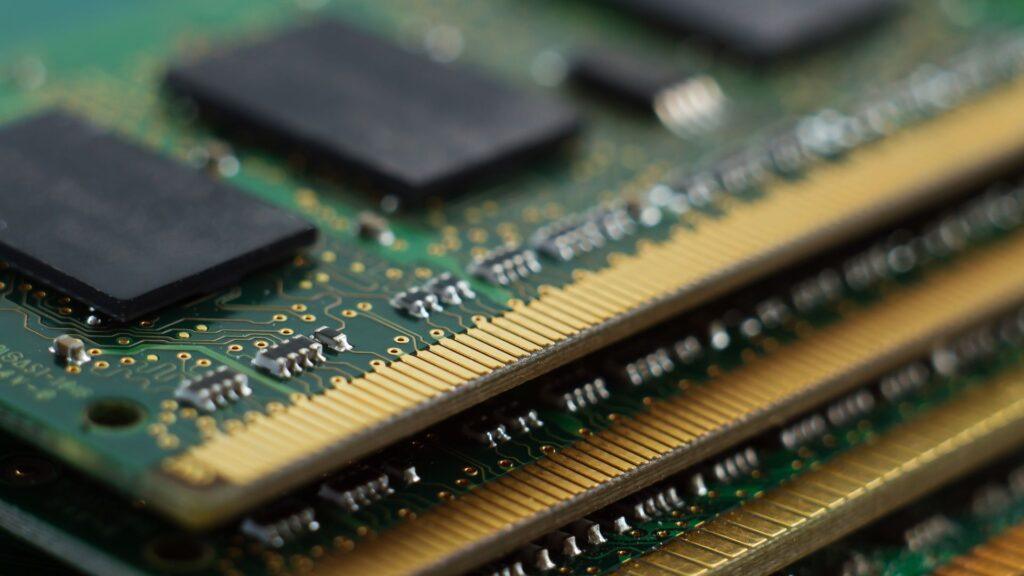
- Price increases for Asus products will be significantly reduced in the second half of 2026
- This ended in Taiwan, but should be reflected to some extent globally.
- There is also a report that SK Hynix, a large memory chip manufacturer, is set to slow down AI memory production in favor of conventional RAM.
There’s been a pretty relentless string of bad news lately with the RAM crisis, but now we’re hearing some more positive nuggets for a change (although temper your optimism, as this is all relative).
First, VideoCardz discovered that Taiwan’s Economic Daily News published a report in which Asus CEO Liao Yi-hsiang noted that in May 2026, price increases for some Asus products in that country amounted to almost 30% (compared to Q4 2025).
The executive then confirmed that Asus would increase prices further in the second half of 2026 due to the component crisis, but that the increase should only be in the single digits. Of course, less than 10% is a big drop compared to knocking on the door of 30%.

Liao said the price increases would be milder because the cost of memory and storage had recently decreased, and also that consumers were increasingly unlikely to buy if more major increases accrued to Asus products. Especially considering that there was quite a bit of purchasing activity in early 2026, as consumers in Taiwan acted earlier than they otherwise would have, with a view to securing purchases before stronger price increases took hold.
The other nugget of positivity is that, as Trading View tells us, there have been some interesting rumors about SK Hynix, one of the big three memory chip makers (along with Micron and Samsung).
There are reports that “SK Hynix may slow the expansion of AI memory chip production and increase its focus on mainstream DRAM products.”
This apparent shift from manufacturing HBM (the aforementioned AI memory) to conventional RAM modules (those in consumer electronics) unsettled investors and led to SK Hynix shares falling more than 12%. (Samsung followed suit with a 12% drop, and a broader drop in tech participation was seen, particularly for companies tied to the world of AI.)
However, what is bad news for investors is good news for consumers; If this report is accurate, SK Hynix’s reallocation of assembly lines to produce more DDR5 RAM could be the beginning of the end of the memory crisis.
Analysis: Is the AI bubble ready to burst? I doubt…

Big conclusions could be drawn here, and the rumor about SK Hynix is a potential move that could have a significant impact for consumers. The fact that some people are talking about the end of the “AI bubble” lately (which actually seems like hopeful talk) could also be read as another indicator in that sense. However, it’s too early to make that kind of decision (and I personally don’t think we’re looking at that either way).
What we don’t know is the extent of HBM’s apparent move away, and anyway, the move could be partly because DRAM is so expensive now that it represents a tempting enough diversification in terms of SK Hynix’s overall memory strategy (a theory floated in some quarters).
We should also remember that SK Group (SK Hynix’s parent company) president Chey Tae-won previously predicted that the RAM shortage might not end until 2030 (a forecast more recently echoed by Nvidia’s CEO). So, as noted, temper any optimism, but this is at least a positive sign from the big chipmaker, as is Asus’s price prediction.
Regarding Asus, again there is a warning: that is, it is an analysis only for the Taiwanese market. But if price increases in the second half of 2026 are only (roughly) a third of what they actually were in the first half of the year, that will surely be reflected to some extent globally. Furthermore, it is very true that consumers around the world will refuse to buy if prices rise too quickly, something I have pointed out several times before. This is not something unique to Taiwan.
Finally, it’s also worth noting that earlier this month, we heard more positive news about the RAM crisis from David McAfee, vice president and general manager of Ryzen CPUs and Radeon GPUs at AMD.
As reported by PC Gamer, McAfee said: “There is a tremendous amount of capacity that memory manufacturers are building to bring more production online, and that increased production online will be focused on DDR, LPDDR, HBM, as the newer memory technologies.”
He added: “I don’t expect a lot of DDR4 production to come back into the world, but those new memory technologies, a significant amount of capacity, are coming online. I think we’ll start to see late next year and into 2028 that ramp really start to take hold, and then it’ll just be a factor of supply and demand forces, and how that affects memory prices.”
Well, this is really just a reminder of what we’ve already been told, but it’s still worth keeping in mind that the expectation for some remains considerable relief from the crisis by 2028.

Follow TechRadar on Google News and add us as a preferred source to receive news, reviews and opinions from our experts in your feeds.

The best laptops for all budgets


