
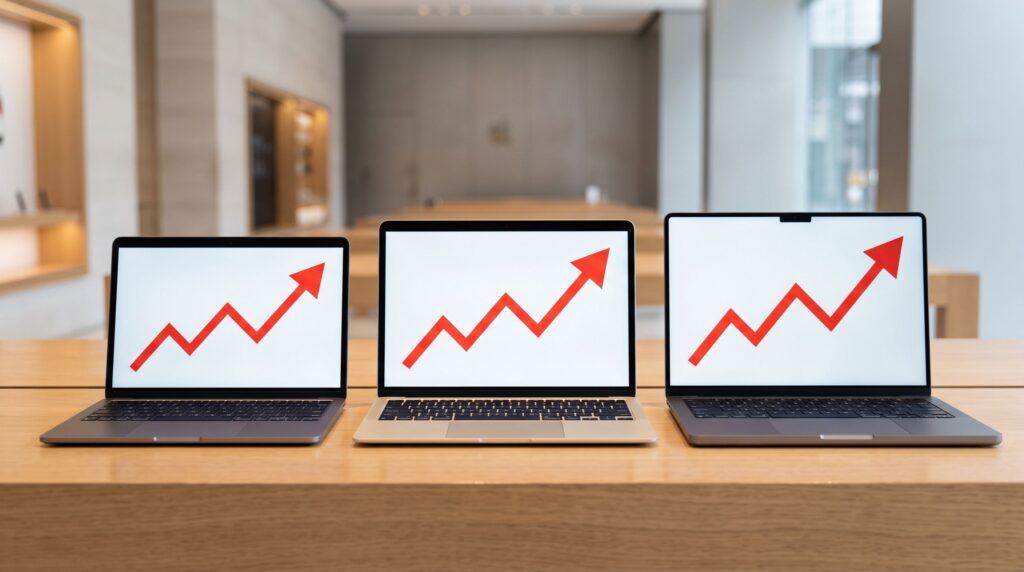
- Apple has increased prices in several categories in Australia
- The MacBook Neo has lost some of its basic appeal
- The move follows rising RAM and storage costs.
Australian shoppers looking for EOFY deals, or hoping for early Amazon Prime Day tech deals, now have another price change to watch out for. Apple has increased local prices on several major product categories, including the new MacBook Neo, MacBook Air, iPad range, Apple TV 4K, HomePod mini and more.
The moment is awkward, but it doesn’t come out of nowhere either. Apple has generally been better than most tech companies at absorbing supply chain pressure before it reaches buyers, although the current RAM and component shortages have gone on long enough to change that calculus.
Warning signs came last month, when Tim Cook flagged “significantly higher memory costs” on an earnings call and later said RAM prices would “drive an increasing impact” on Apple products starting this month.
Australian buyers will feel this
One of the clearest examples is the new MacBook Neo, Apple’s lowest-cost MacBook model and the machine that is likely to appeal to students or anyone trying to purchase a new Apple laptop for less money than the MacBook Air. In Australia it was launched with a price starting at 899 Australian dollars. It now starts at AU$1049, so it has lost some of its basic appeal.
Sure, it’s still Apple’s cheapest laptop, but the higher starting price makes it less competitive against Windows laptops that have been struggling to compete with the Neo. The 512GB model with Touch ID also went from AU$1,099 to AU$1,249.
The MacBook Air has lost some of its competitive edge, and the 13-inch model with the M5 chip (see our 13-inch M5 MacBook Air review) has jumped from AU$1,799 to AU$2,099 to start.
The 15-inch model is up the same amount of AU$300, from AU$2,199 to AU$2,499. For a laptop that often sits in the middle of Apple’s consumer Mac range, that’s a significant hit to its value proposition.
The MacBook Pro’s gains are especially noticeable in some configurations. The 14-inch MacBook Pro with M5 now starts at AU$3,199, up from AU$2,699, and the higher-end M5 Max models are also up several hundred dollars. Buyers looking for additional memory or storage were already dealing with expensive upgrades, so the higher base prices only make that decision more difficult.
The Mac mini is another notable success. It went from AU$999 to AU$1,299, representing a 30% increase on a machine that has often been one of the easiest Apple desktops to justify on price.
The iPad range has increased, which is important for students, families and anyone looking for a new tablet for work, study, travel or general use. The 11-inch iPad Air now starts at AU$1,249, up from AU$999, while the standard iPad, iPad mini and iPad Pro models have also increased.
The uploads are not limited to Macs and iPads. The HomePod mini went from AU$149 to AU$199, the HomePod rose from AU$479 to AU$549, and the Apple TV 4K jumped from AU$219 to AU$299. The Vision Pro was already a niche product at AU$5,999, and the new starting price of AU$6,299 certainly doesn’t broaden its appeal.
Apple’s iPhone line, Apple Watch, and AirPods appear to have avoided at least this round of increases. That helps limit the pain for some buyers, but it doesn’t change the problem for anyone who was waiting to buy a Mac, iPad or other Apple device.
Australian price changes
|
Device |
Previous price |
New price |
Increase |
|---|---|---|---|
|
iPad |
$599 |
749 Australian dollars |
AU$150 (25%) |
|
iPad air 11 |
AU$999 |
1,249 Australian dollars |
250 AUD (25%) |
|
iPad air 13 |
1,349 Australian dollars |
1,599 Australian dollars |
250 AUD (19%) |
|
iPad Pro 11 |
1,699 Australian dollars |
1,999 Australian dollars |
300 AUD (18%) |
|
iPad Pro 13 |
2,199 Australian dollars |
2,599 Australian dollars |
400 Australian dollars (18%) |
|
ipad mini |
$799 |
AU$949 |
150 AUD (19%) |
|
Device |
Previous price |
New price |
Increase |
|---|---|---|---|
|
macbook neo |
AU$899 |
1,049 Australian dollars |
150 AUD (17%) |
|
512GB MacBook Neo with Touch ID |
1,099 Australian dollars |
1,249 Australian dollars |
150 AUD (14%) |
|
MacBook Air 13 |
1,799 Australian dollars |
2,099 Australian dollars |
300 AUD (17%) |
|
MacBook Air 15 |
2,199 Australian dollars |
2,499 Australian dollars |
300 AUD (14%) |
|
14-inch M5 MacBook Pro |
2,699 Australian dollars |
3,199 Australian dollars |
500 Australian dollars (19%) |
|
14-inch MacBook Pro M5 Pro |
3,499 Australian dollars |
3,999 Australian dollars |
500 Australian dollars (14%) |
|
16-inch MacBook Pro M5 Pro |
4,299 Australian dollars |
4,799 Australian dollars |
500 Australian dollars (12%) |
|
MacBook Pro 14-inch M5 Max |
5,799 Australian dollars |
6,399 Australian dollars |
600 AUD (10%) |
|
MacBook Pro M5 Max 16 inches |
6,299 Australian dollars |
6,999 Australian dollars |
700 Australian dollars (11%) |
|
mac mini |
AU$999 |
1,299 Australian dollars |
300 AUD (30%) |
|
iMac |
1,999 Australian dollars |
2,399 Australian dollars |
400 AUD (20%) |
|
Mac Studio (M4 Max) |
3,499 Australian dollars |
4,299 Australian dollars |
800 Australian dollars (23%) |
|
Mac Studio (M3 Ultra) |
6,999 Australian dollars |
9,099 AUD |
AUD 2,100 (30%) |
|
Device |
Previous price |
New price |
Increase |
|---|---|---|---|
|
HomePod mini |
149 Australian dollars |
199 Australian dollars |
50 AUD (34%) |
|
HomePod |
479 Australian dollars |
549 Australian dollars |
70 AUD (15%) |
|
Apple TV 4K |
219 Australian dollars |
299 Australian dollars |
AU$80 (37%) |
|
Vision Pro |
5,999 Australian dollars |
6,299 Australian dollars |
300 AUD (5%) |
Of course, Apple isn’t the only company facing higher memory and storage costs, but the scale of these changes is still quite notable. Price increases on one or two products are pretty easy to explain. Price increases across most of Apple’s range are not something that can be easily avoided.
An Apple spokesperson said: “The consumer electronics industry is facing an unprecedented challenge. The rapid expansion of AI data centers has created an extraordinary increase in demand for memory and storage. We have never seen a price increase for a component this large and so fast. Until now we have protected our customers from these increases, but we have now reached a point where we need to start increasing prices on a number of products, including today’s increases for iPad and Mac. We know this is not good news and we are working tirelessly to find solutions.
The main question is whether Australian prices will drop again if the RAM shortage eases, or if these higher starting points become normal. We are hopeful, but Apple has not promised to reverse the situation.
For now, it may be worth checking local retailers more closely, especially if older stock or short-term deal prices are still available during the EOFY and Prime Day sales periods.
To help, we’ve included some of the best remaining Apple deals below.
The best Apple deals at previous prices
Other Apple offers
These products haven’t gone up in price, but they are still great deals. Do you want more? Check out our dedicated EOFY Apple sales page. Or for more laptops, check out our best EOFY laptop deals.


