
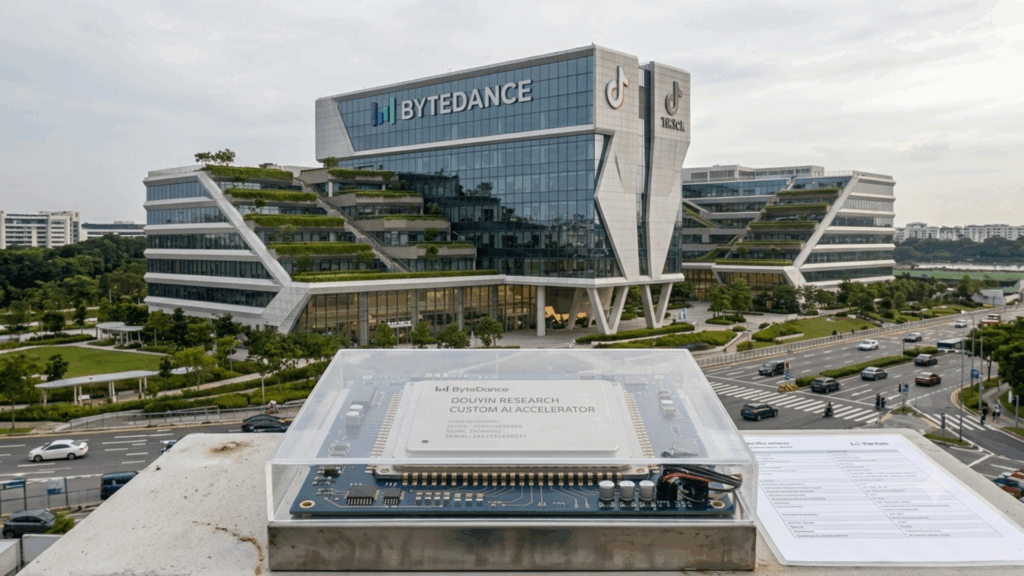
- ByteDance aims to finalize the design of its new CPU in early 2027
- Mass production and deployment are planned for the second half of 2027.
- An early version of the chip has been used internally since late 2025.
TikTok’s parent company ByteDance is reportedly racing to finalize the design of a next-generation in-house CPU by early 2027.
According to SCMP, the company aims to reach mass production and broader deployment during the second half of 2027, with a first version of this proprietary processor rolling out internally from late 2025.
Internal computing demand at ByteDance has accelerated dramatically, driven largely by products like the Doubao chatbot and the Seedance video model, which have significantly increased infrastructure requirements across the company’s growing line of AI tools.

Urgency driven by rapid growth in AI
As agent AI workloads become more complex, computing needs are moving away from pure matrix computations toward broader task orchestration tasks.
These newer AI systems require more coordination, decision making, memory management, and software operations.
Therefore, it creates a greater demand for general-purpose processors that work together with GPUs instead of relying solely on accelerator clusters.
This change is influencing the way companies like ByteDance plan for future computing infrastructure.
The completion of the tape, the last engineering milestone before physical manufacturing of the chip begins, could reportedly come earlier than originally planned.
ByteDance has never publicly commented on its chip development activities, despite what reports describe as rapid expansion in several internal silicon designs.
To help accelerate development and secure foundry manufacturing capacity, the company is reportedly collaborating with US chipmaker Qualcomm on this initiative.
Export controls change the competitive landscape
Washington’s export controls have progressively restricted Chinese companies’ access to advanced semiconductors, specifically including Nvidia’s H100 and H20 accelerators.
This increasingly strict regulatory environment has pushed China’s largest technology companies to create their own internal chip programs at scale.
ByteDance’s CPU initiative fits within that broader pattern, aiming to reduce dependence on suppliers it can’t fully control.
Publicly traded chipmakers including Arm Holdings, Intel Corporation and Advanced Micro Devices could face reduced demand as ByteDance’s internal capabilities mature further.
Nvidia, already limited in selling advanced AI accelerators to Chinese buyers, faces an additional long-term hurdle as ByteDance builds internal alternatives.
This strategy reflects moves already made by leading global hyperscalers investing heavily in custom silicon infrastructure.
Google’s TPU chips, Amazon’s Trainium and Graviton processors, and Microsoft’s Maia accelerator reflect a similar underlying thesis.
At sufficient scale, proprietary hardware can offer significant cost and performance advantages over hardware purchased from third-party vendors.
But confirmation of an official launch date would give markets a clearer signal of how seriously they should value ByteDance’s growing semiconductor ambitions.

Follow TechRadar on Google News and add us as a preferred source to receive news, reviews and opinions from our experts in your feeds.


