
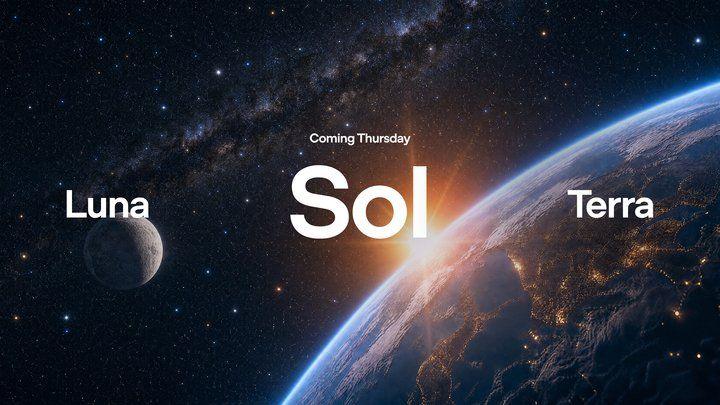
- OpenAI to release preview of ChatGPT-5.6 to trusted partners on Thursday
- The new GPT-5.6 comes in three versions: Sol, Terra and Luna
- Initial access is via API only, with broader implementation in ChatGPT later.
GPT-5.6 comes in three different versions, Sol, Terra and Luna, but it will be nothing like the normal ChatGPT versions we are used to. First, there will be a limited preview for trusted partners, followed by a broader rollout later. The preview begins this Thursday for the lucky few.
The staggered release is not by OpenAI’s design. In a statement about the new models, OpenAI said: “As part of our ongoing commitment to the US government, we are previewing our plans and the models’ capabilities ahead of today’s launch. At their request, we are starting with a limited preview to a small group of trusted partners whose participation has been shared with the government, before launching more broadly.”
The delay comes after US President Donald Trump signed an executive order establishing a voluntary framework under which AI developers could provide the US government with access to their new models for up to 30 days before handing them over to trusted partners.

OpenAI is clearly unhappy with the situation: “We don’t believe this type of government access process should become the default in the long term. It keeps the best tools for the users, developers, enterprises, cyber defenders, and global partners who need them.”
Meet Sol, Terra and Luna
OpenAI releases GPT-5.6 as a family of three models named after celestial objects, rather than its more common naming conventions like “Instant” and “Mini.” Sol, Terra and Luna are three versions of the new ChatGPT-5.6, each targeting a different balance of intelligence, speed and cost.
GPT-5.6 Sun It is OpenAI’s flagship model and most capable AI yet. This is the model for the most difficult jobs: complex coding, multi-step reasoning, agent-style work, and specialized tasks where accuracy matters more than speed. OpenAI says Sol has improved its capabilities in coding, biology, and cybersecurity, and is also getting new “max” and “ultra” modes designed to give you more time and, in ultra mode, additional subagents to work on complicated tasks. You can think of Sol as the ‘big brain’ version of GPT-5.6, which is what you want when the question is difficult enough that it’s worth waiting a little longer.
GPT-5.6 Earth It is the middle option, and probably the one that most ordinary people will use. OpenAI describes it as a balanced model for everyday work, with performance competitive with GPT-5.5 but at half the cost. That makes Terra sound like the likely daily driver model: powerful enough for writing, planning, research, helping with coding, and general ChatGPT usage, but not as expensive or heavy as Sol. If Sol is the specialist you turn to for tough problems, Terra is the model you’d expect to use for most normal tasks.
GPT-5.6 Moon It is the fast and affordable model. It is designed to offer high capacity at the lowest OpenAI cost in the GPT-5.6 family, suggesting it is aimed at fast responses, lighter tasks, and high-volume usage where speed matters. This is the model you’d expect to handle simpler questions, summaries, rewrites, quick brainstorms, and everyday exchanges without needing all the power of Sol. Luna may not be the flagship model, but it could end up being the one people interact with most often if it makes ChatGPT seem faster and cheaper to run.
What will you notice?
As I mentioned before, the test for new AI models, like GPT-5.6 or Claude Sonnet 5, will increasingly be how well they manage multi-step tasks and agency processes.
For ordinary ChatGPT users, the most obvious change when using GPT-5.6 may not be a dramatic new button or interface. ChatGPT probably feels more capable when you ask it to do something complicated and less like a chatbot that needs to be carefully guided through every step.
That’s important because most people don’t use ChatGPT to compare benchmark scores. They notice whether you understand a complicated request, remember the goal of the task, follow instructions correctly, and get close to the end result the first time. If GPT-5.6 works as OpenAI suggests, the update should be most visible in those times when current models still feel impressive but slightly brittle.
When can I get it?
OpenAI’s three-model structure is interesting and it’s unclear whether the ChatGPT version will automatically send your request to different models depending on how complex it is. Obviously, not all tasks will require the same level of intelligence. A faster, cheaper model like Luna could handle simple summaries, rewrites, and everyday questions, while a more powerful model like Sol could be reserved for tougher work where depth matters more than speed.
GPT-5.6 is not available in ChatGPT during preview, so normal users may not notice any of this right away. OpenAI says the models are currently available via API and Codex to a limited group of trusted partners and organizations, with wider availability via ChatGPT planned later.

Follow TechRadar on Google News and add us as a preferred source to receive news, reviews and opinions from our experts in your feeds.


