
- 25 million viewers watch the first 4K live broadcast transmitted from the Moon
- 260 Mbps transfer speeds send video over 250,000 miles
- AWS GovCloud plays important role in NASA simulations
Amazon Web Services, the largest cloud hyperscaler with a market share equivalent to the combined share of Microsoft and Google, just helped enable the first 4K video streaming from the Moon.
The company beamed video footage from the Orion spacecraft using lasers, and an estimated 25 million people watched the coverage across NASA+, YouTube and Amazon’s Prime Video platform.
Not only is this the first time 4K video has been transmitted from the Moon to Earth, but it is also great news for video transmission using laser optics instead of conventional radio.

AWS enabled 260 Mbps transfer speeds using laser
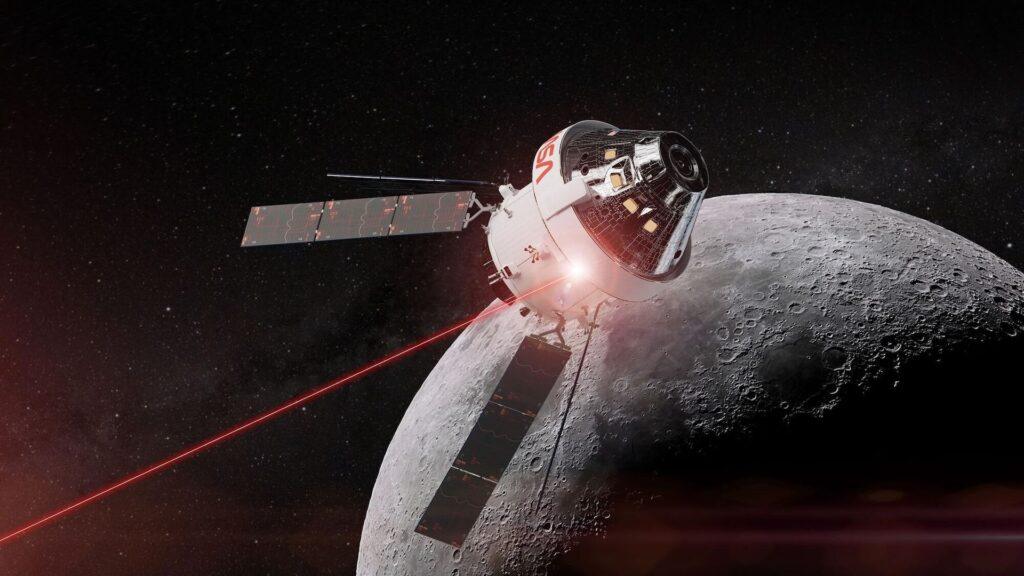
Key to supporting the video transmission was NASA’s Orion Artemis II Optical Communications System (O2O), a laser-based terminal that has been more than 20 years in development and supports transfer speeds of up to 260 Mbps. In other words, fast enough for real-time 4K video and other mission-critical data.
Generally, streaming platforms like Amazon Prime Video would recommend having internet speeds of 15 to 20 Mbps to stream 4K video. With NASA and AWS opening up to 260 Mbps, there was more than enough buffer available to continue transmitting other key telemetry files, voice communications, mission data, and more.
Unlike traditional radio systems, optical communications promise much higher bandwidth and are better suited to transmitting much larger data sets, so they are expected to become increasingly important as space exploration pushes new boundaries.
In this case, the laser transmissions were received by the Mount Stromlo Observatory near Canberra, Australia, and NASA’s White Sands Complex in New Mexico was responsible for processing and distributing the signals. “AWS, NASA and ANU partnered and established the connection in a matter of weeks, for the cost of a laptop,” the company stated.
In total, the video was transmitted an estimated distance of a quarter of a million miles, “connecting viewers with the furthest humans who have ever traveled from Earth.”
But Amazon’s partnership with NASA goes even deeper, as the company hosts the official NASA+ streaming platform using AWS Elemental services.
Amazon plays a crucial role in NASA’s trajectory
In addition to video, Amazon’s cloud infrastructure is also critical to other core NASA operations. Its flight science team at Johnson Space Center runs tens of thousands of trajectory simulations for each launch opportunity, producing between 2 and 5 TB of data per launch window.
Amazon proudly proclaimed that these simulations run on AWS GovCloud (US), allowing for maximum security for sensitive data. Using a technique known as cloud bursting, NASA can “scale to hundreds of additional Intel-based cloud instances on demand,” allowing it to reorient and optimize trajectory in near real time.
Mission control aside, the enormous success of Amazon’s video streaming sets the framework for future space missions, including the upcoming Artemis IV moon landing that NASA hopes to put in the hands of 250 million live viewers.

Follow TechRadar on Google News and add us as a preferred source to receive news, reviews and opinions from our experts in your feeds.


