
Urges all parties to avoid measures that could undermine recent peace progress.
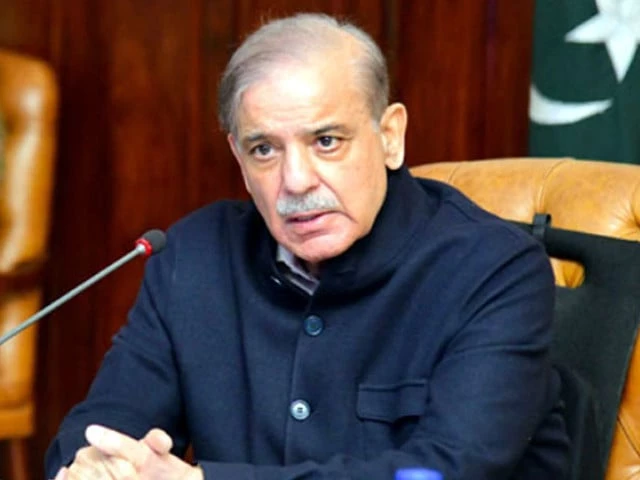
PM Shehbaz calls for restraint and regional peace in calls with Iranian President, Emir of Qatar
Prime Minister Shehbaz Sharif on Friday urged restraint and called for the immediate restoration of peace and stability in the region during separate telephone conversations with Iranian President Masoud Pezeshkian and Qatari Emir Sheikh Tamim bin Hamad Al Thani amid recent regional tensions following the outbreak of fresh hostilities between the United States and Iran.
An interim ceasefire agreement signed between Washington and Tehran – mediated by Pakistan – was intended to provide a 60-day window for negotiations on a permanent agreement, but indirect talks in Qatar ended last week without signs of progress and the US military unleashed a new wave of attacks on Iran on Tuesday. Iran later said it had attacked US military sites in Bahrain and Kuwait and had shot down a US MQ-9 drone that was trying to interfere with the operation. Bahrain’s military later said it had thwarted the Iranian attacks.
According to a statement issued today by the Prime Minister’s Office, the prime minister had a telephone conversation with the Iranian president.
“The Islamabad MoU provides a lasting foundation to promote mutual understanding, respect and shared prosperity in the region and beyond,” the prime minister said, while underlining the importance of honoring mutual commitments and responsibilities under the agreement.
He reiterated Pakistan’s commitment to promoting regional peace and assured President Pezeshkian that Pakistan would continue to provide all possible support to play “a sincere and constructive role” in restoring and maintaining regional peace and stability.
The prime minister urged Iran and all other relevant parties to exercise restraint and refrain from taking measures that could undermine the peace gains made in recent months.
President Pezeshkian thanked Prime Minister Shehbaz, Deputy Prime Minister and Foreign Minister Ishaq Dar, Chief of Defense Forces and Chief of Army Staff Field Marshal Syed Asim Munir and other senior leaders of Pakistan for attending the funeral prayers and burial of late Ayatollah Syed Ali Khamenei.
Read: Iran asked to continue talks and the United States agreed, says Trump
He also reaffirmed Iran’s commitment to regional peace and appreciated Pakistan’s support and constructive role in this regard.
The two leaders reviewed the progress of decisions taken during President Pezeshkian’s visit to Islamabad last month and agreed to accelerate their implementation to further strengthen bilateral cooperation.
The Prime Minister also conveyed his best wishes and cordial greetings to Supreme Leader Ayatollah Syed Mojtaba Hosseini Khamenei.
The two leaders agreed to remain in touch and continue close consultations on matters of mutual interest, including regional peace and stability.
Islamabad: July 10, 2026.
Prime Minister Muhammad Shehbaz Sharif today held a telephone conversation with the President of the Islamic Republic of Iran, HE Dr. Masoud Pezeshkian.
During their warm and cordial conversation, the Prime Minister expressed his deep concern about… pic.twitter.com/M5EDtuCdtm
– Prime Minister’s Office (@PakPMO) July 10, 2026
Prime Minister Shehbaz said he discussed the evolving regional situation and underlined the imperative of moderation, dialogue and diplomacy to safeguard the “hard-won peace gains of the past few months.”
He added that he reaffirmed Pakistan’s “willingness to continue playing its role as an honest and sincere mediator for lasting regional peace.”
I spoke today with my brother, President Dr. Masoud Pezeshkian of Iran.
We discussed the evolving regional situation and stressed the imperative of moderation, dialogue and diplomacy to safeguard the hard-won peace gains of recent months.
I reaffirmed Pakistan’s readiness…
– Shehbaz Sharif (@CMShehbaz) July 10, 2026
Later, in a separate telephone conversation with the Emir of Qatar, Prime Minister Shehbaz expressed deep concern over the recent regional tensions and reaffirmed Pakistan’s complete solidarity with the people of Qatar in the wake of the recent attacks.
According to a PMO statement, the prime minister thanked Qatar’s leadership for its continued support to the peace efforts that led to the Islamabad Memorandum of Understanding and the first round of high-level technical talks in Bürgenstock.
The prime minister urged all parties to exercise restraint and avoid any action that could jeopardize regional peace and stability.
The two leaders agreed that continued diplomatic engagement and meaningful dialogue were essential for peace, and that all parties must implement the commitments made in the peace memorandum.
He further added that Sheikh Tamim appreciated the leadership role played by Prime Minister Shehbaz, Foreign Minister Dar and CDF Munir in efforts to promote regional peace.
He also assured the prime minister that Qatar would continue to support efforts to maintain peace and stability in the region.
Islamabad: July 10, 2026.
Prime Minister Muhammad Shehbaz Sharif today had a warm and cordial telephone conversation with the Emir of the State of Qatar, His Highness Sheikh Tamim bin Hamad Al Thani.
During his discussion, the Prime Minister expressed his deep concern about… pic.twitter.com/GBbjyE6WPm
– Prime Minister’s Office (@PakPMO) July 10, 2026
“I conveyed Pakistan’s solidarity with the brotherly people of Qatar and underlined the need for moderation, dialogue and diplomacy to preserve regional peace. I also thanked His Majesty the Amir for Qatar’s strong support for the peace efforts that led to the Islamabad MoU and reaffirmed our shared commitment to promoting peace, stability and prosperity in the region,” Prime Minister Shehbaz said about his talks with the Qatari leader.
I had a telephone conversation today with my dear brother, His Highness Sheikh Tamim bin Hamad Al Thani, Emir of Qatar.
I conveyed Pakistan’s solidarity to the brotherly people of Qatar and stressed the need for moderation, dialogue and diplomacy to preserve regional peace.
Me too…
– Shehbaz Sharif (@CMShehbaz) July 10, 2026
Read also: Israel shares intelligence with US on alleged Iranian plot to kill Trump: report
Diplomacy is happening behind the scenes right now to ease tensions in the US-Iran conflict. cnn reported today, citing US officials.
Multiple sources, two from mediating countries and the other a US official, told the outlet that regional governments have been trying to calm tensions between the two countries.
The sources said officials from Qatar, Pakistan, Egypt and Saudi Arabia held multiple phone calls with US and Iranian officials on Wednesday in an effort to reduce tensions.
“There are great diplomatic efforts to first reach an agreement with both sides on reducing tensions and then set a date for another round of negotiations between the technical teams,” said a regional source involved in the mediation.
Pakistan urged both sides for restraint on Wednesday after the new round of hostilities.
Pakistan and Qatar on Thursday intensified their diplomatic efforts to save the fragile peace process. Diplomatic sources said Pakistan and Qatar, the two main facilitators of the June peace deal, remain in close contact with both Tehran and Washington in an effort to restore the ceasefire and resume negotiations on outstanding issues, including maritime security, sanctions relief and implementation of the MoU.
Diplomatic observers say the next few days will be critical for the future of the deal. While neither Tehran nor Washington have formally withdrawn from the MoU, both sides now accuse each other of violating its provisions, making the task of mediators increasingly difficult.
Despite the sharp escalation, Pakistani officials remain hopeful that sustained diplomatic engagement can prevent a complete collapse of the peace process.
Officials believe maintaining communication channels with both capitals remains essential to containing the crisis and getting the parties back to negotiations before the conflict escalates into another large-scale regional confrontation.


