
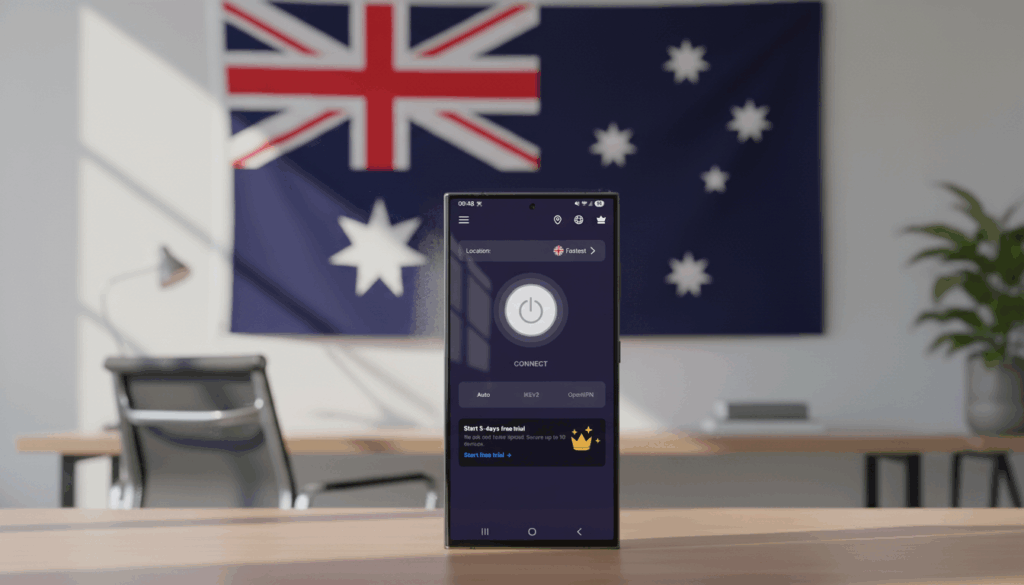
- Australian eSafety Commissioner calls VPN detection a ‘reasonable step’ for tech companies to enforce age limits
- The watchdog notes that service providers should avoid workarounds under new industry codes.
- Australia’s position reflects growing global debate around age guarantee and VPNs
Australia’s internet watchdog is keeping a close eye on VPN services as the country steps up its efforts to enforce strict online age verification rules.
According to documents obtained by The Guardian under freedom of information (FOI) laws, the Australian eSafety Commissioner expects tech platforms and service providers to actively block solutions that allow users to bypass age-restricted content and social media bans.
Internal documents explicitly detail how the government plans to address these privacy tools under its Illicit Materials Codes and Standards. Under the Codes, the documents state that “service providers must take reasonable steps to avoid workarounds such as VPNs, so eSafety will consider this when considering compliance with the codes.”
For everyday web users, this raises a troubling question: Could activating a virtual private network (VPN) to protect your personal data could soon mark you as a shirker?
As cybersecurity protections increasingly find themselves in the crosshairs of child safety regulations, digital privacy advocates are sounding the alarm.
The push for VPN detection
Under the new codes, the Australian government is imposing the burden directly on industry suppliers to prevent exposure to age-restricted material, defined by regulators as Class 1 and Class 2 material.
Because a VPN encrypts your Internet traffic and spoofs your IP address, it can make it look like you’re browsing from a different country, bypassing local geoblocks and age barriers. That’s exactly why VPN downloads skyrocketed after Australia imposed mandatory age verification for adult content last March.
However, Australian authorities are confident that the platforms can counter this.
According to FOI documents, the government’s ongoing trial of age-assurance technology has convinced regulators that network detection is feasible. The documents note that “the Department of Infrastructure, Transport, Regional Development, Communications, Sport and the Arts is aware that technology companies can tell when a VPN is in use.”
Consequently, the eSafety Commissioner considers detection of these tools a fundamental requirement. The internal log clarifies that “this is similar to eSafety’s regulatory guidance for minimum age on social media, where eSafety considers VPN detection as a reasonable step to prevent underage users from having an account.”
A global domino effect?
Australia is far from the only country struggling to balance child safety legislation with the right to online privacy. The debate over whether VPNs should be treated as essential security software or mere circumvention tools is intensifying around the world.
A recent analysis of Australia’s age verification rules suggests that attempting to plug these “loopholes” could seriously compromise the digital security of the general population. In fact, some experts argue that requiring platforms to actively block VPN connections sets a dangerous precedent for civil liberties.
The domino effect is already visible throughout Europe.
As the EU launches its own age verification initiatives, regulators are increasingly signaling that VPNs could be next to impose restrictions. Similarly, the changing role of VPNs in the UK has sparked rigorous debates over whether incoming social media bans could lead to VPN restrictions.
Ultimately, the eSafety Commissioner’s plan highlights a growing reality: as governments around the world implement strict age assurance mandates, child safety measures and VPN use are on a collision course.
It remains to be seen whether ordinary Australians will be able to continue freely protecting their data on public Wi-Fi networks without being blocked from their favorite sites.
Follow TechRadar on Google News and add us as a preferred source to receive news, reviews and opinions from our experts in your feeds. Be sure to click the Follow button!


