
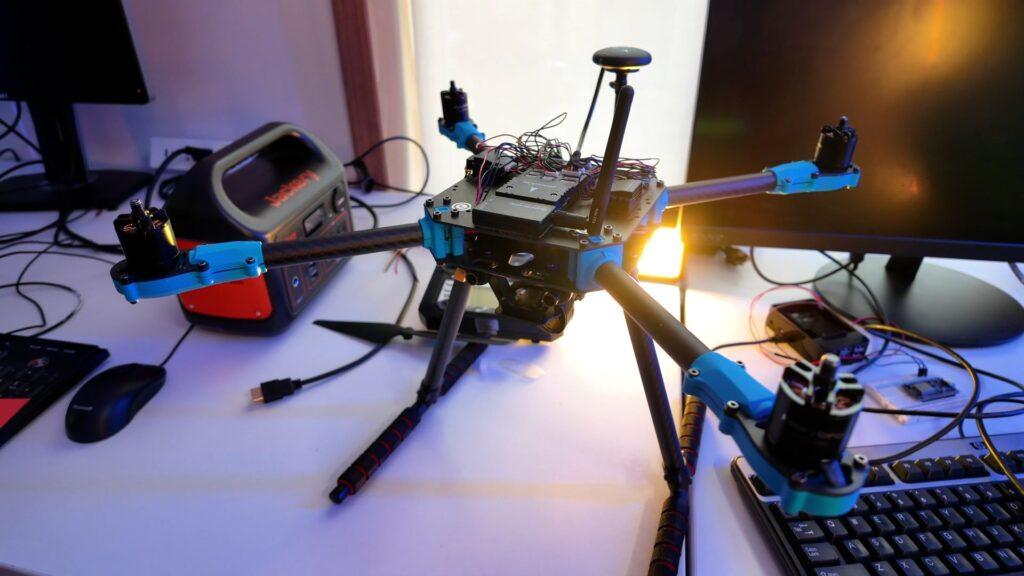
- A startup founded by former teenage drone racing champions has won a contract with the US military worth up to $500 million for its FPV attack drones.
- This is the Pentagon’s largest small drone contract to date, and will run through 2031, even as it struggles to take on drones and components made in China with a much smaller manufacturing base.
- This contract allows Neros to power a 250,000 square foot factory with the goal of producing one million drones per year by 2028.
Neros Technologies, founded in 2023 by former teenage drone racing prodigies Soren Monroe-Anderson and Olaf Hichwa, has won an indefinite-delivery contract from the US military worth up to $500 million for its Archer FPV attack drones.
The contract will run until June 2031 and is among the largest of its kind. It arises from tens of thousands of deliveries to Ukraine under a multinational coalition drone contract. Neros maintains an office in kyiv that supports the country’s war effort, where the Archer serves as an alternative without Chinese components to the cheap drones that dominate the market elsewhere.
It marks one of the Pentagon’s biggest commitments yet to the cheap, expendable aircraft that the Ukraine war has made the defining weapon of modern ground combat and, increasingly, the airspace just above it.

What is the Neros Archer drone?
The Archer drone is possibly the most successful budget FPV drone made in the USA to date.
With two years of frontline use in Ukraine, deliveries of over a thousand per month, and cumulative shipments in the tens of thousands, Neros has a record that no other American manufacturer comes close to matching on volume alone.
The Archer is an 8-inch quadcopter that carries a 4.5-pound payload over 12 miles, built entirely without Chinese components—a rare combination that landed Neros on the Pentagon’s list of approved blue UAS and earned it Chinese sanctions.
The deal for Neros’ Archer comes out of the Army’s Purpose-Built Attritable Systems (PBAS) program, which selected it last November as one of three major manufacturers tasked with pushing modular FPV drones to the platoon level, and lands amid a service-wide acquisition shakeout: Army officials say they intend to increase annual drone purchases from about 50,000 to at least one million in about two years.
Neros hopes to not just ride the wave but capture the lion’s share of it: The effort that began with 30 basement-built drones that the founders personally delivered to Ukraine for testing is now aiming considerably higher, with the US military backing its ambitions.
There’s a reason for this: Neros is the closest thing the United States has to a response to Chinese dominance in the industry. This year, it took over Project Millennium, a 250,000-square-foot facility in Los Angeles, about 100 times its previous size, and has publicly committed to reaching 1 million drones a year by 2028.
If the promise is fulfilled, Neros alone would increase current US drone capacity about tenfold: one estimate for 2025 puts total US manufacturing capacity at about 100,000 units a year.
For now, the Pentagon’s roughly $1.1 billion Drone Dominance initiative, intended to field some 300,000 low-cost attack drones by the end of 2027, continues to clash with the fact that most U.S.-made FPVs cost multiples of the roughly $5,000 per unit the military currently wants to pay.

Follow TechRadar on Google News and add us as a preferred source to receive news, reviews and opinions from our experts in your feeds.


