
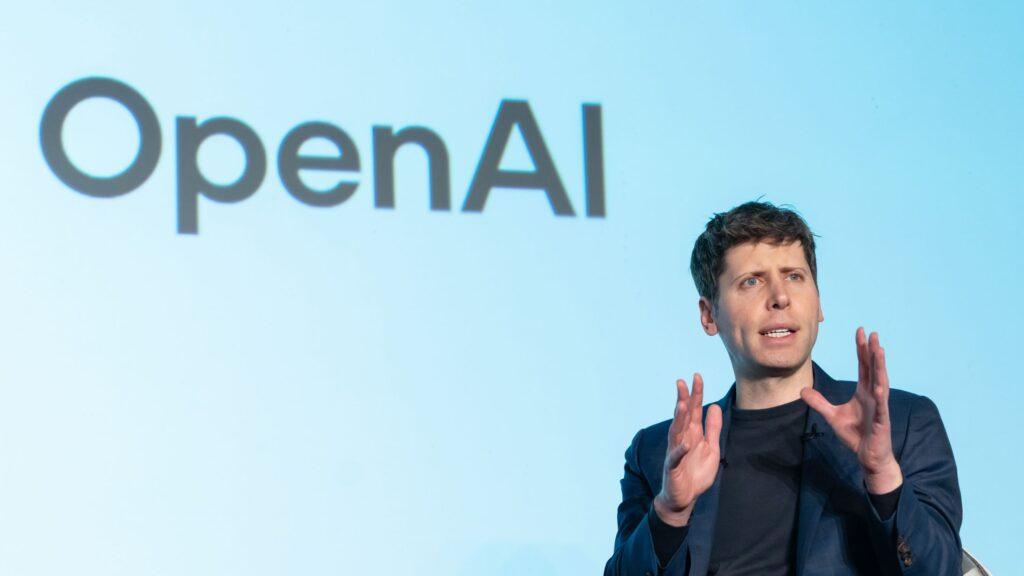
- OpenAI has announced a 3.2 gigawatt AI data center in Georgia
- The campus will be built on an existing warehouse project in an industrial area.
- OpenAI has established four commitments to the local community
OpenAI plans to build a new $30 billion AI data center campus in Effingham County, Georgia, which will deliver 3.2 gigawatts of computing once fully operational.
The site, called ‘Project Camellia,’ will span 1,400 acres and is expected to be completed in phases between 2028 and 2032. Construction will take place on a pre-existing warehouse project with an industrial zone at the Savannah Gateway Industrial Hub.
But OpenAI’s announcement differs significantly from previous data center announcements, focusing on how the project will benefit the local community, rather than the additional capacity and computing it will offer to OpenAI models.

OpenAI wants to be held accountable
To try to quell some of the local opposition to new data center projects, OpenAI’s announcement is broken down into a four-point plan for community engagement.
The first focuses on one of the main concerns of Americans across the country: electricity. OpenAI commits to “pay the full cost of the infrastructure and electrical service costs necessary to serve you.” But, as OpenAI highlights in the announcement, Georgia Public Utilities Commission rules prevent the company from shifting any costs to existing ratepayers in the first place. So it’s less of a promise and more of an acknowledgment of the rules.
But OpenAI says it will “proactively reduce its energy consumption before residential customers are impacted during periods of high demand” to “significantly support the reliability of Georgia Power’s electric system and support our neighbors.” How this will work in practice is not detailed.
OpenAI says the new data center will also operate using a closed-loop cooling system to avoid unnecessary water use by continuously drawing and flushing into the local water supply, so outside of the initial flushing of the system and subsequent filling of the closed-loop system, actual water usage will be comparatively low. But things can still go wrong during these initial water intakes and discharges.
As a third benefit to the local community, OpenAI has promised $80 million “in community benefits over the life of the project” in addition to the “hundreds of millions of dollars in state and local tax revenue” that OpenAI hopes will make it the county’s largest taxpayer. OpenAI will also provide “eligible students at Georgia universities, community colleges, and technical schools” with up to $71 million in credits toward OpenAI Codex.
OpenAI does not give a time frame for the life of the project, so the $80 million in community benefits could be a relatively small annual amount depending on how long the project is expected to last.
Finally, OpenAI is committed to being responsible. OpenAI says it has already been gathering feedback from state and local officials, community leaders, schools and other regional partners “to understand local priorities and gather feedback on the project.” To that end, OpenAI will hold an open house on July 23, a day after the initial announcement was made. Feedback from this meeting and subsequent engagements with the local community will be “memorialized” in a Georgia Community Compact to “translate community priorities into specific commitments and clear accountability measures as the project develops.”

Follow TechRadar on Google News and add us as a preferred source to receive news, reviews and opinions from our experts in your feeds.


