
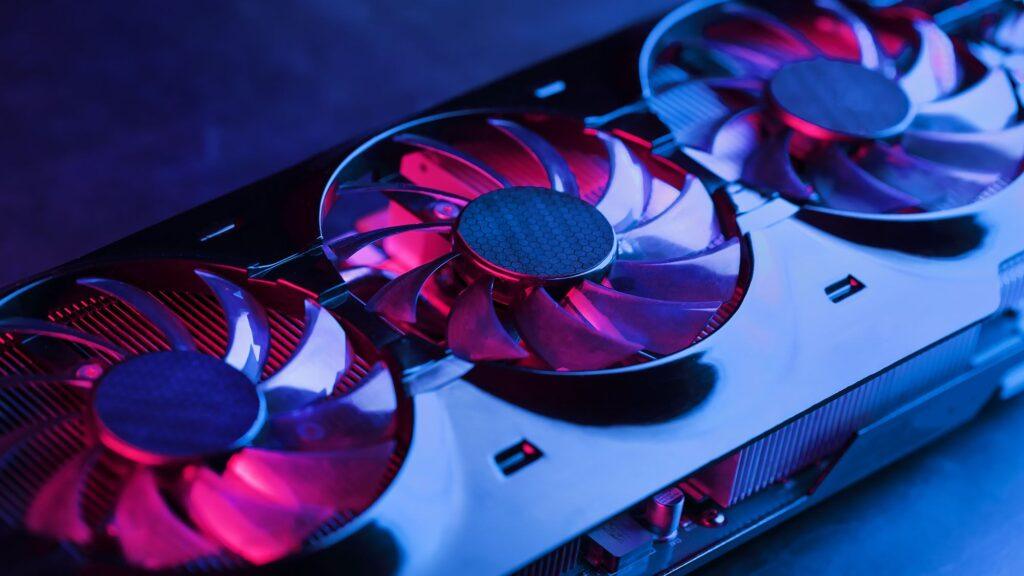
- A recent report suggests that Nvidia has informed its partners about price increases for GDDR6 and GDDR7 memory kits.
- This means that retailers can increase prices on RTX GPUs that use GDDR6 and GDDR7 memory.
- The potential price increase and a user’s dual GPU setup highlight the importance of hardware preservation.
The RAM crisis continues to plague PC makers, with rising prices and memory shortages ultimately leading to higher retail prices for consumers, and the trend is likely to continue with Nvidia.
According to a report from Benchlife, Nvidia is rumored to be planning a price increase for its GDDR6 and GDDR7 memory kits for RTX GPUs, and has informed AIB (Add-In Board) partners such as Asus, MSI and Gigabyte, who make their own versions of Nvidia’s GPUs. As expected, the price increase for these memory kits is due to the current RAM crisis.
While price increases for RTX GPUs are not guaranteed for consumers, because this will directly impact AIB’s partners who manufacture the GPUs, retail price increases are unfortunately likely. It’s a trend we’ve seen with recent PC hardware.
Latest videos ofTechnologyRadar
Notably, Valve’s Steam Machine was initially supposed to cost less than its final price of $1,049 / £879 / AU$1,609, which could now also be at risk of a price increase, based on suggestions from a Steam Machine engineer (as reported by Bloomberg). New portable gaming PCs are also often released for over $1,000, and the price of RAM and storage certainly play a role.
Consumer struggles
The RAM crisis is a sad situation for consumers and underlines the importance of preserving PC hardware. GPUs aren’t cheap by any means, especially with recent suggestions that AMD would also increase memory kit prices for its own AIB partners.
We’ve also recently seen the return of the RTX 3060, due to Nvidia’s attempt to help consumers with more options amid a difficult PC hardware market. However, if these price increase reports are legitimate, the RTX 3060 will likely be subject to higher prices at retailers.
That’s exactly why GPU configurations, like one Reddit user’s RTX 3090 and RTX 3050 dual-GPU rig, are now more important than ever. In this case, the RTX 3050 is responsible for allowing the generation of frames through Lossless Scaling to work.
My dual GPU setup
from r/losslessscaling
A game then uses the power of the RTX 3090 for high-quality visuals and performance, with the two GPUs joined together. The user claims he got 144 fps at 4K resolution up from the initial 71 fps without frame generation.
Frankly, a dual-GPU setup isn’t exactly common, nor is it recommended for gaming, as modern games are only designed for single-GPU rendering (although the frame-rate use case is worth noting).
Users would also need a more robust power supply, depending on the GPUs used, and probably a new motherboard with another compatible PCIe lane.
However, what I think is most important here is that it is a great example of why hardware preservation is so important, as it serves as a backup in case GPUs melt or end up defective, or for experiments like the one I described above. With no end in sight to the RAM crisis, reusing old hardware could be a way to overcome this.

Follow TechRadar on Google News and add us as a preferred source to receive news, reviews and opinions from our experts in your feeds.


