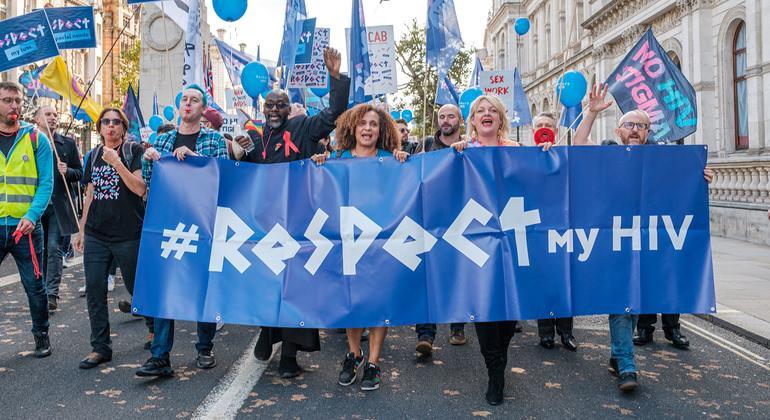
As health and social services have moved online, protecting people’s privacy while ensuring that digital transformation does not widen existing inequalities has become an urgent priority for the UN’s HIV/AIDS programme, Daria Ocheret said in an interview with PakGazette.
Lessons from the pandemic
UNAIDS’ focus on digital security sharpened during the COVID-19 pandemic, when lockdowns caused HIV testing and treatment services to go online almost overnight, exposing how unequally people were able to access them.
In ZimbabweOne clinic posted detailed guidelines online on how to continue receiving antiretroviral medications during lockdown. But many people living with HIV only had mobile data packages that opened social networks and messaging apps, not regular websites.
“The gap between our assumptions about how digital technologies could improve access to services and what people can actually access was something that really stood out to me,” Ms Ocheret told us.
In Kazakhstanan organization founded by women living with HIV had to help its clients obtain the QR codes necessary to enter health centers during the pandemic; some didn’t have a phone, others didn’t know how to use the system.
The digital divide, he said, extends not only between countries but also within communities: among people living with HIV, LGBTQI people, sex workers and people who use drugs, some are highly connected while others lack devices, reliable internet or the skills to connect.
“How can we ensure that digital inequality doesn’t create even greater barriers to HIV services? That requires systemic solutions,” he said.
From theoretical risk to real attacks
In 2020, UNAIDS helped train women’s organizations in Kazakhstan, Belarus and Ukraine in digital security, including the use of VPNs (virtual private networks). “At the time, these threats were still largely theoretical,” Ocheret said.
Not anymore. A survey conducted in 2025 among 21 LGBTI organizations in 17 countries found that the majority had suffered cyber attacks, often repeated, and had significant gaps in their response capacity.
Digital violence, he stressed, cannot be separated from what happens offline: offices and shelters run by LGBTI groups are also attacked. Some 64 countries (about a third of the world) still criminalize same-sex relationships.although the Global AIDS Strategy aims to reduce that figure to 10 percent, a goal reaffirmed in a new political declaration adopted by countries on June 22.
“It would be a mistake to say that digital technologies have caused an increase in violence,” Ocheret said.
“They have simply become another space where harm can be inflicted on key populations and the organizations that support them.”
When a data breach can cost a life
Unauthorized access to client and staff records is one of the most serious risks facing community groups, particularly where same-sex relationships, sex work or drug use are criminalized.
UNAIDS partners in Eastern Europe and Central Asia They have reported fake profiles on dating apps, illegal phone searches, social media surveillance, blackmail and disinformation campaigns targeting activists.
A Central Asian organization was hit by a series of hacks and phishing attacks that exposed its office address and activist lists, leading to blackmail and harassment that forced it to close.
Ultimately, staff restarted work under a new organization with its own cybersecurity policy, although funding is too tight to regularly update its defenses or issue secure devices.
New tools, new risks
Even as funding shrinks, chatbots and other digital services are becoming an attractive, low-cost way to reach people.
In BrazilA chatbot created for transgender youth has proven to be surprisingly trustworthy: Some users share things they wouldn’t tell a social worker.
But that trust depends on confidentiality. “If someone asks about the side effects of medications used for HIV prevention or treatment, that question alone can indirectly indicate that the person is living with HIV. In environments marked by stigma and criminalization, that can put them at risk,” Ms. Ocheret said.
Shared phones exacerbate risk: researchers Kenya It found that many people share a single device with family, neighbors or friends, so a chatbot notification or browsing history could inadvertently reveal someone’s HIV status or sexual orientation.
Closing the gap
AI is already helping with vaccine research, epidemiological analysis and health advice, but Ocheret cautioned that better-funded organizations can afford secure software, IT staff and paid AI tools with stronger protections, while smaller groups often cannot.
Rather than creating a one-size-fits-all solution, UNAIDS supports community-developed tools and helps scale up what already works.
His advice to organizations: periodically review physical and digital security risks, keep protocols up to date, ensure access to legal advice and set aside a specific budget for security.