
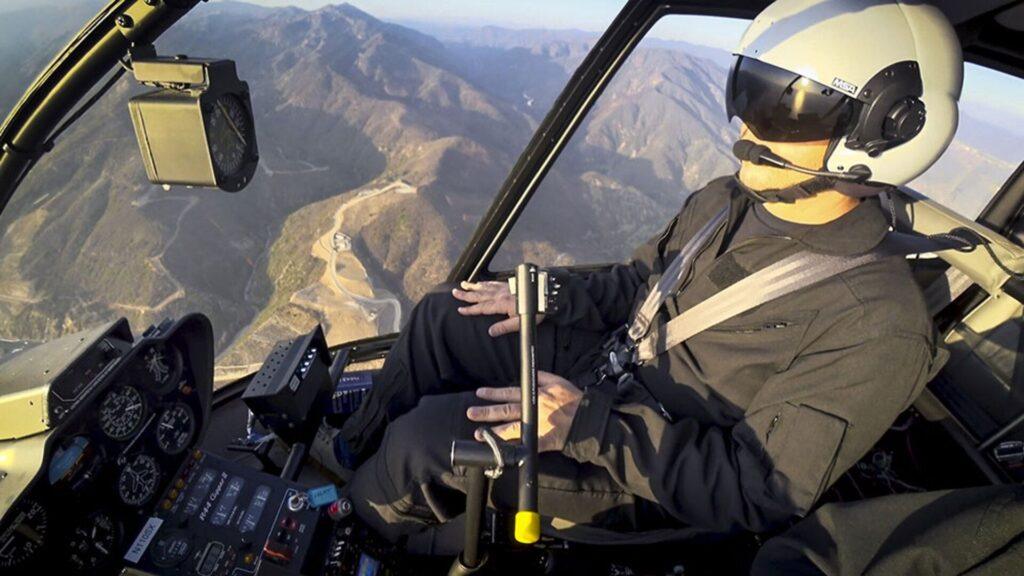
- A Chinook helicopter completed a landing without pilot intervention.
- Software-based upgrades are transforming the capabilities of legacy military aircraft
- The precision landing accuracy reached less than 1.5 meters.
A 64-year-old CH-47F Chinook helicopter completed its first fully automated landing without pilot intervention, marking a milestone for military aviation.
The demonstration, conducted using Boeing’s Approach-to-X software, showed the heavy-lift helicopter making precise landings using advanced flight control systems.
Rather than replacing the crew, the system functions as a supervised autonomy layer that allows pilots to define key parameters such as landing zone and approach angle.
Article continues below.
Look
How the autonomous landing system really works
The aircraft autonomously manages flight control inputs while the crew focuses on tactical awareness and threat detection.
The A2X capability is based on Boeing’s enhanced Digital Automatic Flight Control System architecture, which integrates advanced control laws and pilot-informed interface design.
The system replicates real-world pilot behavior during the approach and landing phases by leveraging precision navigation inputs and flight control algorithms.
During initial flight testing beginning in January 2026, the system performed more than 150 automated approaches with positional accuracy of less than five feet.
The demonstrated ability to maintain less than 1.5 meters of positional error is particularly notable for operations in confined or degraded landing zones where spatial margins are minimal.
This capability directly improves the Chinook’s effectiveness in air assault, resupply and special operations missions, especially at night or in degraded visual environments.
The Chinook remains critical to the U.S. Army’s heavy lift capability, transporting troops, artillery, vehicles and supplies across the battlefield.
In high-threat environments where reaction time and situational awareness are critical, allowing crews to focus externally while the aircraft manages complex flight tasks could change the way heavy-lift helicopters are employed.
Pilots retain the ability to modify glide path and heading data in real time, ensuring responsiveness to threats, obstacles, or last-minute mission changes.
The development process included iterative feedback loops between test pilots, operational units and Boeing engineers, shaping not only the control laws but also the cockpit interface.
This alignment is essential for operational acceptance, particularly on legacy platforms that remain critical to military logistics.
The upgrade represents a relatively low-risk, high-impact upgrade path for the existing Chinook fleet.
By focusing on software-driven capability improvements rather than the development of new airframes, the Army can accelerate fielding timelines while controlling costs.
Once validated, the A2X-enabled DAFCS upgrade could be integrated across the CH-47F fleet without altering the aircraft’s primary configuration.
The successful demonstration of supervised autonomy marks a tangible shift toward operational autonomy in legacy helicopters.
Accuracy, repeatability, and reduced crew workload translate directly to an advantage on the battlefield.
However, the system has only been tested under controlled conditions and its performance in harsh electromagnetic environments or austere landing zones is yet to be proven.
Through Army recognition

Follow TechRadar on Google News and add us as a preferred source to receive news, reviews and opinions from our experts in your feeds.


