
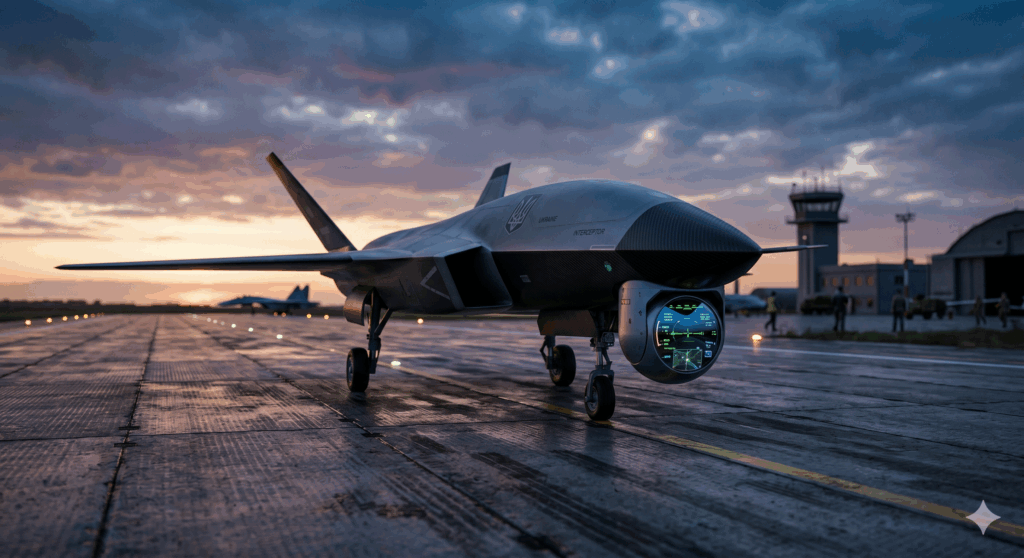
- The attack, carried out on June 1, 2025 by the Ukrainian SBU, targeted five different Russian airfields.
- The drone attacks caused the destruction of $7 billion in military equipment, according to Ukraine, even as Russia claimed much smaller damages, $26 million.
- Ukraine claims 41 aircraft were destroyed or damaged, while official Russian figures admit only 11 losses.
Operation Cobweb is widely considered the most successful drone attack the world has ever seen, in terms of the damage it inflicted and the sophistication demonstrated by the Ukrainian security services.
With $7 billion in claimed losses (according to Ukrainian estimates) and damage to up to 41 aircraft at five different Russian airfields, its scale and ambition means that militaries not directly involved in the conflict also take note of the lethality of a properly executed asymmetric attack.
The model can be replicated around the world, where most defenses tend to look outward rather than inward when it comes to security against remotely controlled FPV drones.

Why the world’s most sophisticated drone attack yet requires a change in doctrine
Many compare Operation Spider’s Web to Russia’s Pearl Harbor moment because of the extreme shock value it produced, even as it crippled much of its air force, much of it irreplaceable, by using drones that cost considerably less.
The operation, which reportedly required 18 months of meticulous preparation, used up to 117 drones that were smuggled into Russia as parts, assembled locally and hidden inside mobile cabins on trucks before being activated remotely using Russian cellular networks to avoid exposing local operators.
The deepest of these attacks took place in Belaya, eastern Siberia, nearly 4,300 kilometers from Ukraine, even as it raised concerns around the world about the vulnerabilities that modern militaries, including the United States, currently exhibit to such attacks.
Not only did it serve as proof that cheap drones could effectively render redundant or neutralize multibillion-dollar military assets, it also forced a rewrite of the rules of conventional warfare as understood by modern armed forces.
It highlighted a growing sense of alarm that not only high-value assets that were not adequately protected were potential liabilities on a modern battlefield, but also the fact that low-cost attacks like these could potentially shape future conflicts, even as military powers grapple with the question of how best to address swarms of drones, many of which can cost several orders of magnitude less than their targets.
The United States, in particular, stands out here, with 11 aircraft carriers deployed around the world and up to 4,790 managed military sites around the world, of which 824 are important national installations, all of which need to be adequately protected.
To put it in context, Iran’s current mass-produced Shahed drone costs as little as $20,000, by some estimates, providing a very low opportunity cost deterrent against a military that has spent billions of dollars waging war and defending against drone attacks in the Middle East.
The United States is already investing heavily in counter-drone systems (laser, microwave, and EW suites) and is using hardened shelters, among other measures. However, as modern drones become smaller, more sophisticated and even harder to track, it could mean that a change in doctrine, rather than simple countermeasures, is required to account for a new world, where having the best arsenal may not be the answer to sustained conflicts, as cheaper and easier-to-build drones continue to reshape modern theaters of war.

Follow TechRadar on Google News and add us as a preferred source to receive news, reviews and opinions from our experts in your feeds.


