
The plaintiff alleges that Achakzai made “seditious comments” against state institutions in a recent public speech.
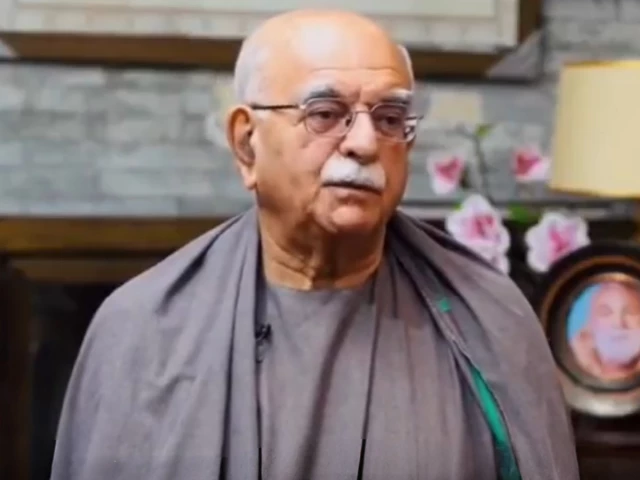
A photograph of opposition leader Mahmood Khan Achakzai. SCREEN CAPTURE
QUETA:
Mahmood Khan Achakzai, leader of the opposition in the National Assembly and president of the Pashtunkhwa Milli Awami Party (PkMAP), has challenged a treason case registered against him before the Balochistan High Court (BHC).
The veteran politician filed the petition against an FIR lodged following a complaint by a citizen named Waleed Khan. The complainant alleged that Achakzai made “seditious comments” against state institutions during a recent public speech. Challenging the legal grounds of the case, Achakzai appeared before the BHC to request the annulment of the legal proceedings.
Following his court appearance, the PkMAP chief addressed the members of the BHC Bar Association and strongly defended his political stance. He stated that the TTAP is the only political alliance in the country formed through an independent public initiative, free from the influence or support of what he described as “powerful quarters.”
Achakzai stressed that the complex and long-standing crises facing Pakistan and Balochistan can only be salvaged through unwavering commitment to truth, strict adherence to constitutional governance and strong democratic frameworks. He added that the path to absolute political and national stability depends largely on a truly independent elected parliament.
Criticizing the traditional governance model in the province, the opposition leader argued that relying solely on tribal elites and influential figures to steer the political process would not solve Balochistan’s deep-rooted problems. Instead, he called for broader and more inclusive public participation at all levels of society.
Underlining the historical sanctity of the 1973 Constitution, Achakzai reminded the legal community of the sacrifices endured to falsify the document.
He stated that maintaining the absolute supremacy of the Constitution and ensuring total judicial independence are the fundamental pillars required to resolve persistent national disputes.
While demanding free, fair and transparent elections, the veteran leader noted that recurring electoral processes have little value if they do not genuinely reflect the democratic mandate of the masses.
He further criticized the growing dominance of financial power in the country’s political landscape, alleging that parliamentary seats are increasingly compromised by monetary influence, which ultimately deprives ordinary citizens of authentic representation.


