
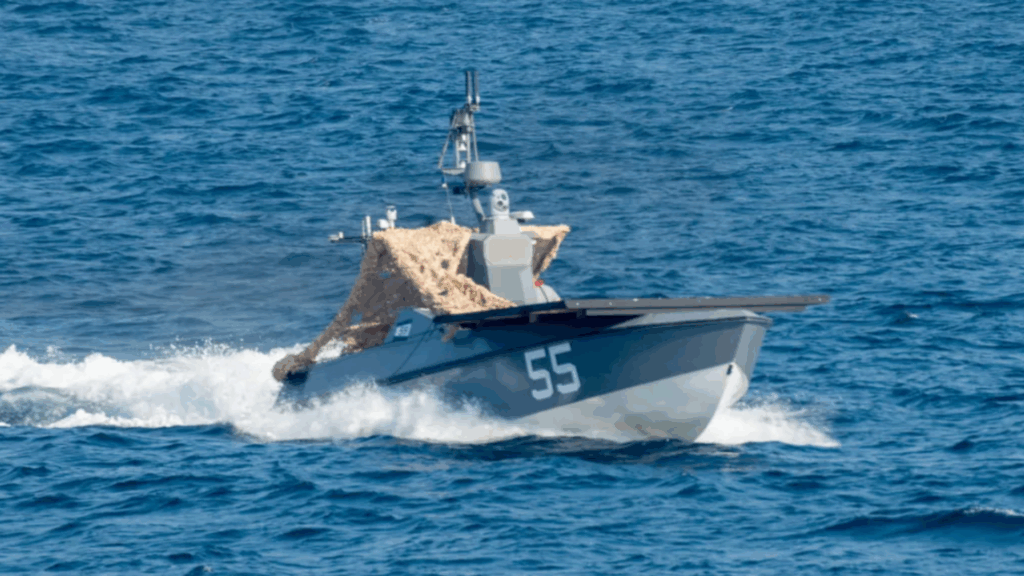
- Unmanned Navy ship completes first known military aircrew rescue mission
- The crew of the American Apache survived after the uncrewed ship reached them first.
- The rescue operation showed the expansion of the military role of autonomous systems
A US Army Apache helicopter crashed near the Strait of Hormuz, but the most significant event came from the rescue efforts that followed.
An unmanned ship operated by the Navy recovered the helicopter crew, marking the first known recovery of military personnel involving an uncrewed surface vessel.
The incident occurred near Oman, where U.S. forces rescued both crew members approximately two hours after the helicopter went down.

A rescue mission that introduced a new role for unmanned systems
While investigations continue into the cause of the Apache incident, military officials confirmed that the crew survived and remained in stable condition afterwards.
According to the United States Central Command, naval forces, the 82nd Airborne Division and support units from the Air Force and Navy participated in the rescue operations.
Task Force 59, the Navy formation responsible for testing and operating various unmanned maritime technologies, also participated in the operation.
Authorities have not revealed the specific ship involved, although the unit operates several unmanned ship designs in Middle Eastern waters.
The successful recovery drew attention because personnel rescue missions traditionally rely on helicopters, ships and other manned military platforms.
Open water recoveries already involve considerable operational risks, especially when missions occur near contested regions or active military environments.
The use of an unmanned vessel reduced the need to immediately expose additional personnel while allowing rescuers to reach the stranded crew.
Military planners are examining broader rescue applications.
Defense planners have increasingly explored ways to integrate autonomous systems into missions where manned platforms face elevated operational hazards.
Analysts note that unmanned ships could be deployed in large maritime regions and remain available for emergencies along critical routes.
Those advantages may become particularly relevant in vast theaters of operations where rescue forces face limitations of distance, time and safety.
Military officials have also recognized growing concerns about the vulnerability of traditional combat search and rescue resources during modern conflicts.
Therefore, the successful recovery near the Strait of Hormuz offered a practical example of how a drone supported personnel rescue efforts.
This advancement comes as armed helicopters continue to perform maritime security duties involving commercial shipping and regional military operations.
Apache helicopters have played a visible role in protecting shipping lanes and responding to threats involving smaller hostile vessels.
President Donald Trump later claimed that Iran had shot down the helicopter, although investigators had not publicly confirmed the cause.
“Our Grand Army just informed me that last night the Iranians shot down one of our highly sophisticated Apache helicopters while patrolling over the Strait of Hormuz,” the president said on his Truth Social network.
“There were two pilots involved, both are safe and sound. However, the United States must, of necessity, respond to this attack.”
The loss of the Apache remains under investigation, but the rescue operation itself may receive the same attention because it demonstrated a capability rarely seen before.
It remains uncertain whether this event will become a turning point for future rescue operations, although military interest in uncrewed recovery is evident.
Via TWZ

Follow TechRadar on Google News and add us as a preferred source to receive news, reviews and opinions from our experts in your feeds.


