
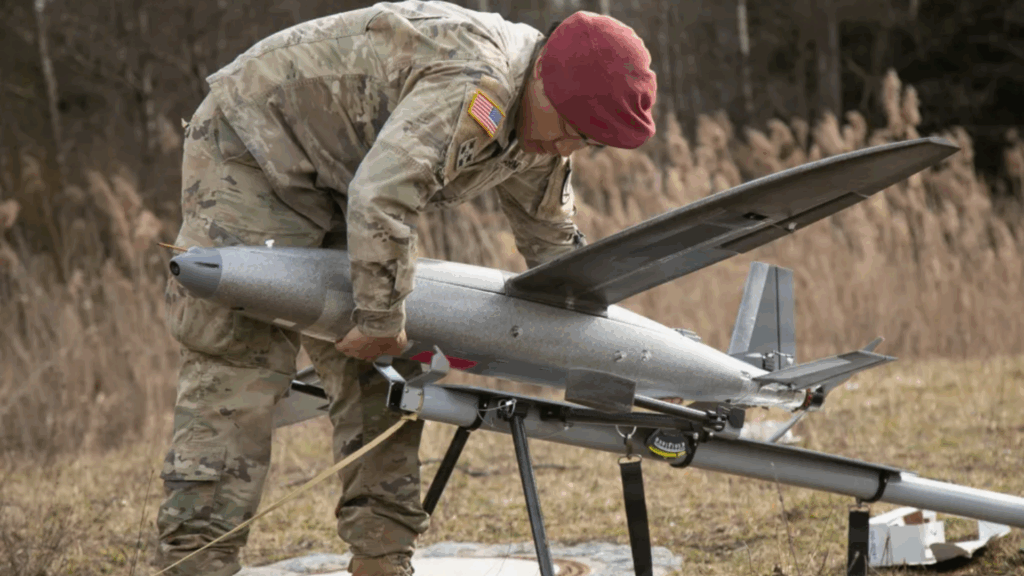
- Wild Hornets Expands Use of 3D Printing to Meet Demand
- Internal manufacturing reduces dependence on external suppliers
- Company focuses on software as drone swarm threats evolve
Ukrainian drone maker Wild Hornets believes 3D printing could be the answer to modern warfare, helping companies like it reduce costs and boost production.
D.U. reports that the company is now increasing its 3D printing footprint by using a large number of FDM (fused deposition modeling) desktop printers, such as Bambu Lab and Elegoo devices, instead of using expensive industrial systems.
This allows the company to produce plastic drone components in high volumes, but also improves manufacturing speed, allowing the company to iterate the design more quickly as enemy tactics evolve.

The role of 3D printing in modern warfare
Recent reports on the company by industry experts in 3D printing industryhighlights how desktop 3D printers offer several advantages for rapidly evolving aerial and digital warfare, such as lower capital costs for manufacturing, rapid prototyping support, and easier scaling through new printers, rather than having to build new tooling and molds.
This comes as Ukraine continues to face enemy threats: the International Institute for Strategic Studies (IISS) continues to report an increase in attacks from Russia as the country redoubles its efforts against Iranian Shahed-type drones.
Affordable, in-house manufacturing also encompasses battery packs, flight controllers, and other electronic and electronic components, all of which helps reduce costs and supports Ukraine’s efforts. It also reduces dependency on third parties and external supply chains.
Since its inception, Wild Hornets has grown from a volunteer initiative to a manufacturer capable of producing around 100 drones per day; Deepening your 3D printing strategy will only help.
Speaking of artificial intelligence, an anonymous Wild Hornets spokesperson said the use of DOU AI in drone-based warfare is limited but is beginning to expand, primarily encompassing reconnaissance and navigation. However, Wild Hornets estimates that adding AI functionality currently increases costs by $150 to $500 per drone, making it an expensive consideration.
Drones are becoming much more than hardware
Looking ahead, Wild Hornets is seeing interest from defense partners extend beyond the drone itself to the full Hornet Vision package, which includes digital video streaming, remote control, artificial intelligence and more.
The system itself was originally designed because Chinese digital control systems became unavailable amid ongoing geopolitical conflicts, but as the company recently demonstrated successful remote operation of its Sting interceptor from 2,000 kilometers away, from a country outside Ukraine, partners are increasingly interested in the complete hardware and software package.
However, even as aerial and autonomous threats continue to rise, the company’s anonymous spokesperson told DOU that drone swarms do not exist in the form they are supposed to exist, describing them as “a cool legend and scam mechanism to get money from naive investors.”
The company promises to add drone swarm technology as it emerges and evolves, but for now it is neither an option nor a realistic threat.
“We would like the war to end,” they added. “So instead of increasing production volumes, we would focus on technologies, research and development, design solutions and cooperation with foreign partners.”

Follow TechRadar on Google News and add us as a preferred source to receive news, reviews and opinions from our experts in your feeds.


