
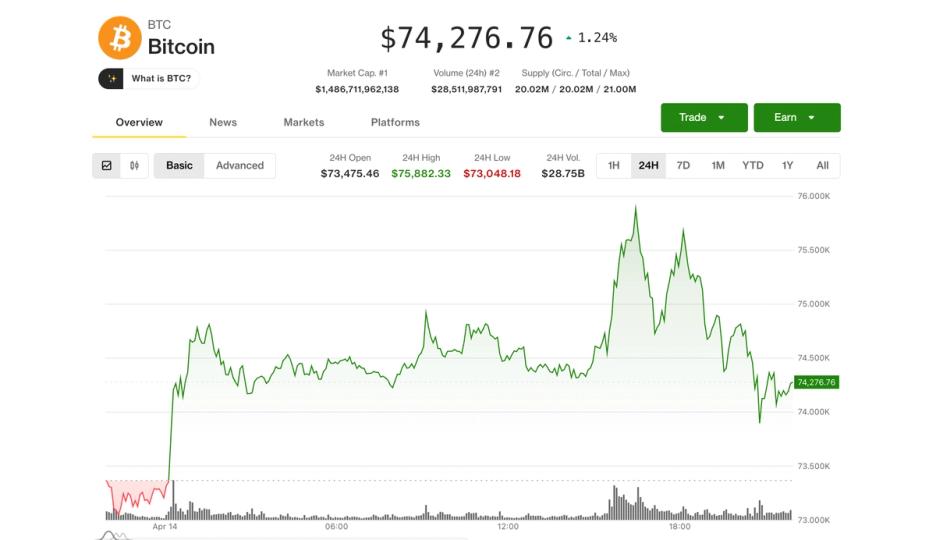
bitcoin The day began with a promising opportunity for a breakout, but the rally fizzled out before a familiar brick wall that has kept prices in check for more than two months.
After briefly breaking above $76,000, a key resistance level, the largest cryptocurrency reversed course, falling below $74,000 later in the session. It still held a 1.3% gain in the last 24 hours, and recently changed hands around $74,300.
Ether (ETH) followed a similar path, retreating from over $2,400, but still outperformed, advancing 2.5% daily.
Traditional markets saw no such reversal, and the Nasdaq closed at its session high, up 2%. The S&P 500 rose 1.2% and is now just a few points away from hitting a new record high, in stark contrast to bitcoin, which remains roughly 40% below its record high of $126,000.
Still, conditions are set for an upside squeeze in cryptocurrencies, even as Tuesday’s breakout failed to hold.
According to Vetle Lunde, head of research at K33 Research, Binance perpetual bitcoin funding rates have remained negative for 11 consecutive periods despite the recent rally, indicating that traders are still tilting bearish even as prices rise. At the same time, open interest has been rising, suggesting that new short positions are being added rather than closed, he said.
That combination has historically set the stage for strong bullish moves, he said.
The 30-day average funding rate has been negative for 46 consecutive days, Lunde added, matching the extended bearish positioning seen during past periods of market stress, such as after the FTX crash in late 2022 and the mid-2021 bear market, when China banned bitcoin mining.
“Comparable risk aversion regimes have historically been attractive entry points for BTC,” Lunde said, as crowded short trades were forced to unwind.


