
- ChatGPT’s new voice mode launches today for everyone, even free users
- It allows for much more natural conversations and won’t interrupt you if you stop talking.
- You will be able to perform simultaneous translation for the first time in ChatGPT
OpenAI has updated ChatGPT’s voice mode for everyone with two new models rolling out globally starting today.
I heard the new GPT-Live-1 model in a demo by OpenAI and it sounds much more natural than the previous ChatGPT voice model.
The new model aims to address two particular problems with the existing ChatGPT voice mode. First of all, the previous version simply wasn’t as smart as the text version of ChatGPT. Secondly, he tended to interrupt too much. You’ll notice this especially if you stay silent while thinking of a response: ChatGPT will often fill the gap by talking.

Sounding smarter
To solve the intelligence problem, the new model actually delegates more difficult questions to ChatGPT-5.5 and then returns with an answer. He’ll say things like “let me check it out for you” to let you know he’s doing this, which keeps the conversation flowing naturally and doesn’t make it seem like you have to wait too long for a response.
It does the same for any answers you need to search the web for. So, for example, if you ask it when your team’s next World Cup game is, it will say something like “OK, let me check that” while searching for it using GPT-5.5, and then give you the answer.
“Hello chat”
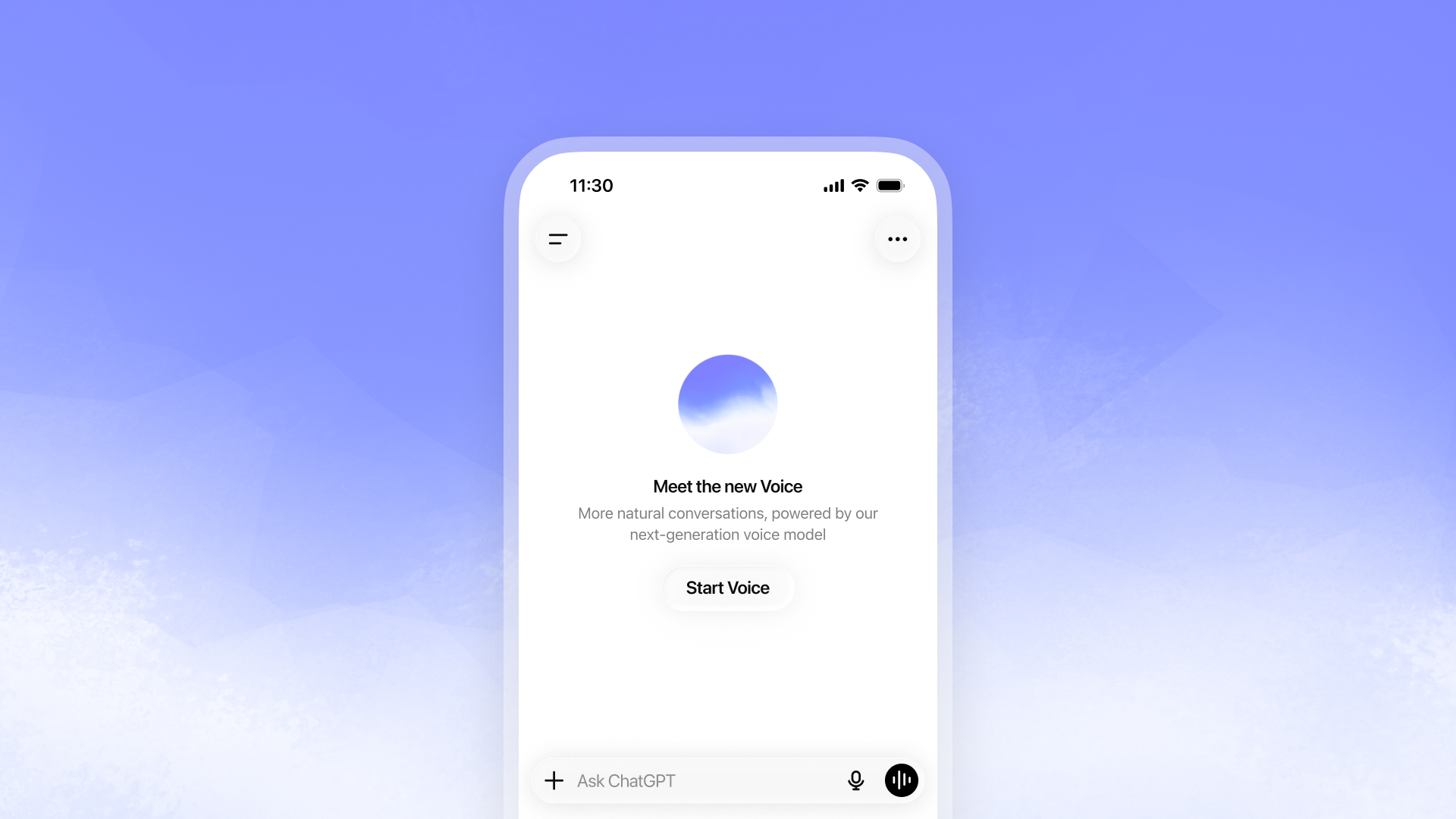
OpenAI also demonstrated how the new ChatGPT voice mode can stop talking and listen if you tell it to, without interrupting. You can simply ask him not to respond until you speak to him directly again and he will wait.
Of course, this requires you to give it a name, which it doesn’t officially have. In the demo I saw, the OpenAI employee called it “Chat,” so he said “Hey Chat,” just like you would say “Hey Siri.” In practice that seems to work quite well.
Simultaneous translation
The last new feature to highlight is simultaneous translation. If you watch world leaders being briefed at places like the United Nations, you will see that they have a headset through which they receive a simultaneous translation in their own language of what the speaker is saying.
Now you can do this with ChatGPT. Say “I would like you to simultaneously translate everything I am saying into [language]”, then start speaking and ChatGPT will provide you with a live translation as you speak. Seeing this in action was pretty impressive and I imagine it will be very useful in several real-world situations.
All major languages seem to be supported as well.
The future of AI
The new GPT-Live-1 models (there are two, the regular one and a mini version) will begin rolling out to all users immediately, but it could take a few days until they reach everyone. The smaller GPT-Live-1 mini model will be the default for free users, while paid users will get the full GPT-Live-1 model.
Until now, ChatGPT’s voice mode has been a useful tool when you need to use your hands for something and can’t type, but it’s never been good enough to become the standard way to interact with ChatGPT. It now appears that OpenAI is attempting to unlock the ability to use voice as the primary interface for AI, and it is quite possible that this is the future that OpenAI is aiming for. Today I think we have all taken one more step towards it.

Follow TechRadar on Google News and add us as a preferred source to receive news, reviews and opinions from our experts in your feeds.


