

OpenAI has released “a major update” to Codex that it says will help make the platform a more effective working tool for users.
Codex will now be able to go “beyond coding” and access other parts of your computer, as well as operate desktop applications on its own, running in the background so that it does not interfere with your current work.
Article continues below.
A smarter Codex for everyone
“We’re launching a major update to Codex, making it a more powerful partner for the more than 3 million developers who use it every week to accelerate work across the entire software development lifecycle,” OpenAI said in a blog post announcing the news.
“Codex can now operate your computer alongside you, work with more tools and applications you use every day, generate images, remember your preferences, learn from previous actions and take on continuous, repeatable work.”
The new memory feature, now in preview, will mean that Codex can remember useful context from previous experiences, such as personal preferences, corrections and information that took time to collect, helping to complete future tasks more quickly and effectively. It will also proactively propose useful work to pick up where you left off using the context of projects, connected plugins, and memory.
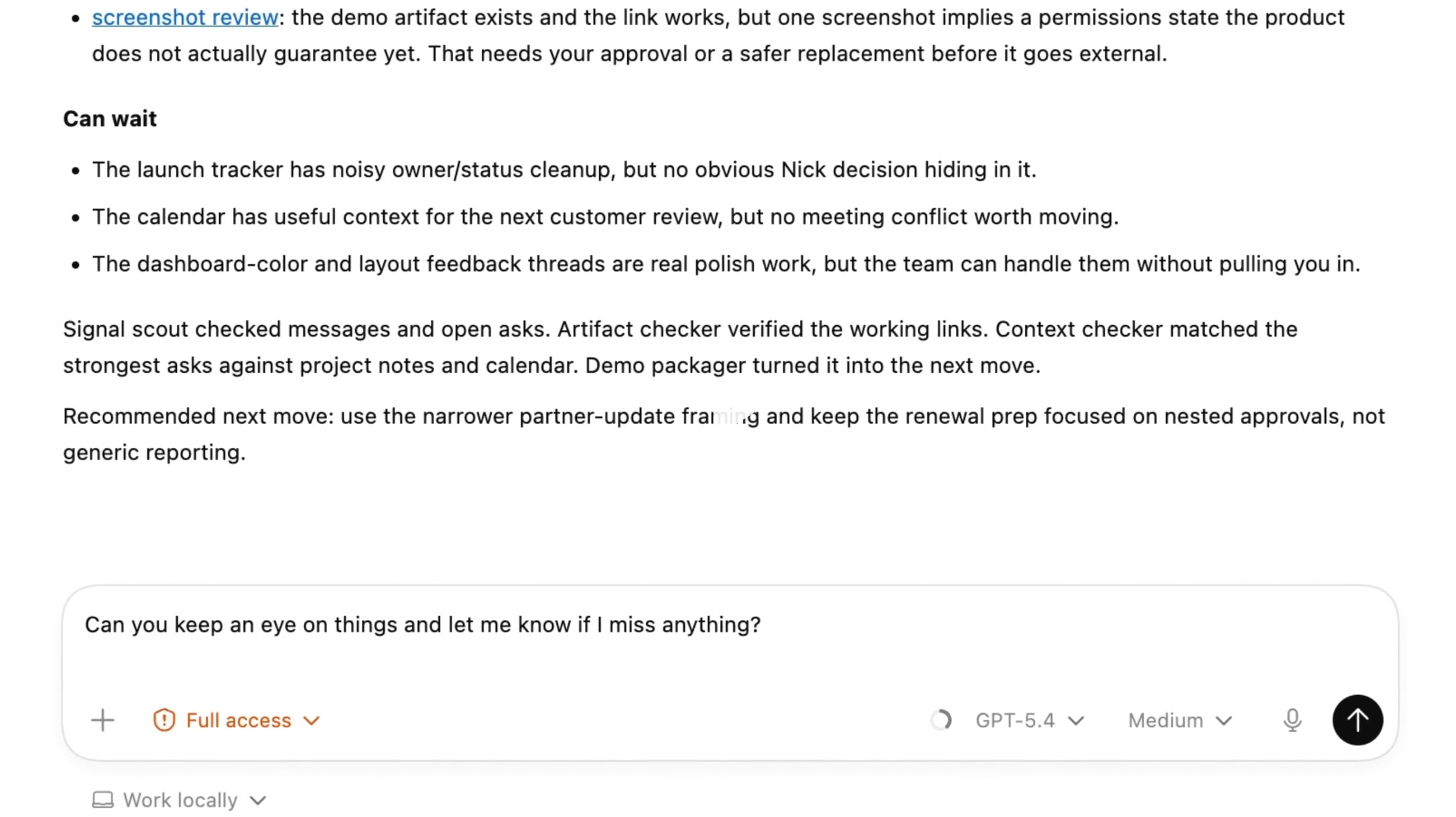
This increased capability means that multiple agents can now work together on a Mac at the same time, but avoid interfering with their work in other apps – a tool that OpenAI notes could be useful for developers iterating on interface changes, testing apps, or working on apps that don’t expose an API.
Codex now also includes an in-app browser, allowing users to comment directly on pages to provide precise instructions to the agent, which could again be useful for game and frontend development.
Regarding image generation, Codex will be able to use gpt-image-1.5 to quickly create images, which combined with screenshots and code will help workers create product concepts, interface designs, mockups and games within the same workflow.
Elsewhere, there’s also support for addressing GitHub review comments, running multiple terminal tabs, and users will also be able to open files directly in the sidebar with rich previews for PDFs, spreadsheets, slides, and documents, and use a new summary panel to keep track of agent plans, sources, and artifacts.
All updates are rolling out to users of the Codex desktop app who are signed in with ChatGPT, with personalization features (including memory and contextual suggestions) coming soon to business, education, and EU and UK users, and desktop usage initially available on macOS, before rolling out soon to EU and UK users.

Follow TechRadar on Google News and add us as a preferred source to receive news, reviews and opinions from our experts in your feeds.


