
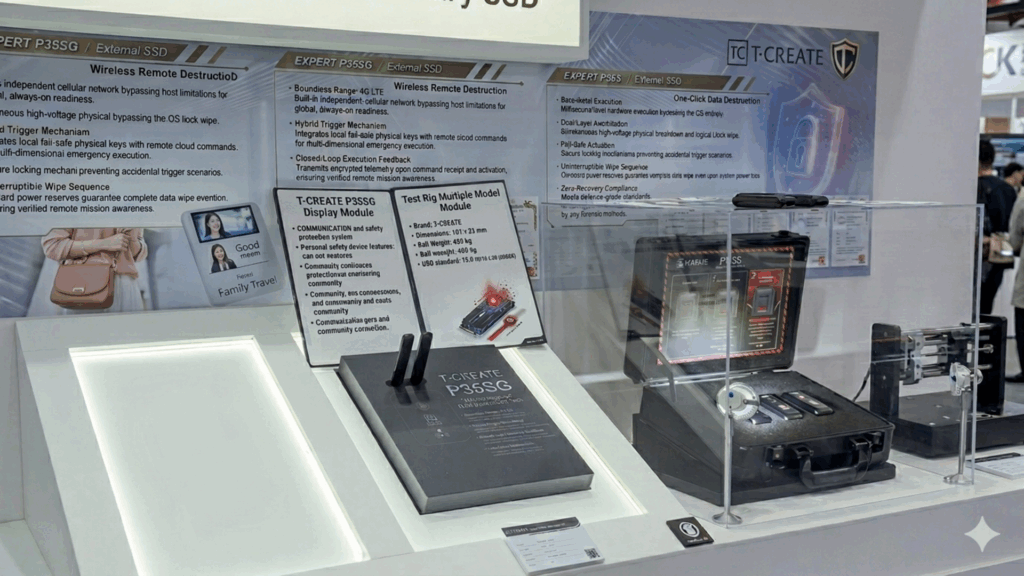
- T-CREATE EXPERT P35SG enables remote SSD destruction via cellular control
- Hardware-level wipe prevents recovery even after advanced forensic attempts
- Physical button allows instant local activation of secure data erase
A storage device capable of destroying its own content remotely has become one of the most unusual technologies presented at Computex 2026.
Teamgroup introduced the T-CREATE EXPERT P35SG, an external SSD that combines portable storage with an integrated cellular communications system.
The device incorporates an independent 4G LTE modem, allowing it to receive commands without depending on a connected computer or host network.

How Wireless Destruction Really Works Without a Host Computer
The built-in cellular network bypasses limitations that the host machine might impose on the disk, so a user can trigger the destruction of sensitive data remotely, even when far from the physical device.
For on-site use, the SSD also includes a physical button that allows instant data erasure with a single touch when needed.
It uses a patented two-stage safety button system combined with Teamgroup’s dedicated kill circuit, both protected by multi-region utility patents.
The company has also integrated a proprietary destruction trigger notification system, which sends real-time updates so users can confirm when the removal process has been successfully completed.
The drive performs its erase sequence at the hardware level rather than through any operating system, a basic execution that makes it resistant to software-based interruption once the process begins.
Built-in power reserves ensure that the wipe is completed even if the device is suddenly disconnected, and a high-voltage physical failure combined with a logical data wipe further strengthens the destruction process.
The company claims that this method meets strict standards designed to prevent forensic recovery.
A fail-safe locking mechanism helps reduce the risk of accidental activation and unintentional data loss.
A business traveler carrying confidential client information may find value in this level of remote control of destruction.
Basically, the drive acts as a data “deadman switch,” ensuring that information cannot be recovered if the device is compromised.
Previous self-destruct storage technologies and initial concepts.
Self-destructive storage technology has evolved through several experimental stages over the years, ranging from military-style designs to more practical consumer approaches.
In 2021, Technodynamika, a subsidiary of Rostec, reportedly created a prototype of a USB drive with a built-in detonator designed to physically destroy NAND chips when activated.
The mechanism was intended to make the recovered data completely unrecoverable once activated.
More recent consumer-oriented concepts, such as the Ovrdrive USB, took less extreme approaches.
These included heat-based data destruction and secure multi-step unlocking processes designed to prevent unauthorized access.
TEAMGROUP has also entered this field with devices such as the P250Q self-destruct SSD and P35S SSD, which can permanently erase data with user-initiated commands.
They combine hardware-level data erasure, AES-256 encryption, and power loss resistance to ensure that sensitive information cannot be recovered even after an interruption.

Follow TechRadar on Google News and add us as a preferred source to receive news, reviews and opinions from our experts in your feeds.


