
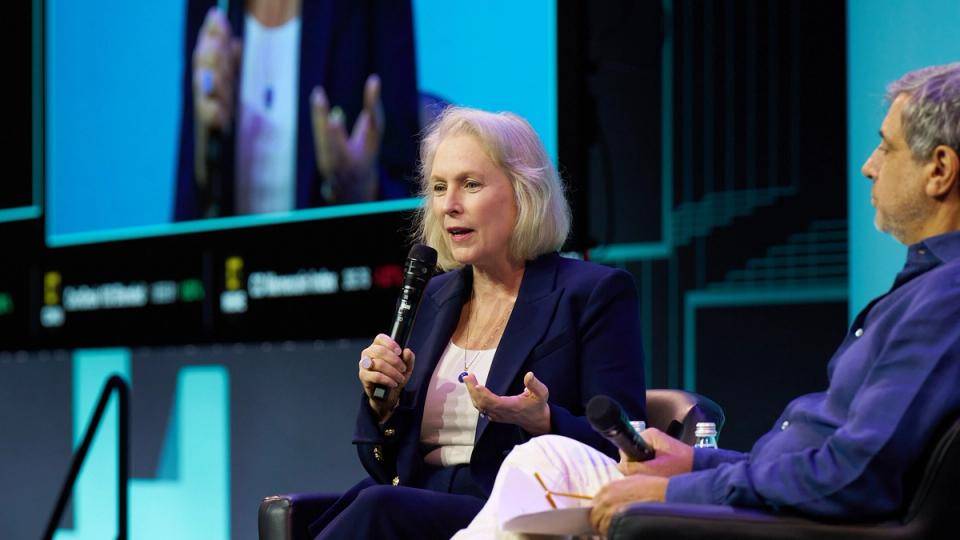
MIAMI – Long-awaited legislation to establish US regulations for crypto markets will not survive the Senate if it does not include a controversial ethics provision that prohibits top government officials from having personal interests in the industry, said US Senator Kirsten Gillibrand.
“No one is going to vote for this bill if we don’t have an ethical provision,” Gillibrand, a New York Democrat who has been involved in bipartisan cryptocurrency legislation for years, said Wednesday at Consensus Miami 2026. The inclusion of that section, largely aimed at President Donald Trump’s business interests, remains one of the few major points in the negotiation of the bill, which is coming to a head this month.
“We cannot allow members of Congress, senior administration officials, presidents or vice presidents to enrich themselves from these industries because of their privileged status,” Gillibrand said. “It’s the worst form of pay-for-play; it’s the worst form of campaign finance violations; it’s a violation of the Constitution.”
The Digital Asset Market Clarity Act, the crypto industry’s main policy goal in Washington, is awaiting a necessary Senate Banking Committee hearing to advance to the full Senate for a vote.
Gillibrand said the ethics negotiation must be resolved next week to get bipartisan approval at the hearing, which is expected next week. He said negotiators are also working on consumer protection and illicit financing elements. So far, on the ethics provision, White House officials have denied that Trump’s business interests represent a conflict and have said they will not tolerate a bill that targets him.
“We cannot allow greed and corruption in Washington to destroy this industry, and without that provision, that is exactly what will happen,” Gillibrand argued.
The window for legislative action is narrowing considerably, and the Senate bandwidth needed to pass legislation will be tight, with about 10 weeks left on the Senate calendar before Congress moves to midterm elections.
Gillibrand predicted that a final vote could take place in the first week of August, “if we’re lucky.” That would be the last chance before Congress’s summer vacation.
However, on another Consensus panel, Summer Mersinger, CEO of the Blockchain Association who served on the Commodity Futures Trading Commission, suggested that a legislative window may never close permanently.
“There is a window of opportunity, and it’s always important that you act when you find that window of opportunity,” he said. “But I always say that doesn’t mean the window won’t open again.”
Read more: Ripple CEO Brad Garlinghouse says clarity is better than chaos as Senate reaches key moment


