
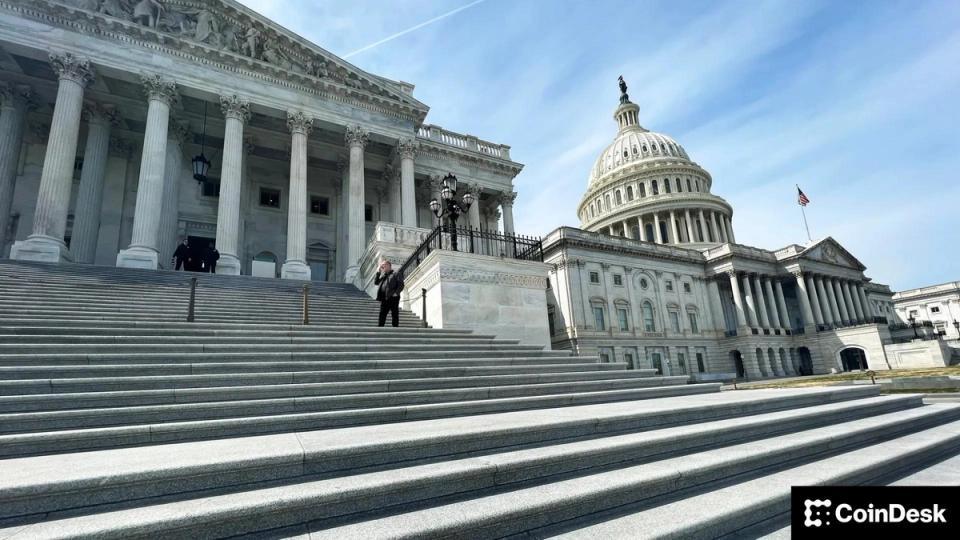
A package of several crypto tax bills may not yet be ready for prime time, as a US House Ways and Means Committee hearing revealed potentially important questions from lawmakers suggesting the panel has failed to achieve bipartisan adoption of bills that would design a clearer tax code for digital asset earnings.
The latest pieces of legislation are intended to address the tax filing burdens of cryptocurrency users and investors, although House lawmakers, especially Democrats, raised pointed questions about the proposed tax treatments during a Tuesday hearing to discuss the bills, with some key members reportedly objecting ahead of the session. This preliminary hearing is an initial step in a process that would normally proceed through reviews and annotations before the bills could be considered by the House at large, and committee Chairman Jason Smith has indicated his intention to make bipartisan progress.
“I’m aligned with that goal … eventually,” Richard Neal, the committee’s top Democrat, said during the hearing. “There is a healthy skepticism on both sides.”
Although the Digital Asset Market Clarity Act that is slowly making its way through the US Senate represents the cryptocurrency industry’s main policy effort in Washington, a set of new cryptocurrency tax laws would come second on the priority list. As U.S. rules stand, taxes on digital asset gains are difficult for investors to manage, especially those who profit from mining, staking, or those who make a large number of transactions.
“The committee’s legislation addresses key gaps in the tax code, including parity in tax treatment with comparable traditional financial asset transactions, clarity for tax situations unique to digital assets, and reducing the administrative burden for digital asset owners and brokers,” chair Smith summarized in a statement ahead of the hearing.
One of the bills would address the industry’s long-standing request that small transactions with minimal profits should be exempt from tax reporting, which could ease accounting burdens on users and free up digital assets for use in routine payments. Another bill would eliminate the double taxation scenario for mining and gambling income, which is taxed upon receipt and when sold.
“If Americans want to pay with a stablecoin instead of a credit card or cash, they should be able to do so without a ton of tax paperwork,” Smith said during the hearing.
Mining postponements
But one of the hearing witnesses, Mike Kaercher, deputy director of the Tax Law Center at NYU Law, said the bills still contain traps, including his own objection to the mining and gambling provision that could be abused.
“The problem is that the bill provides an option for gamblers and miners to defer income paid in the form of newly minted coins until they are available,” he said, suggesting it could create a new tax subsidy. He argued that “it violates parity with traditional finance and the principle that income is taxed upon receipt.”
“Despite some well-thought-out guardrails in the bill, it is possible for taxpayers to permanently avoid taxes by earning rewards through certain business structures,” he said.
That concept attracted significant attention from committee Democrats, concerned about the abuse of such a delay.
It is unclear whether there will be a viable window for major cryptocurrency tax legislation before the current session of Congress ends at the end of 2026. It is already late in that session and the agenda is already packed, including remaining work on the Cryptocurrency Clarity Act.
“Regulatory clarity and fiscal clarity go hand in hand,” Kevin Wysocki, chief policy officer at Anchorage Digital, said in a post on the social media site
For its part, the US Senate has not made significant progress on cryptocurrency tax bills, although Senator Cynthia Lummis has tried to pass similar legislation in the upper house of Congress, so far without success. Ultimately, both chambers would need to pass the legislation before it can become law governing US crypto activity.
A possible reduction in the burden on taxpayers in the recently introduced bills would also be shared by the Internal Revenue Services, which has already been inundated this year with a new tax filing regime. The US tax agency has cut a significant portion of its staff under President Donald Trump’s administration while receiving a growing influx of cryptocurrency filings.
“Millions of Americans own or use digital assets, but much of the tax code still treats this technology as if it were a niche experiment rather than a growing part of the financial system,” said Coinbase vice president of tax Lawrence Zlatkin. “The result has been confusion for taxpayers, compliance challenges for businesses, and unnecessary burdens on the IRS.”
Read more: US House tax committee weighs crypto bills, including relief for small transactions


