
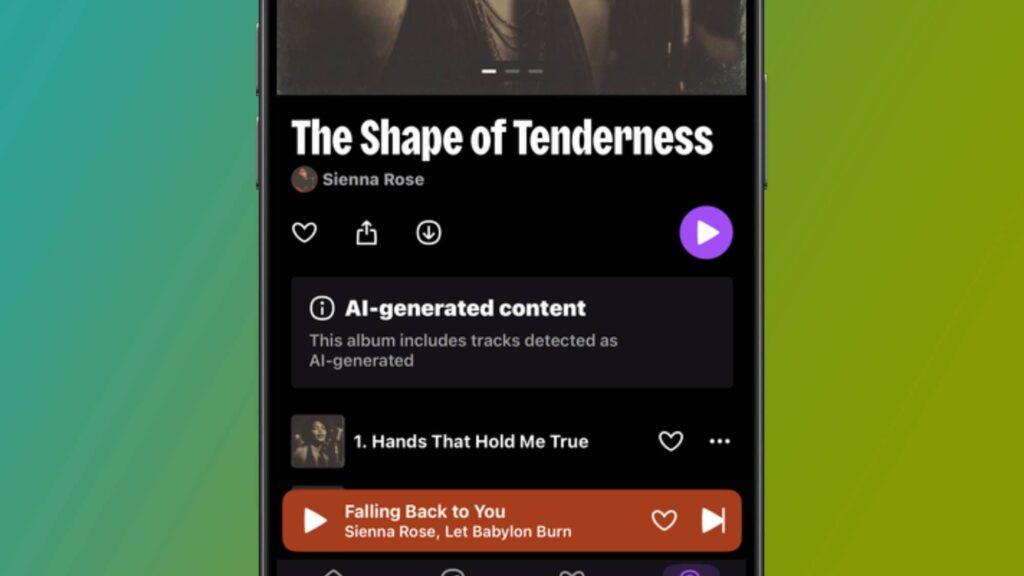
- Deezer says the number of AI-generated songs on its site continues to grow
- Now, it has been detected that 44% of all uploads are generated by AI
- As part of its anti-AI plan, Deezer will already store high-resolution versions of AI tracks
There’s one key feature that separates Deezer from the host of other best music streaming services out there, and that’s its transparency into AI-generated music.
The number of AI uploads continues to rise, the French platform says, having gone from just over 30% of all uploads in December 2025 to 44% now, and the company wants giants like Spotify to join in and do something about it.
Deezer is doubling down on its fight against AI and will no longer store high-resolution versions of these tracks. In a statement, CEO Alexis Lanternier said: “Thanks to our technology and the proactive measures we implemented over a year ago, we have shown that it is possible to minimize AI-related fraud and payment dilution in streaming.”
Article continues below.
Lanternier then urged rival platforms to take similar steps, adding: “Since January, we have made our detection technology available for licensing and we look forward to seeing industry peers of all stripes join us in the fight for justice in the age of AI.”
Deezer launched its own AI detection tool in January 2025, aiming to detect completely AI-generated music and increase trust and transparency with subscribers. It even went all the way and made its flagship technology available to rivals earlier this year.
Stop the sinking (can’t stop the sinking)
To dig a little deeper into the numbers, late last year Deezer said that up to 34% of new music uploads were generated entirely by AI, tagging more than 13.4 million songs by 2025. Now, that number has skyrocketed to an alarming 44%, which equates to about 75,000 per day, or more than 2 million AI-generated uploads each month.
Although a fairly alarming statistic in itself, what is arguably more worrying is that a large majority of users have stated that they cannot distinguish AI-generated music from human-created music, which is a testament to how quickly these technologies are evolving.
One of the factors driving the rise of AI-generated uploads is that it is an easy way to imitate other artists and generate profits through fraudulent streams. With the growing number of AI songs on Deezer, the streaming service has also cracked down on demonetization, claiming that up to 85% of streams were detected as fraudulent when it made its AI detection tools public. We reached out to Deezer, who says this percentage remains the same today.
Deezer’s AI tagging system is just the beginning of a broader fight against the scourge of AI. While Spotify hasn’t clamped down on AI detection in the way that Deezer or, say, Bandcamp has (which led to a growing migration from the big green streaming machine to its high-resolution rival Qobuz late last year), Spotify has recently launched a new system that allows artists to review and approve what music appears on their profile.
Apple Music is another rival that could join the battle against AI-generated music; The company is expected to implement transparency labels to help identify AI-generated and assisted music, but again, the onus is on labels and distributors to indicate the use of AI in what you’re listening to.
Follow TechRadar on Google News and add us as a preferred source to receive news, reviews and opinions from our experts in your feeds.


