The UN health agency assessed on Wednesday that there is a high risk of the Bundibugyo strain nationally and regionally, but a low risk globally.
Low pandemic risk – so far
However, the UN agency’s emergency committee believes that, at this stage, it does not meet the criteria for a pandemic emergency.
To date, 51 cases have been confirmed in the Congolese provinces of Ituri and North Kivu, although the magnitude of the epidemic is much larger. The WHO has counted almost 600 suspected cases and 139 suspicious deaths so far, and two cases related to the outbreak detected in Kampala, Uganda.
Because There is currently no authorized vaccine or specific treatment for this rare strain and health authorities are trying to quickly interrupt transmission. in a region marked by insecurity and population displacement.
With the support of the UN peacekeeping mission MONUSCO, the World Food Program (WFP), Doctors Without Borders (MSF) and other partners, experts and medical teams have already been deployed to the affected areas, while treatment centers are being set up.
talking to PakGazetteDr Marie Roseline Belizaire, WHO Emergency Director for Africa, emphasized the importance of a response based on community trust. “The speed of the response in the first days is essential to interrupt transmission and prevent further spread of this epidemic”, he stressed.
Supplies arrive in the town of Bunia to reinforce the response against the Ebola outbreak in the province of Ituri.
Community Focused
For WHO, public trust is at the center of the response. Health authorities are especially trying to prevent people with symptoms from becoming too afraid to report themselves or to refuse isolation.
“Every emergency, every epidemic begins in a community and ends in a community,” recalls Dr. Belizaire. “If we do not have this community trust, no matter what actions we take, they will not be accepted..”
The WHO insists on a participatory approach based on lessons learned from previous outbreaks in the region. “We are not going to come and dictate our science… but work with them.”he explains.
Lessons learned
The WHO aims to take the response to the community, drawing lessons from previous outbreaks in which many families were hesitant to report cases or let loved ones go to treatment centers.
The care and follow-up structures must be settle as close as possible to the affected populations ensure care for confirmed patients, monitor suspected cases and contacts, and maintain ties with families.
“Families could visit their hospitalized patients in these treatment centers,” emphasizes Dr. Belizaire.
According to her, The objective is to guarantee comprehensive management that includes medical care, psychosocial support and nutritional needs of patients.while supporting families and contacts as part of the response.
Aid to strengthen the response against the Ebola outbreak arrives in Ituri, in the east of the Democratic Republic of the Congo.
‘A complex security context’
The outbreak is evolving in a region marked by insecurity, population displacement and high mobility linked to mining areas.
These factors complicate early case detection, contact tracing, and rapid implementation of control measures.
Delivering aid also represents a major logistical challenge. “We are working with other partners to facilitate the transportation of equipment by air.“says Dr. Belizaire. More than 11 tons of equipment have already been sent to Bunia to support the response.
WHO considers the experience gained during the 2018-2020 Ebola outbreak in this same region, which was contained despite a similar security context, to be an important asset. “This is not the first time (…) we have already had outbreaks in this region and they were controlled,” recalls Dr. Belizaire.
Challenges of a rare strain, without vaccine
Unlike the Zaire strain, which is more common, more virulent and causes more regular epidemics, the Bundibugyo strain remains poorly understood and currently has no authorized vaccine or specific treatment.
“We have to find the right formula to explain to the community that the vaccine you received in 2018, 2020 only protects you against this. [Zaire] strain. And now you are not protected against this,” he explains.
Drawing on her extensive field experience responding to Ebola outbreaks in Africa, Dr. Belizaire notes that discussions have already begun within the WHO research and development program to accelerate potential medical advances.
Research efforts had previously focused on the Zaire strain, responsible for the most frequent Ebola outbreaks and for which vaccines and therapeutic tools are now available.
Self-protection
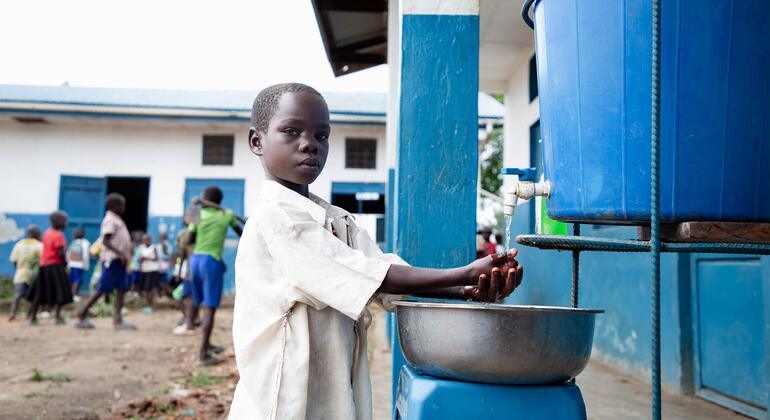
The WHO states that several simple measures should be taken at the community level to limit the risk of transmission: avoiding any contact with the body fluids of a sick or deceased person and rigorously implementing hygiene measures, in particular regular hand washing.
The health agency also stresses the importance of quickly reporting any suspected case and consulting a health center without delay if sudden symptoms appear, such as “high fever, great fatigue, muscle pain,” as well as vomiting or diarrhea.
Dr. Belizaire also emphasizes the importance of allowing health teams to conduct contact tracing in communities as soon as a suspected case is reported, as well as the need to protect health workers.
It is also necessary to protect those who are sick so that they do not feel stigmatized. Trust only information from health authorities, he warns, and avoid rumors “which can greatly complicate the response and endanger their lives.”