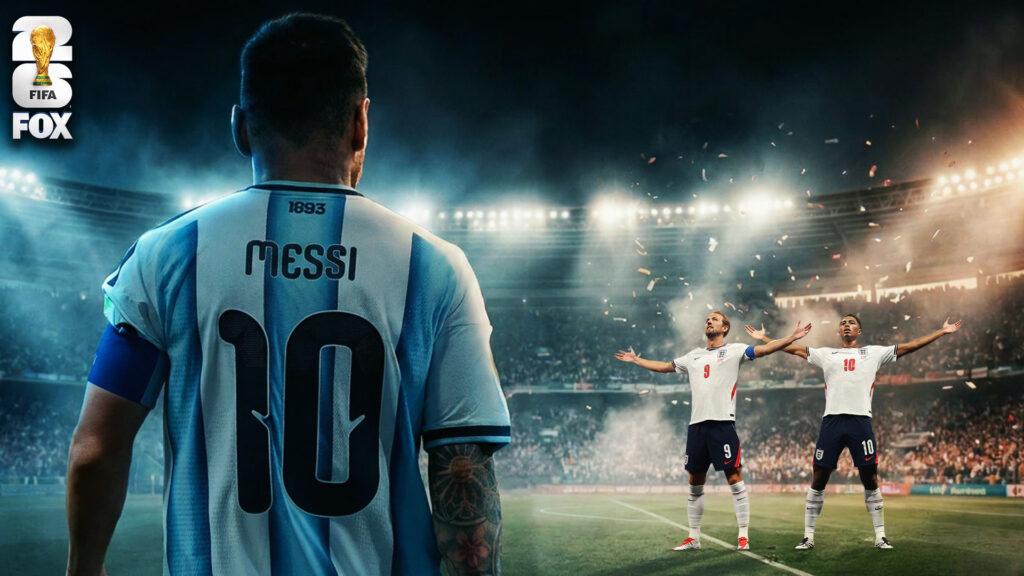
NEWNow you can listen to Pak Gazette articles!
Rivalries in football usually exist for unique reasons. It’s not that they are simplistic, but that we understand why they are there. Like Liverpool’s rivalry with Everton or the Superclásico between Boca Juniors and River Plate, local derbies are contested and disputed based on a territorial war that has placed them very close together but, in reality, very far apart. They are neighbors who hate each other and nothing will change that.
It’s different on the international stage, where shocking cultural and political moments in history create rivalries so fierce that they last from generation to generation. Take as an example the Pacific Classic between Chile and Peru, which arose from a war in the 19th century. As my father taught me from a very young age, Peruvians say the word “Chalaca” instead of “Chilean” to describe a bicycle kick, since Peru refuses to believe that a Chilean born in Spain invented the acrobatic move, and attributes it to Afro-Peruvians from a time that was never recorded.
But I digress. What I mean is that rivalries in the beautiful game often have a connective tissue that endures in the mentality of each fan, where history and geography paint a picture of a fierce battle on the field.
However, there is one rivalry that runs so deep that it stands out above the rest. It is both delicate and determined, as it stems from war, the social and cultural animosity of two continents and ways of life, but at the same time, but that has also given us some of the most memorable and dramatic moments of World Cup football.
It is a rivalry made of thorns, rooted in years of resentment where the stars also seek to emerge from fierce moments of action.
This is Argentina and England. A match like no other.
After Argentina’s victory over Switzerland and England’s victory over Norway, the two will meet on Wednesday in Atlanta in what should be a majestic semi-final where the past meets the present. The fact that, surprisingly, this will also be Lionel Messi’s first match against the Three Lions is probably a secondary headline.
This, after all, is a ghost duel, it originated in 1962 but it grew in animosity as the years went by and four years later, in 1966, was when the fire was founded.
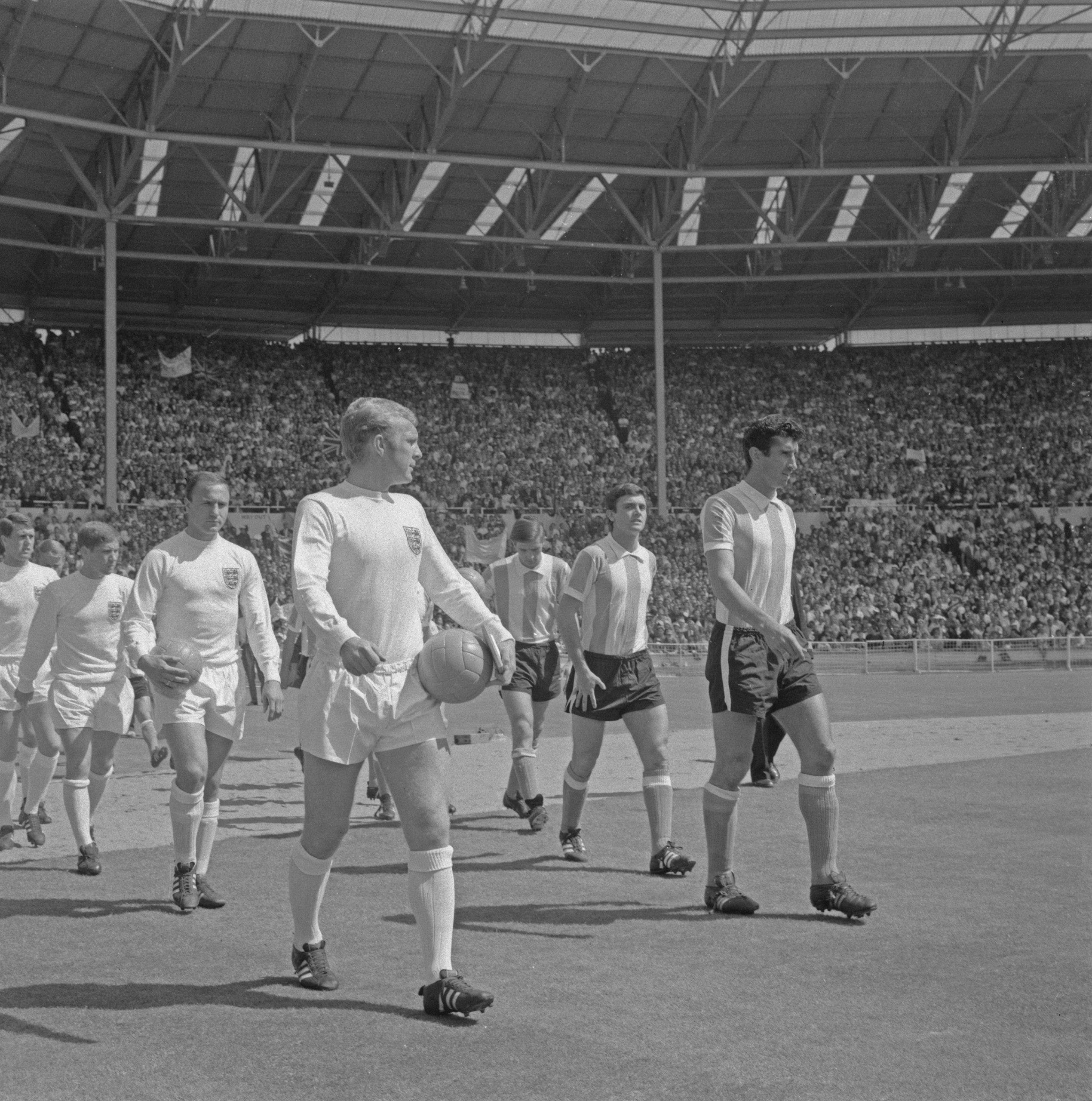
England vs. Argentina in the 1966 World Cup. (Photo by Evening Standard/Hulton Archive/Getty Images)
It was the last and only time England won the World Cup. The hosts emerged victorious against Argentina in the quarter-finals, but it was a completely physical match where Argentine captain Antonio Rattín (sadly passed away this month at the age of 89) was sent off in the first half for two infringements in the space of three minutes. This match was so fierce that England manager Alf Ramsey decided to call the opponents “animals” and did not want his players to exchange shirts at the end of the match.
It was also a match that essentially introduced yellow and red cards, knowing full well that something had to be done to tone down the heat.
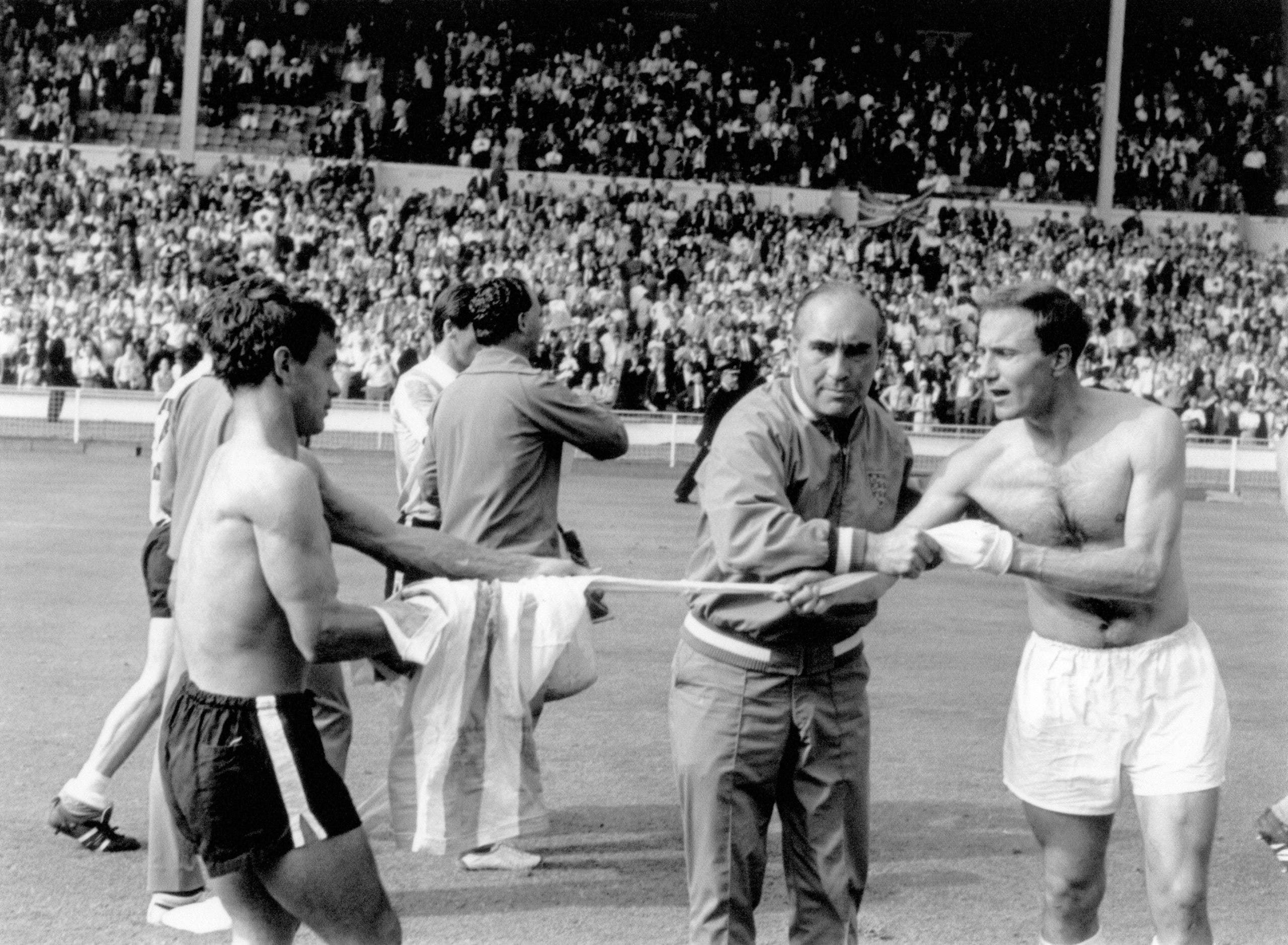
A rivalry rooted in animosity as the 1966 match turned bitter. (Photo by S&G/PA Images via Getty Images)
Good luck with that.
The 1986 World Cup in Mexico saw the arrival of the legendary Diego Maradona, but most notably it was now a quarter-final between both sides that followed the Falklands War (something so profoundly shocking for both sides, but for Argentina) it was the fall of a military government, which ushered in a new democracy in 1983. A relationship made of war, something more shocking and catastrophic than anything we can imagine, now played the starring role.
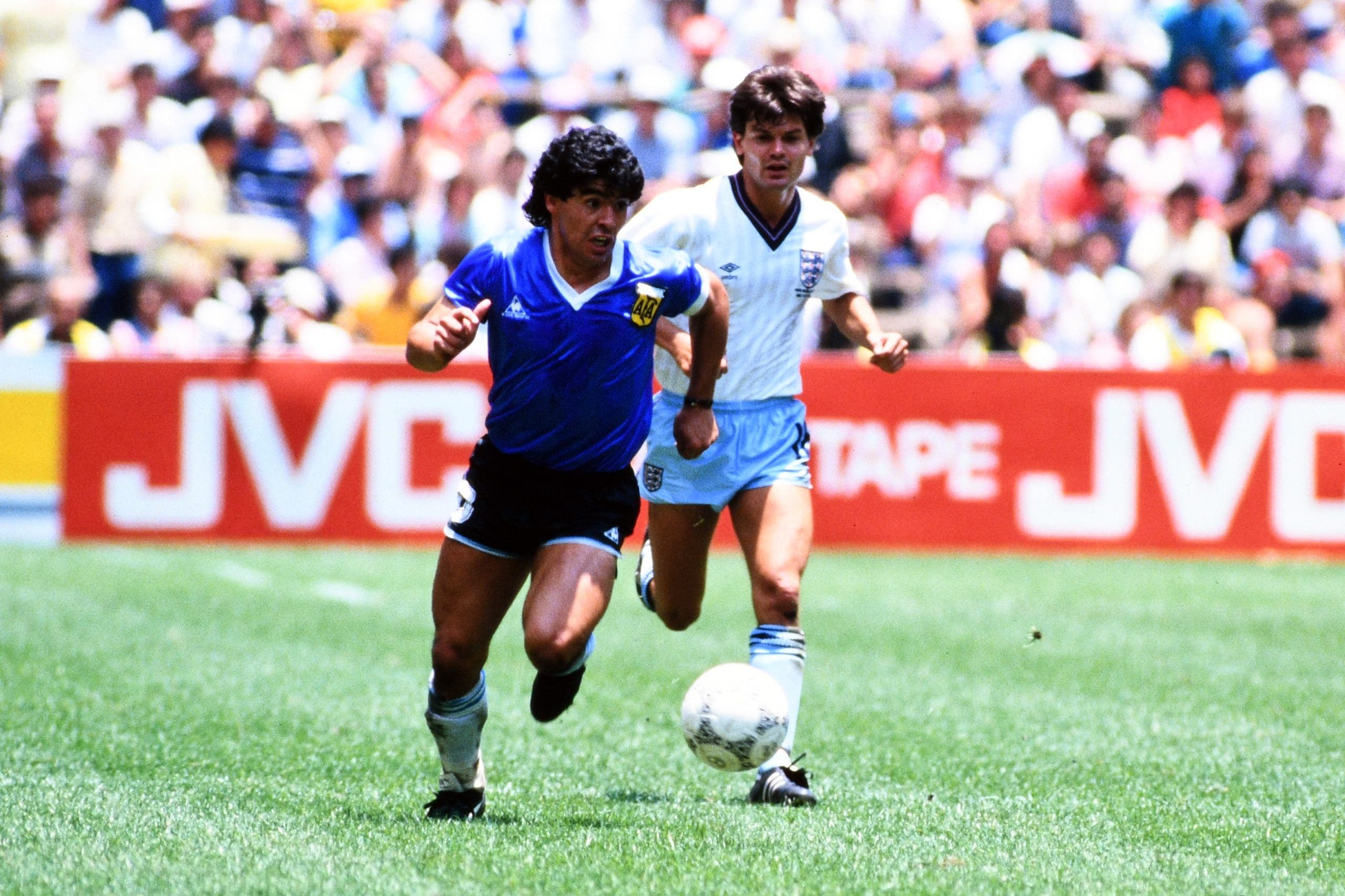
Diego Maradona had an iconic match against England. (Photo by Etsuo Hara/Getty Images)
As a result, the 1986 match brought with it the eternal memory of the Hand of God, where in the 51st minute, still scoreless, the 5ft 5in Maradona beat England stopper Peter Shilton and used his hand to knock the ball out of Shilton’s reach and into the net. Despite aggressive complaints from England, the goal stood, leading to Maradona scoring a second goal four minutes later, which is one of the greatest works of art you will ever see on the pitch.
Maradona and Argentina would end up winning the World Cup and the star would admit later in life that it was an intentional handball but, more importantly, it was not just a goal he celebrated, but symbolic revenge for the fallen soldiers of the Falklands. This would only make him an even greater icon and hero to Argentinians, and a despised rival in England.
After this historic moment at the World Cup, it’s fair to say something stuck with both nations. This was now a rivalry that goes beyond football. It was a matter of life or death. They may mean different things from each other, but the cauldron of fire continued to grow and that’s when, 12 years later, David Beckham entered the narrative.
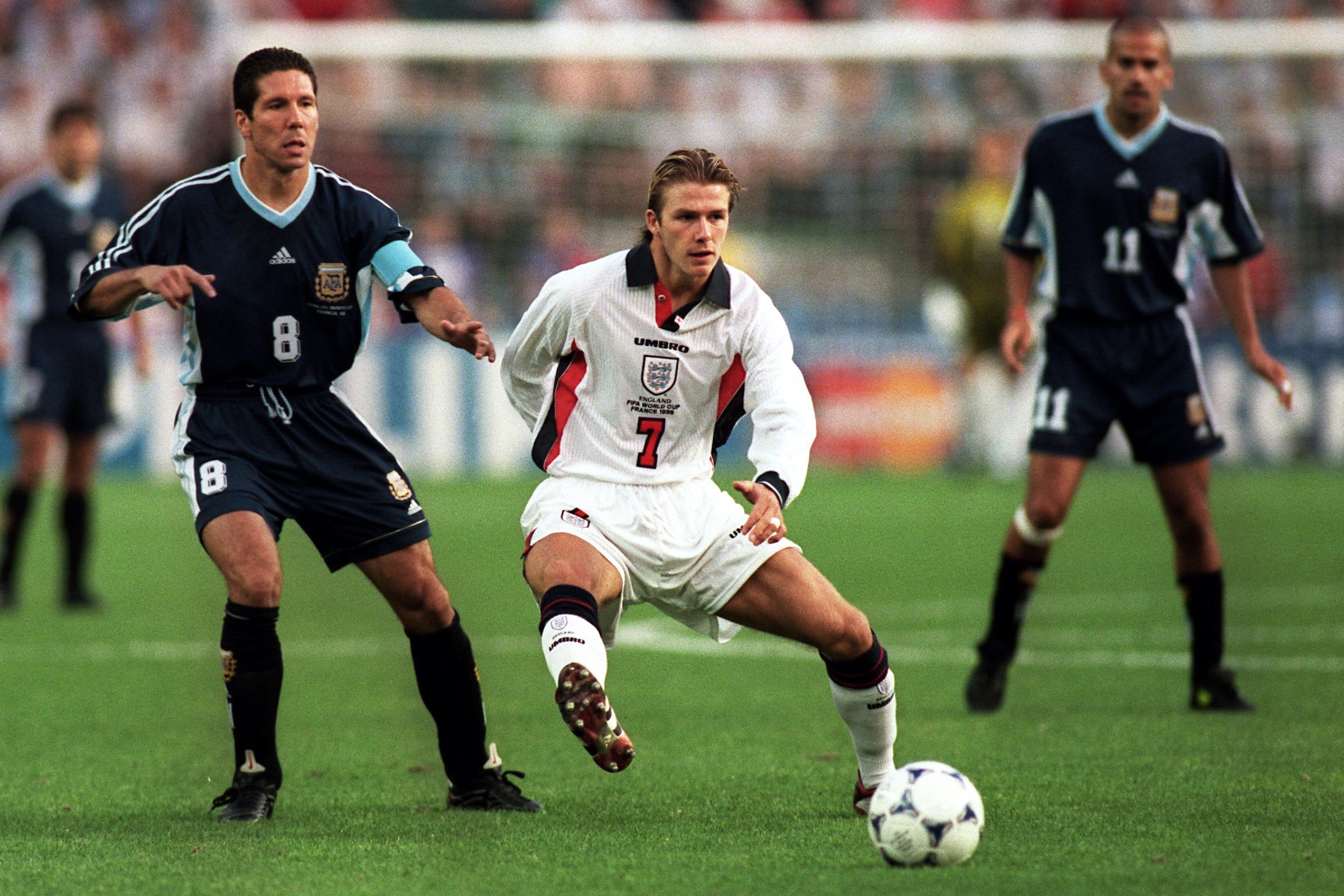
David Beckham has played a role in the Argentina-England rivalry. (Photo by Tony Marshall/EMPICS via Getty Images)
In 1998, at the World Cup in France, England’s golden boy and the Three Lions faced Argentina in the round of 16. I remember that match very vividly. I was at boarding school and my friends and I snuck out to a local pub and watched, hiding behind a group of adults shouting at the television, when Beckham kicked Diego Simeone after a collision and was consequently sent off in the 48th minute. It was a moment of madness, beautifully played by Simeone, that crushed the hearts of English fans who had already seen 18-year-old Michael Owen score one of the biggest goals in football history English. But that was before the red card.

We can only remember the autopsy and how it vilified Beckham and dented England’s progress when they lost on penalties. For Argentina? Once again, it was revenge. Redemption. Historical atonement.
But four years later, in Japan, in the group stage of the 2002 World Cup, Beckham would have the feeling of salvation after a penalty called, which later occurred as a result of a foul by Mauricio Pochettino on the aforementioned Owen. Beckham sealed the penalty and the Three Lions would secure the victory. A round of 16 victory against Denmark would follow, before finally losing to Ronaldinho’s audacious free kick and the magical Brazil team in the quarter-finals.
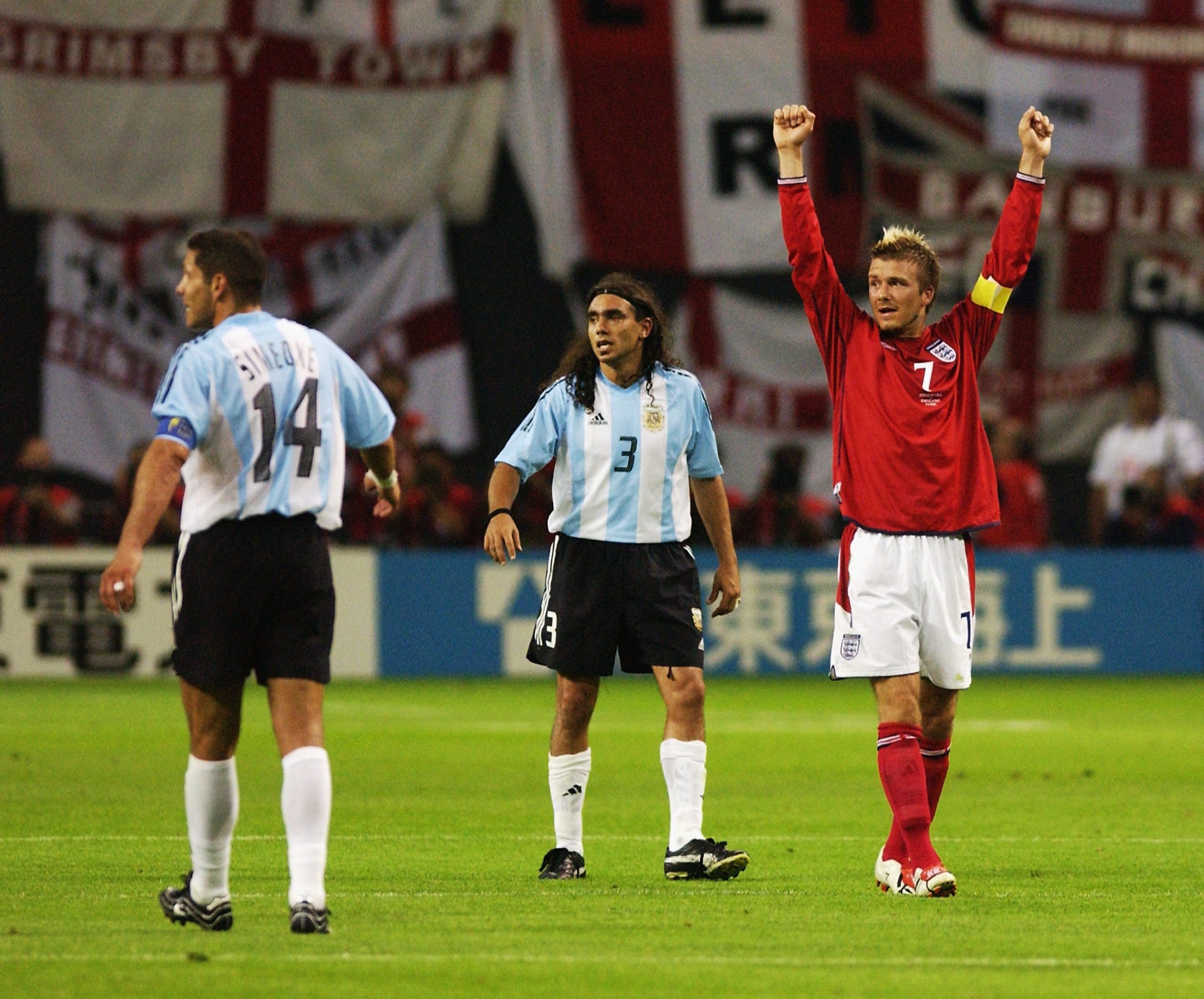
David Beckham played against Argentina in two editions of the World Cup. (Photo by Stu Forster/Getty Images)
And here we are. 24 years later. The rivalry returns in the grandest of stages and, despite many young people not even remembering this conflict, it is fair to say they will find out on Wednesday.
Argentina fans, and the team, have resurrected their call to arms in song, as La Cuarta Estrella has become synonymous with this team. The song says:
For Malvinas, for El Diego (“For the Malvinas Islands, for Diego”),
By the last of Leo (“For the last of Leo”),
Argentina I want to see you two-time champion (“Argentina, I want to see you champion back-to-back”).
It could be argued that this rivalry means more to Argentina than it does to England. For the losses and the pain, the common thread of the country and what history has done (or rather undone) to them. And there is the team itself, which wears emotion on its sleeve and kills itself for victory.
But I think this English team is also equally loaded. Full of fire and poison. This is a team that has already faced incredible hostility and extreme conditions. From defeating Mexico at the Azteca to enduring hot and humid conditions in Miami against Erling Haaland’s Norway. Then they understand the challenge. They know the task and what is at stake right now. Most importantly, they are aware that Argentina, despite showing some vulnerabilities during this World Cup, is still the defending champion for a reason.
Lionel Scaloni tries to calm the fixed and historical connotations of the rivalry, but he knows very well that this will not happen.
Then there is Messi himself, who is ready to face England at international level for the first time. The greatest player the sport has ever seen, carrying his country on his shoulders, with Diego Maradona, Rattín and other missing heroes watching from above. While he continues to deliver in this last dance, now comes the biggest and most emotionally charged battle of all: a match against England.
It doesn’t escape me to remember that he will also face his Inter Miami boss since David Beckham will be watching him from the stands.
Before the match, I’m sure they will wish each other well and remember the similarities both nations share. They are the same common points that Argentina and England love each other. From Oasis to The Beatles, the warmth of loyalty in football itself and the appreciation for the beauty and battle in the game. Shared respect is as powerful as the historical enmities that brought us here in the first place.
But you should know this. On Wednesday in Atlanta, as they stare each other down on the pitch and prepare to fight for every ball, every tackle and every effort toward victory, Argentina and England will remind us why soccer is so much more valuable than social media highlights or glamorous photos of celebrities attending a game in the luxury of a suite.
England v Argentina is about love and hate, fallen heroes and newfound saviors. It is about the present but also the past, both eternally connected to memories of pain and sacrifice. This is an encounter where you appreciate what you have, thanks to the guardians who brought you to this moment. But this is also a match of fierce competition, with the hope that you carry the identity of your nation in the tip of your heart, running through your veins and never forgetting that this rivalry can only exist because you have each other.