
NEWNow you can listen to Pak Gazette articles!
Sen. Chuck Schumer, D-N.Y., has called on FIFA to cover the full cost of rail for New Yorkers attending the World Cup, as NJ Transit train ticket prices are set at $150 to get to MetLife Stadium to watch the games.
Schumer issued a statement Sunday, calling on FIFA to pay for the entire fair, which is astronomically higher than the regular cost of traveling from Penn Station to the Meadowlands, while understanding that “FIFA will earn approximately $11 billion in revenue from the tournament, while New York fans receive $150 round-trip NJ Transit tickets to get to the game.”
MetLife Stadium in East Rutherford, New Jersey, will host eight matches during the World Cup, including the final on July 19. Regular fare is $12.90 for the Meadowlands train from Penn Station, but will increase to $150 starting June 13 and ending July 19. Transportation will also be available for $80.
CLICK HERE FOR MORE SPORTS COVERAGE ON PakGazette.Com
Senate Minority Leader Chuck Schumer, D-N.Y., during a press conference following the weekly Senate Democratic Policy Luncheon at the U.S. Capitol in Washington, DC, U.S., Tuesday, March 17, 2026. (Graeme Sloan/Bloomberg via Getty Images)
NJ Transit CEO Kirs Kolluri defended the fare increases Friday, saying the ultimate cost to the company should not burden New Jersey commuters.
“It’s an exciting time for New Jersey to showcase New Jersey’s diversity as well as its economic standing in the country and the world. Equally important, (Gov. Mikie Sherrill) has said that New Jersey commuters cannot and will not subsidize the movement of fans to the game, because that would not be fair,” Kolluri said, reiterating that the tournament will cost NJ Transit $48 million.
Penn Station is also scheduled to be partially closed up to four hours before each World Cup match, obviously disrupting regular commuters eight times during the tournament.
NEW JERSEY GOVERNOR MIKIE SHERRILL WAKES UP FIFA AFTER REPORTING NJ TRANSIT TICKETS FOR WORLD CUP WILL BE MORE THAN $100
Schumer maintains that it is unfair that New Yorkers have to deal with rising prices, especially considering that FIFA is eliminating parking at MetLife Stadium. Additionally, parking at the nearby American Dream shopping center costs approximately $225, while walking access is also prohibited.
In turn, public transportation is “effectively the only way to get into or out of the stadium on game days,” Schumer’s statement said. But Schumer isn’t criticizing NJ Transit: He understands the financial issues the company has to deal with.
It is FIFA he is pointing the finger at for not helping with the cost.
“NJ Transit’s entire operation to transport fans to and from MetLife is projected to cost $62 million, with approximately $11 million dedicated to security alone. The federal government is contributing $10.6 million and the NY/NJ Host Committee is contributing just over $3 million, leaving NJ Transit on the hook for a $48 million bill without any financial contribution from FIFA.
“Meanwhile, FIFA has told other host cities that they can offer fans a mass train for just $2.50 round trip, a fraction of what New York fans are charged.”
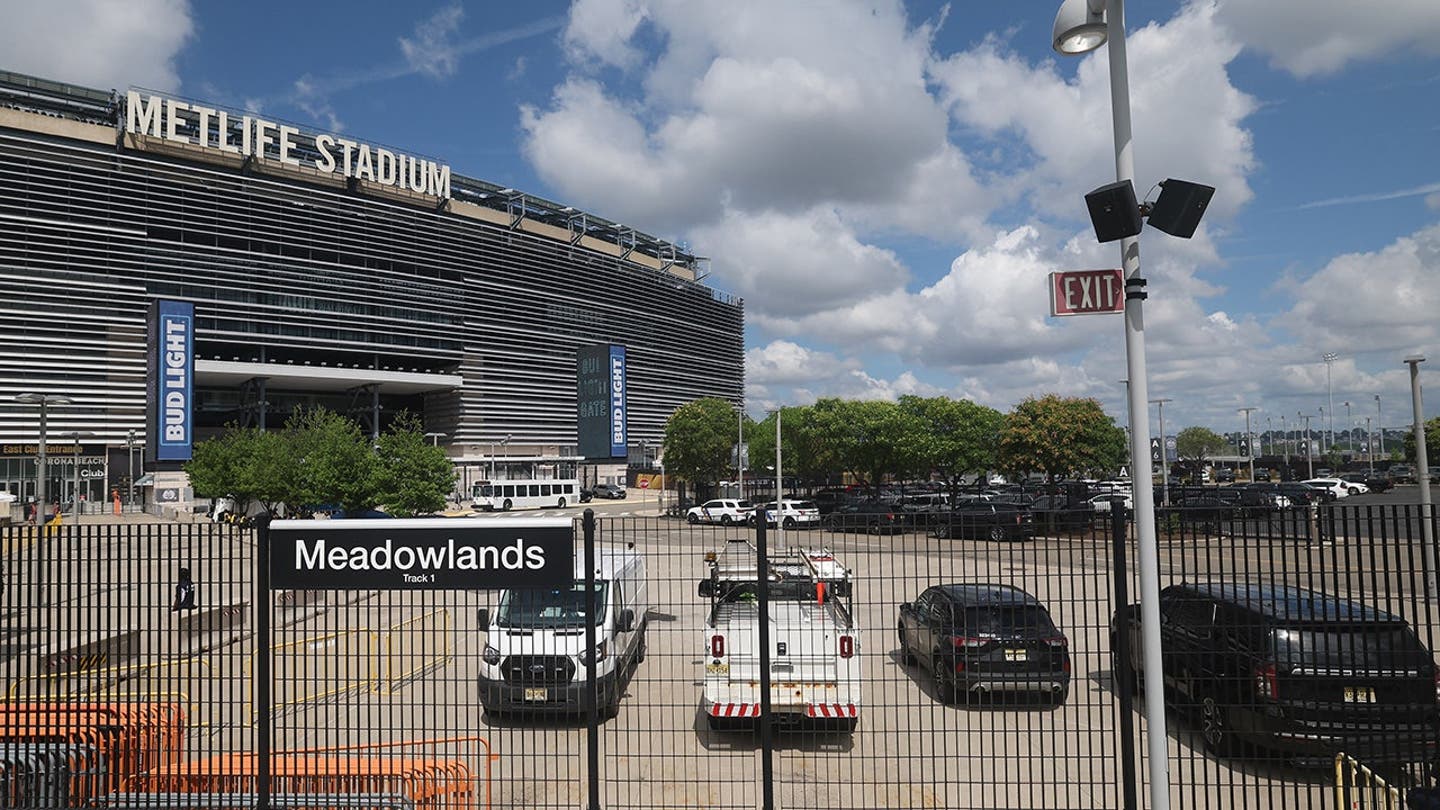
A general view of MetLife Stadium and the Meadowlands Train Station is seen from a NJ Transit train before the 2025 FIFA Club World Cup semi-final match between Paris Saint-Germain and Real Madrid at MetLife Stadium in East Rutherford, New Jersey, on July 9, 2025. (Luke Hales/Getty Images)
Schumer added that “charging more than eleven times the normal fare for a train ride is a scam, plain and simple.”
FIFA’s budgeted revenue for the 2023 to 2026 cycle is approximately $11 billion, marking a 71% increase over the previous cycle. It also marks the most lucrative World Cup in the tournament’s history.
Schumer’s statement also noted that ticket prices for game attendees are around $700 for the group stage, and the final at MetLife Stadium costs up to $10,000 to get in the door under FIFA’s dynamic pricing model.
“We have more fans, more riders and more disruptions than any other region in this tournament,” Schumer added. “FIFA needs to step up accordingly. Past practices are not enough when parking is eliminated, Penn Station is closed and all fans are forced to use one transportation system. FIFA should cover the travel, not put the bill on New York fans.”
FIFA may not have historically contributed to public transportation costs in previous tournaments, but Schumer maintains that New York and New Jersey are not all other host regions. It is the most densely populated area in the country and will host eight games.
Kolluri also noted that if the $12.90 regular fare remained in place, NJ Transit’s $48 million bill would be 92% subsidized for commuters.
“No one I’ve talked to thinks that’s fair or reasonable. Commuters in New Jersey shouldn’t be saddled with the cost of a wonderful event for years into the future, certainly. But fans who go to the games should be saddled with the cost. That’s all we’re trying to say,” Kolluri said.
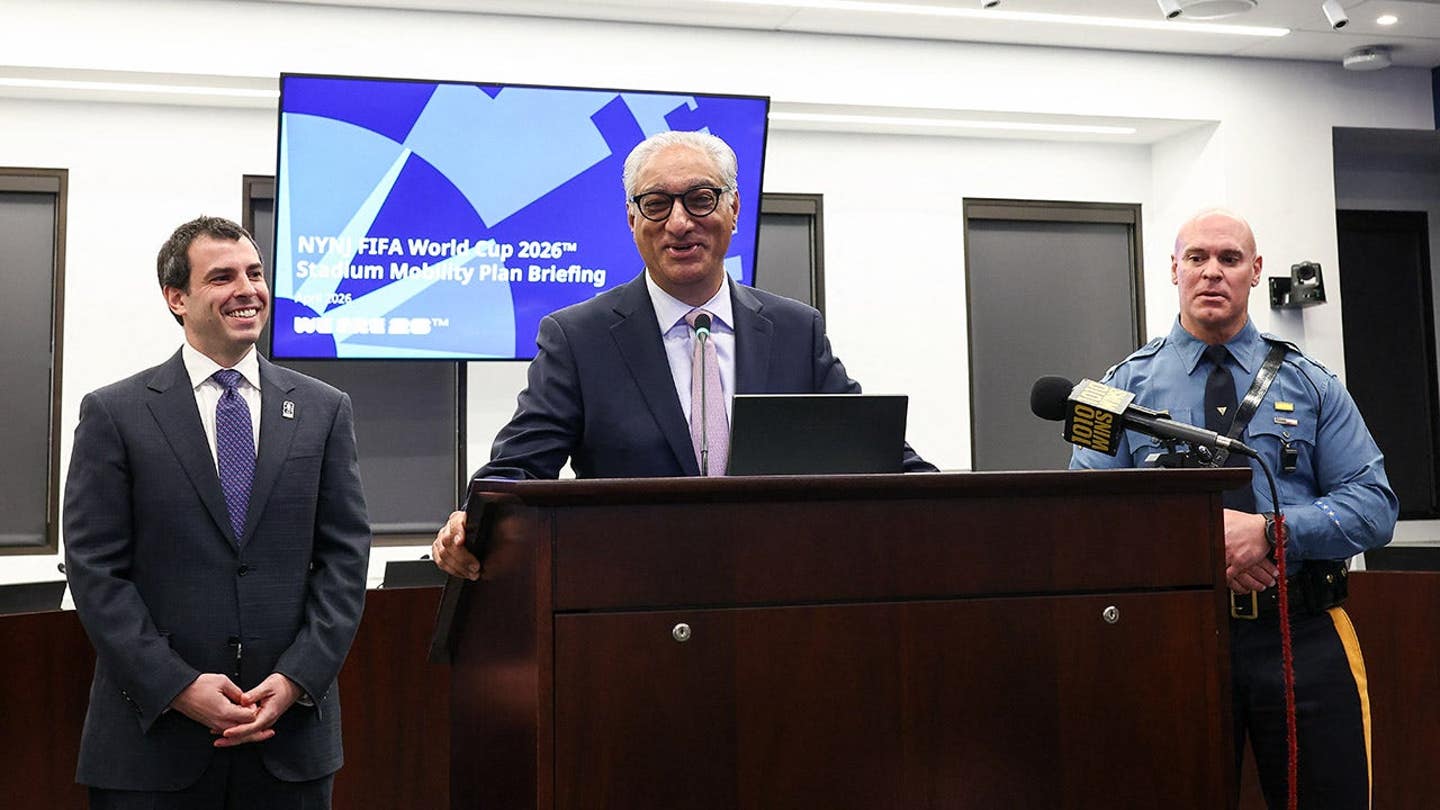
Kris Kolluri, CEO of NJ Transit, and Alex Lasry, CEO of the 2026 FIFA World Cup New York and New Jersey Host Committee, speak during a news conference on the regional mobility plan for the World Cup in Newark, New Jersey, on April 17, 2026. (Charly Triballeau/AFP via Getty Images)
CLICK HERE TO DOWNLOAD THE Pak Gazette APP
With the plan now officially in place, FIFA World Cup COO Heimo Schirgi issued the following statement to Pak Gazette Digital:
“Since the host city agreements were signed in 2018, FIFA has worked collaboratively with the host committees and their partners to develop a transportation plan that provides efficient and accessible public transportation options for ticketed fans attending all eight matches at NY NJ Stadium. The goal is to minimize congestion, reduce reliance on private vehicles and ensure that the fan experience is a positive and memorable one, defined by the action on the field, not delays on the roads.
“NJ Transit’s current pricing model will have a chilling effect. High fares inevitably push fans toward alternative transportation options. This increases concerns about congestion, late arrivals, and creates broader ripple effects that ultimately diminish the economic benefit and lasting legacy the entire region stands to gain by hosting the World Cup.”