
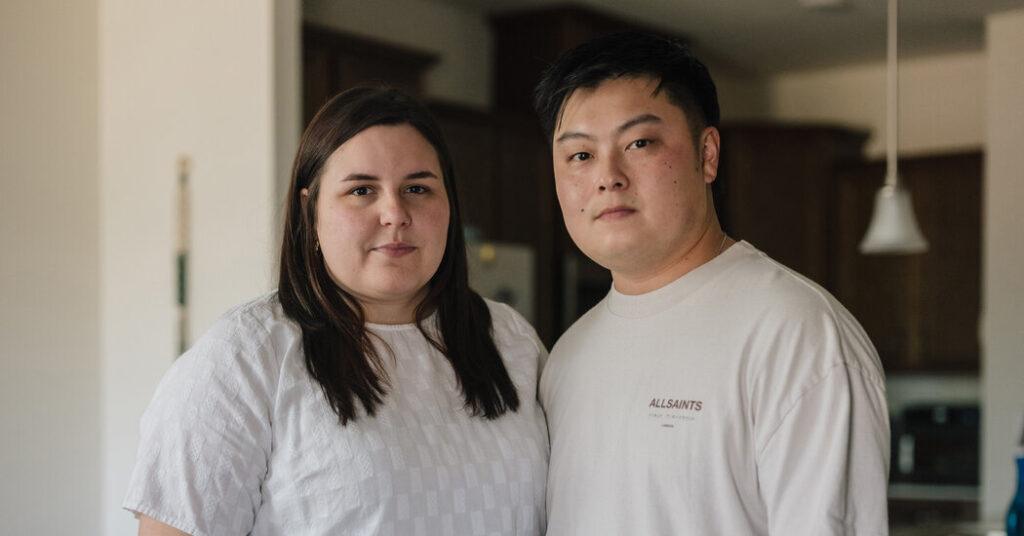
Tired of renting in Raleigh, North Carolina, Lillian Rouse and her fiance began the search last year to buy their first home together. But after months of searching, they decided to wait until they had a firmer financial footing.
Rouse, a 28-year-old data analyst, and Mark Debney, who is 29 and works for a technology company, together earn $120,000 a year, but they worried it wouldn’t be enough to cover the costs of a house they liked. They parked the money for the down payment on a CD, which they renewed in February, to give themselves more time to build up their savings.
The economic uncertainty generated by the war in Iran, which began shortly after, only reinforced that decision, he said.
The effects of the war have raised mortgage rates and pushed consumer confidence to historic lows, making buying a home for the first time even more daunting.
After optimism earlier this year that the market was strengthening, the traditional spring shopping season is fading. Sales of existing homes, which account for the bulk of the housing market, held steady in April, the National Association of Realtors reported Monday, after falling 3.6 percent in March.
The average home is taking longer to sell, “which means consumers are taking their time before making decisions,” Lawrence Yun, chief economist at the National Association of Realtors, said in a statement.
A prolonged conflict in the Middle East could keep energy prices high and slow global economic growth, hurting sectors such as the U.S. housing market, Moody’s Analytics said in a recent report. Rising inflation expectations would suppress demand for housing, especially for first-time buyers, Moody’s added.
“We may not have fully seen the impact of the war yet,” said Cristian deRitis, deputy chief economist at Moody’s Analytics. “If this continues for a while, it will start to affect the uncertainty and psychology more.”
Fears of vastly higher inflation have led bond traders to raise 10-year Treasury yields, a major influence on mortgage rates. The average rate on a 30-year fixed-rate mortgage, which fell below 6 percent just before the war began, has since risen to 6.37 percent, according to mortgage financing giant Freddie Mac.
The average age of first-time homebuyers has risen to 40, up from 30 in 2008, according to the National Association of Realtors. These buyers accounted for just 21 percent of the market last year, a record low. In part, declining fertility rates, which hit a new low in the United States last year, have been linked to high housing costs.
Rouse said delaying buying a home also means putting off starting a family. “It’s not a fun decision,” she said, noting that she and her fiancé valued the stability of growing up in homes their parents had bought. “I think it’s better to wait to have children until we have a house,” she said.
Younger buyers often face other financial constraints, such as student loans, deRitis said. And rental costs have slowed, reducing the pressure to move into homeownership.
When David So, a 27-year-old mechanical engineer at HP in Corvallis, Oregon, started looking at homes in February, he said he was “shocked” when he crunched the numbers. He moved back into his parents’ house to save for a down payment.
“I want my monthly payments to go down,” he said, noting that this could be accomplished by putting more money up front or waiting for mortgage rates to drop.
Beyond a mortgage, other costs associated with home ownership are weighing on buyers. Property taxes, insurance, and homeowner association fees can add several hundred dollars to monthly housing costs.
Higher costs undermine affordability for buyers, said Brad Case, chief residential economist at Homes.com, a real estate portal owned by analytics provider CoStar. Market values have increased, he said, which has raised property taxes. And insurance rates tend to skyrocket after every natural disaster.
“Those have increased dramatically,” he said. And they don’t include things like appliances and gym access that could have been included for renters.
“It’s just a matter of outlining your entire budget and recognizing that you will now have to pay for certain amenities that you didn’t have to pay for before,” he said.
David O’Reilly, chief executive of Howard Hughes Holdings, which builds master-planned communities, said first-time buyers were “choosing to wait until they can afford the community and lifestyle they want.” In response, Howard Hughes has been telling its builders that more starter homes were needed, O’Reilly said.
That couldn’t happen too soon, said Rouse, who was dismayed by the quality of housing on the market. “Everything was taken to hell,” he said. “We don’t have $15,000 to do renovations.”


